Library › Guides › Succubi & Incubi
What Is a Succubus? Meaning, Origin and Modern Myth
By Metavulgar · updated 2026-11-11 · 6 min read
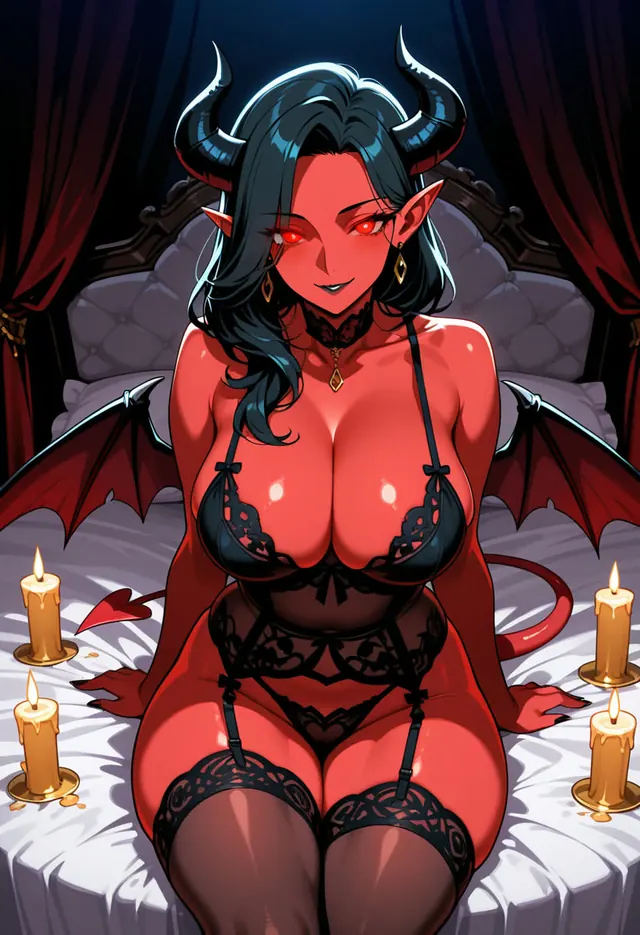
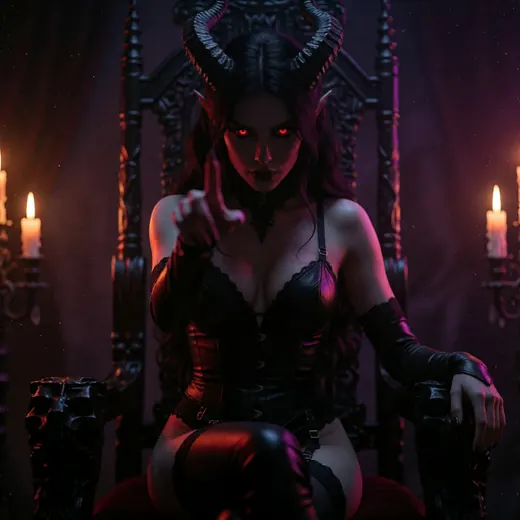
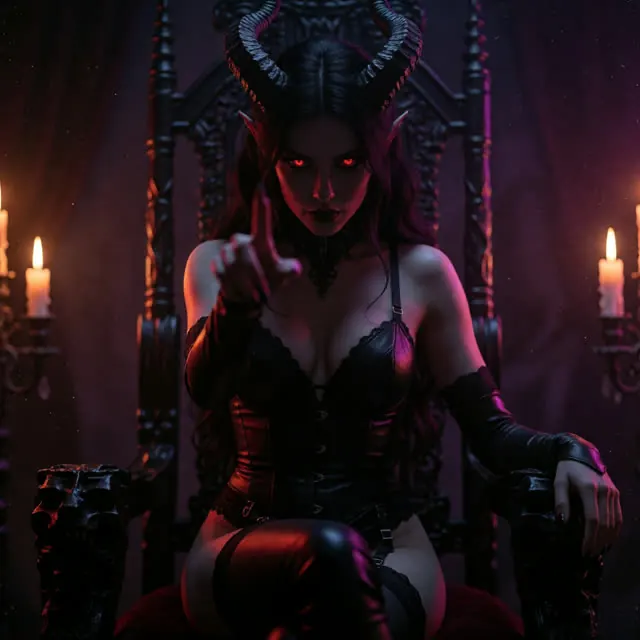
A succubus is a female demon of medieval folklore who comes to men in the night, seduces them while they sleep and takes something of theirs in return: strength, semen, breath, or in later stories a soul. In modern fantasy she has softened into something more interesting than a monster. She is an adult, ancient, confident supernatural woman who makes a bargain with you and keeps it.
I voice succubi for a living, so I get asked the same thing constantly: where does she come from, and why does she work so well as a fantasy? This guide answers both. If you would rather hear her than read about her, the full audio series is The Succubus Contract, and Start Here puts her at the end of a five-night path.
The short definition
Three things make a creature a succubus rather than just "a demon woman":
- She comes to you. The classic succubus visits at night, usually in sleep or the edge of sleep. You do not go looking for her.
- She seduces. Violence is not her method. Charm, voice, scent, touch and persuasion are.
- She takes. Every old account has an exchange, and the exchange is never even. That is where the menace and the appeal both come from.
Everything else, the wings, the tail, the heart-shaped symbol, is costume that varies by century. For the other half of the pair see succubus vs incubus and the entry on the incubus.
Where the word comes from
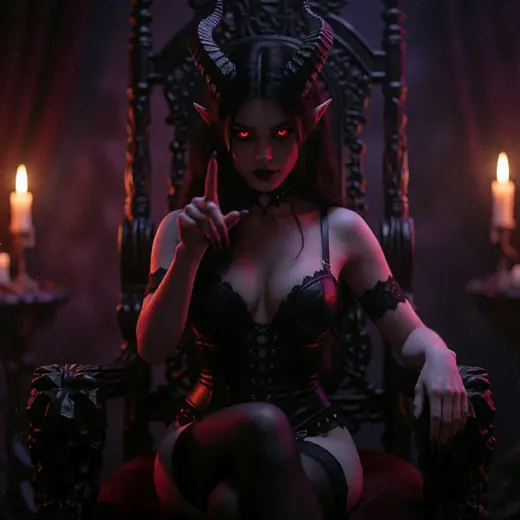
The English word arrived in the late 1300s from medieval Latin. It is built on the idea of lying beneath, and the male form, incubus, on lying upon. Churchmen who wrote about these spirits used the words as job titles: the same demon could appear as a woman to a man and as a man to a woman. The wordplay is part of why the two terms always travel together. The fuller story of the word is in succubus meaning.
Folklore: nightmares, Lilith and a famous handbook
No single myth created the succubus. She is a collage of older figures:
- Mesopotamian night spirits. The lilitu and ardat lili of ancient Mesopotamia were female spirits tied to night, wind and unmarried desire. They are the distant ancestors of the figure later called Lilith.
- Lilith in medieval Jewish writing. The medieval satire known as the Alphabet of Ben Sira makes Lilith Adam's first partner, a woman who refused to lie beneath him and left. Later mystical texts turned her into a night demon, and from there she was adopted as the mother or queen of succubi.
- The Germanic mare. A pressing, breathing, night-riding spirit that sat on the chests of sleepers. The word survives in English "nightmare." Our modern idea of a night visitor owes a lot to it, and succubus in dreams explains the sleep science behind it.
- Greek and Roman seductresses. Lamia and her kin, women-monsters who lured young men, supply the style of seduction. See succubus lore for the crossover.
- Medieval demonology. Writers on witchcraft, most famously the authors of the 1486 handbook Malleus Maleficarum, argued about how demons could act on sleepers. That book describes succubi collecting what they took from men. It is a theological document of its time, not a source of fact about the world, and I treat it purely as the origin of a story.
How the succubus changed
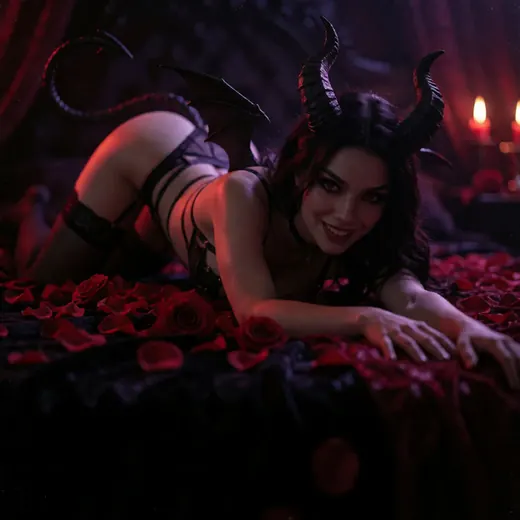
For about four hundred years the succubus was a warning. She was blamed for nocturnal emissions, for restless sleep, for monks who could not keep their vows. The story did social work: it gave a name and a villain to feelings people were told to be ashamed of.
Then the villain turned into a heroine. Romantic poets made the dangerous beautiful woman a figure of longing. Fantasy tabletop games and, later, video games gave the succubus a stat block and an agenda. Anime and manga gave her a personality. The monster girl genre, which you can read about in what is a monster girl, turned her into a full character with a voice, a sense of humor, a habit of teasing and sometimes real tenderness.
That arc, from warning to wish, is the reason she is so common in adult fantasy. The old fear of being taken has become the fantasy of being taken, on terms you chose by opening the story.
What a modern succubus is like
Across games, novels and audio, the pattern is stable enough to list:
- Ancient and unhurried. She has seen centuries of men. Nothing about you surprises her, and that is exactly why her attention feels special.
- A negotiator. The contract is her signature move. I dig into it in succubus contract trope.
- Playful. The best ones tease. A succubus who never smiles is a villain; one who smiles slowly is a lover.
- Dangerous in a controlled way. The edge is real, but it is the kind you can lean into, because you know the story is a story.
- Adult in every sense. She is grown, centuries old, and a woman of authority. No modern succubus worth listening to is anything else.
Abilities, weaknesses and names
If you came here for powers, the full catalogue of dream entry, shapeshifting, charm and drain is in succubus abilities. Weak points in folklore and fiction, handled as lore only, are in succubus weakness. Looking for a character name? Succubus names has a long list sorted by style.
Why she works so well in audio
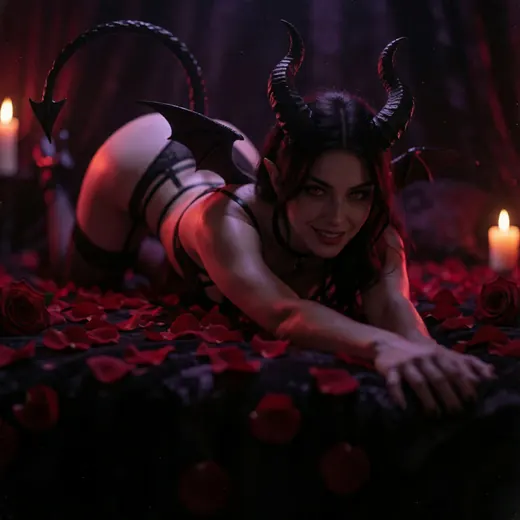
A succubus is a voice before she is a body. Her first move in every story is to speak: low, close, a little amused. Audio gives you exactly that. Binaural recording puts her behind your shoulder, then at your ear, then everywhere, which is how nightmare spirits were always described. The ASMR guide to the genre explains the sounds, and succubus hypnosis covers the slower, suggestion-based version.
In my own sessions I use the contract as the spine. In The Summoning you call her. In Clause Two: Worship she explains what the bargain asks. By Part 6: Home the story has become domestic, which is its own kind of dangerous.
Common misunderstandings
A few ideas about the succubus keep circulating that do not survive a look at the sources:
- "She is always evil." Early church writing cast her as a demon, yes, but the folklore around night visitors was never uniform. Modern fiction makes her morally mixed: sometimes a villain, often a bargainer with her own code, and in the monster girl genre frequently a heroine.
- "She is a vampire with different branding." The two share the feeding motif but not much else. A vampire is undead and bound to blood; a succubus is a spirit or demon bound to desire and bargains.
- "The tail and wings are traditional." They are not. Medieval accounts say little about her body at all. The silhouette most people picture comes from Victorian-era illustration and twentieth-century games.
- "A succubus is a girl who seduces men." In fiction she is a particular kind of adult being: ancient, self-possessed, in no hurry. The age of the character matters to the genre, and every succubus in my work is grown and centuries old.
Knowing which parts are old and which are invented is half the fun. You can enjoy the modern costume without pretending the history says more than it does.
A note on fantasy and consent
Everything above is fiction, and I write it that way. You pick up the story when you press play and put it down when you take your headphones off. The surrender in these sessions is a performance between consenting adults, a listener and a voice. Nothing in a succubus story is advice about real life, and nothing in this guide asks you to believe in demons.
Where to go next
- Read the history: succubus lore.
- Understand the word: succubus meaning.
- Pick a role to play: succubus roleplay ideas.
- Hear her: the Succubus Contract, six parts, start with the first.
Frequently asked questions
What is a succubus in simple terms?
A succubus is a female demon from medieval folklore who visits men at night, seduces them and takes something from them in exchange. In modern fantasy she is usually an ancient, confident, playful seductress who offers bargains rather than a simple monster who attacks.
Is a succubus real?
No. The succubus is a folklore and fiction figure. Historically the story explained nightmares, sleep paralysis and nocturnal emissions. Today she is a fantasy archetype used in books, games, anime and erotic audio, enjoyed as pure imagination between adults.
What is the difference between a succubus and an incubus?
In folklore they are the same kind of demon in different forms: the succubus appears as a woman to men, the incubus as a man to women. In fantasy, the incubus is simply the male counterpart. The incubus entry covers the other side.
What does a succubus want?
Classically, energy: vitality, breath or a soul. In modern stories she usually wants attention, devotion and a bargain with someone who chooses her freely. That shift from taking to trading is what made her a romantic and erotic figure.
Where can I hear succubus audio?
My six-part Succubus Contract series starts with The Summoning. If you are new to monster audio in general, Start Here is the gentler route.
Listen next
Keep reading
- Succubus Meaning: Origin, Slang and Modern Use
Succubus means a female demon who seduces men in their sleep. The word comes from medieval Latin and literally implies lying beneath. In modern slang - Succubus vs Incubus: Differences, Origins, Tropes
A succubus is a female demon who seduces men; an incubus is a male demon who seduces women. In medieval theory they could be one demon taking two form - Succubus Lore: Lilith, Lamia, Mara and Beyond
Succubus lore is a collage: Mesopotamian night spirits, Lilith in medieval Jewish writing, the Greek lamia, the Germanic mara and Christian demonology - Succubus Abilities: Folklore Powers and Fantasy Additions
Classic succubus abilities are dream entry, shapeshifting, charm through voice and gaze, draining a sleeper's vitality, and binding bargains. Folklore