Library › Guides › Succubi & Incubi
Succubus vs Incubus: Differences, Origins, Tropes
By Metavulgar · updated 2026-11-11 · 6 min read
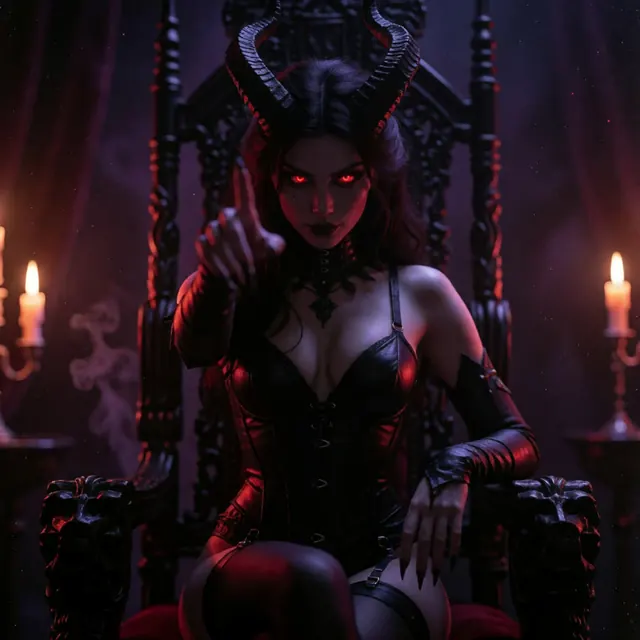
A succubus is the demon who comes to men in a female form; an incubus is the one who comes to women in a male form. That is the whole classical difference, and it is less clear-cut than it sounds. This guide lays out the folklore, the modern split and a table you can screenshot.
Primary background lives in what is a succubus and the incubus entry. Here we compare.
Side by side
| Succubus | Incubus | |
|---|---|---|
| Form | Female | Male |
| Visits | Men (traditionally) | Women (traditionally) |
| Name idea | Lying beneath | Lying upon |
| Folklore role | Night visitor, drains vitality | Night visitor, pressing weight |
| Modern fantasy | Bargainer, tease, contract-maker | Charmer, tempter, patient seducer |
| Common aesthetics | Horns, tail, wings, red and black | Dark coat, shadows, steady gaze |
| Typical mood | Playful with an edge | Smooth with an edge |
| Typical audience | Listeners who like a woman in charge | Readers drawn to a dangerous suitor |
The medieval theory: one demon, two forms
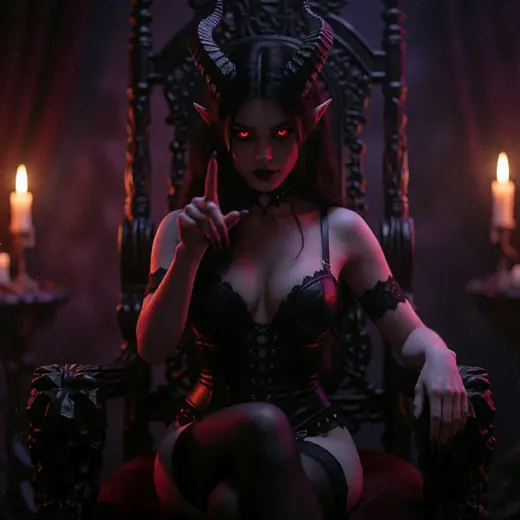
Churchmen writing about demons in the Middle Ages faced a puzzle. Demons were thought to have no bodies of their own, yet stories said they could act on sleepers. Their proposed answer: a demon could take a form, and the roles were distinct jobs. In the most repeated version, one demon takes the woman's role to receive from a man, then switches to the man's role to visit a woman. The names describe the job, not a permanent demon sex.
This is the part modern fiction mostly forgets, and it is why old texts talk about them together. If you like the lore side, succubus lore widens the view to other cultures.
Where each came from
- Succubus blends Mesopotamian night spirits, the figure of Lilith in medieval Jewish writing, and the Germanic mare that sat on sleepers.
- Incubus has its own roots in the same night-pressure folklore: a weight on the chest, a presence in the room. The nightmare tradition applies to both, which is why succubus in dreams also explains incubi.
Neither has a single founding myth. Both are labels attached to experiences people could not otherwise explain.
How modern fiction splits them
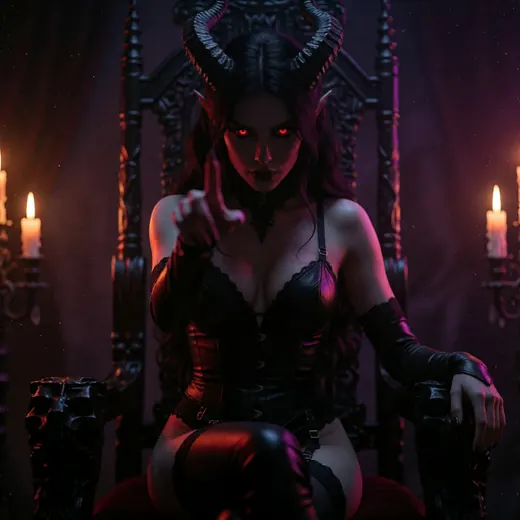
Once the old theory went out of fashion, writers separated the pair into two species and gave each a personality.
The succubus now
She is a negotiator. The classic modern setup is a contract: she offers, you accept, and the terms are the story. She is amused, patient, possessive and often surprisingly warm. See succubus contract trope for why that structure is so effective.
The incubus now
He is a tempter. The incubus is usually written as a charming, composed, slightly world-weary figure who is good at listening. In romance novels he is a love interest with a supernatural handicap. He is the subject of a lot of reader-insert fiction aimed at women.
Gender is not destiny
Fiction constantly plays against type. Succubi who feed on women, incubi who serve a human, demons with no gender. Fantasy is permissive: what the label guarantees is the role of a night visitor with a bargain, not who gets which seat.
Powers: the same toolkit
Both are credited with the same standard abilities:
- entering dreams,
- shapeshifting into someone's ideal,
- charm and persuasion,
- feeding on vitality or emotion,
- contracts that bind.
Succubus abilities goes through each in detail, with notes on how audio fiction uses them.
Weaknesses: also shared
Folklore and fiction give both the same limits: a true name, a broken circle, genuine affection they did not plan on, a better-written contract. Succubus weakness covers these as lore only.
Which one fits which fantasy?
- Want a woman in charge, teasing and in control? Succubus.
- Want a slow, warm seduction with a hint of danger from a male voice? Incubus.
- Want a bargain with fine print? Succubus is the classic.
- Want a devoted partner who happens to be a demon? Either, but fiction leans incubus for romance.
My own work is voiced from the succubus side, for male listeners. In The Summoning you are the one who calls her; in Her Sisters you meet her family, which shows off the genre's world-building. For a gentler first meeting with a monster, Start Here is the place.
Pop culture quick tour
| Medium | Typical succubus | Typical incubus |
|---|---|---|
| Tabletop and video games | A monster stat block, sometimes a charming ally | A tempter archetype with a social edge |
| Anime and manga | A comedic or tsundere heroine | A rare, brooding love interest |
| Romance novels | A heroine with a hidden hunger | A hero fighting his nature |
| Audio | A voice in your ear making an offer | A voice in your ear making a promise |
What the difference means in audio
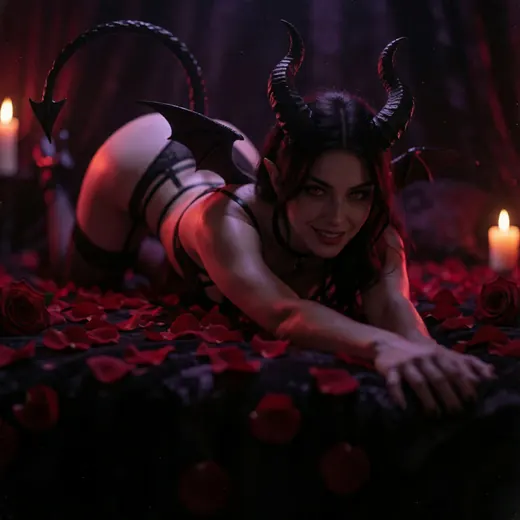
I write and voice these sessions, so here is the practical side. A succubus session and an incubus session differ less in plot than in pacing.
- A succubus scene is a negotiation. She sets terms, you answer, she tests the answer. The excitement is in the exchange: who is leading, how fast she lets you move, what you agree to say out loud. Contract stories give the listener something to say yes to.
- An incubus scene is a slow approach. The tempter earns trust first. Longer silences, softer questions, a lot of reassurance before the edge shows.
- Both use the same sound design. Close-mic breathing, a layered whisper that moves from ear to ear, a pause before the important sentence. Binaural recording makes the visitor feel inside the room, which is exactly what the folklore describes.
If you are choosing where to start, begin with a gentle monster from Start Here and then step up to the contract. By the time you meet her in Her Sisters, you will know whether the succubus mood suits you.
A note on writing them
When I write a succubus I ask three questions: what does she want, what will she trade, and what does she refuse to say out loud? The same questions work for an incubus. Answer them, and the rest of the character follows. That is also why so many fan stories use the pair as a mirror: the same bargain, offered from either side of the bed.
A short history of the pair in art
Visual culture shaped how we picture them as much as theology did. Fuseli's 1781 painting The Nightmare, with a sleeper and a squatting creature on her chest, became the template for the pressing night visitor. Victorian-era illustrators added bat wings and tails. Pulp covers and role-playing manuals standardized horns and the heart-tipped tail. Today's concept artists mix all of these and add fashion. The result: when you see red, black, curved horns and a tail, you read "succubus," and when you see a long coat and a steady stare you read "incubus," whether or not any folklore says so.
Common mistakes
- "Incubus is just the male version." Close, but in old texts it is a role, not a species.
- "Succubi only visit men." Fiction does whatever it likes.
- "They are the same as vampires." They are not; compare in succubus vs vampire.
Takeaway
Succubus: female night visitor, bargains and teases. Incubus: male night visitor, tempts and charms. Same toolkit, same history, different moods. Pick the one that fits the voice you want at your ear, and enjoy the fantasy as fantasy. When you want to hear her, the Succubus Contract is waiting.
One more way to tell them apart
Ask what the visitor does when you hesitate. A succubus raises an eyebrow, names the clause you have not read yet and waits with obvious pleasure. An incubus lowers his voice, asks what is wrong and lets the silence work. Both are persuasion; one is theater, the other is patience. Neither works without your say-so, and in every story I tell the listener keeps the final word.
Frequently asked questions
What is the main difference between a succubus and an incubus?
A succubus is a female demon who seduces men; an incubus is a male demon who seduces women. In medieval theory they were roles one demon could take. In modern fantasy they are separate species with different personalities and moods.
Are succubus and incubus the same demon?
In old demonology, yes: the theory held that one demon could appear as a woman to a man, then as a man to a woman. Modern fiction treats them as two kinds of beings, each with its own culture and character.
Which is stronger, a succubus or an incubus?
Neither, by folklore. Both share the same powers and limits. In fiction, strength depends on the author, and many stories play with it by making the human clever enough to bargain with either.
Can an incubus seduce men or a succubus seduce women?
In modern fiction, yes; writers freely cross the old lines. The label mainly signals a night-visiting seducer with a bargain, not a fixed target.
Is there audio about succubi?
Yes. My Succubus Contract is a six-part series told from a succubus's side, starting with The Summoning.
Listen next
Keep reading
- What Is a Succubus? Meaning, Origin and Modern Myth
A succubus is a female demon from medieval European folklore who visits sleeping men to seduce them and draw off their vitality. Today the word also n - Succubus Abilities: Folklore Powers and Fantasy Additions
Classic succubus abilities are dream entry, shapeshifting, charm through voice and gaze, draining a sleeper's vitality, and binding bargains. Folklore - Succubus Weakness: What Folklore and Fiction Say
A succubus has no single weakness. Old sources point to religious authority and waking from sleep; games add cold iron and holy damage; romance fictio - Succubus vs Vampire: Differences, Feeding and Seduction
A succubus is a demon of desire who visits sleepers and feeds on vitality through bargain; a vampire is an undead revenant who feeds on blood and cour - Succubus Lore: Lilith, Lamia, Mara and Beyond
Succubus lore is a collage: Mesopotamian night spirits, Lilith in medieval Jewish writing, the Greek lamia, the Germanic mara and Christian demonology