Library › Guides › Succubi & Incubi
Succubus Contract: The Trope, Its Roots and Story Ideas
By Metavulgar · updated 2026-11-11 · 6 min read

A succubus contract is a bargain: she offers something, you accept terms, and the story spends the rest of its length showing what those terms really mean. It is the signature move of the modern succubus, and I built a six-part audio series on it. This guide explains where the trope comes from, why it is so effective as erotic fiction, and how to write or choose your own.
If you would rather hear it than read about it, the full series sits in The Succubus Contract, and Start Here introduces her gently before the paperwork starts.
The old story underneath
The idea of a pact with a supernatural being is far older than the succubus. One of the earliest recorded examples is the legend of Theophilus of Adana, a sixth-century cleric said to have made a written deal with the Devil to win a church office, then regretted it. The Faust legend, first printed as a popular book in 1587, made the pact a staple of European storytelling: knowledge and pleasure now, a reckoning later.
Medieval writers also described pacts in a witchcraft setting, often with a mark said to seal the bargain. Those texts are historical curiosities, products of their century, and I only use them as story material.
What the contract tradition gives us, for fiction, is a clean structure:
- Someone wants something.
- A supernatural figure offers it.
- Terms are stated, often more heavily on one side.
- The person agrees.
- The story is the cost arriving.
The succubus took that skeleton and replaced the dread with desire. Her bargain is usually not for riches but for devotion, attention and surrender, so the cost is something the listener might want to pay. For the creature's own background, see what is a succubus and succubus lore.
Why it is erotic: choice, price, surrender
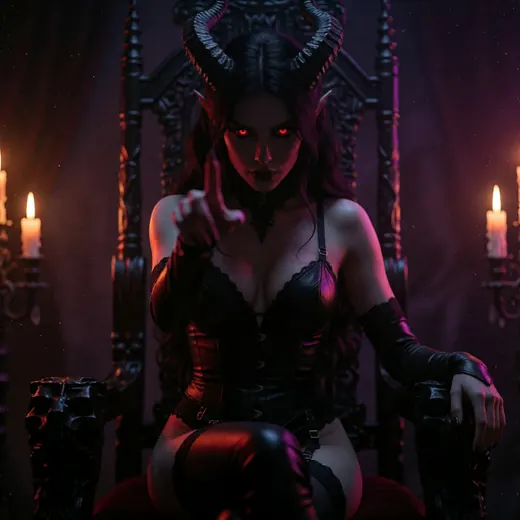
The contract works for three reasons that reinforce one another.
Choice
Nothing in a good contract scene is forced. She lays out terms and waits. That wait is the point: the listener is not a victim but a participant who said yes. It places the surrender inside your agency, and that is what makes it possible to enjoy fully. Every contract scene I write includes a moment where she asks again.
Price
A price makes the stakes concrete. The thing you give up can be small and sweet (your evenings, your attention, a promise to come when she calls) or large and mythic (a soul, a name). The story never needs real money; the cost is always a feeling. Keeping it symbolic is what keeps it elegant.
Surrender
Once the terms are agreed, you are bound by your own word. A succubus does not need to overpower you. She only has to point at the clause. That is a very particular thrill: being held by something you consented to.
Anatomy of a succubus contract
Most contracts, in fiction and in my scripts, contain the same handful of parts. Think of this as a template.
| Part | Purpose | Example line |
|---|---|---|
| Summons | Gets her into the room | "You called. I answered." |
| Offer | States what she gives | "Tell me what you want and I will arrange it." |
| Clauses | The numbered terms | "Clause one: you will not lie to me." |
| Consideration | What you give in return | "In exchange, you are mine at night." |
| Signature | The act of agreeing | A whispered yes, a held breath, a touch |
| Fine print | The twist | "I never said when the night ends." |
Clauses that carry the story
The best contracts are made of short, personal clauses rather than legalese. Examples that work well:
- Attendance. You answer when she calls.
- Honesty. You tell her what you really want, out loud.
- Worship. You give her your full attention and praise, which is the subject of Clause Two: Worship.
- Exclusivity. You are hers and, in a possessive version, her sisters are not allowed near you.
- Renewal. Terms expire and must be re-signed, which is how a new chapter begins.
How my series uses it

In my six-part Succubus Contract, each part is a different stage of the same bargain:
- The Summoning establishes the offer and the first yes.
- Clause Two: Worship shows that the terms ask for devotion.
- The Missed Payment is the consequence scene: you broke attendance, and she is not angry so much as hungry to be reassured.
- The New Contract rewrites the terms after you have lived inside the old ones.
The progression is deliberate. A contract that never changes becomes a routine; a contract that is renegotiated is a relationship.
Story ideas you can steal
If you write, role-play or just daydream, here are directions that keep the trope fresh:
- The loophole. You read the terms closely and find a clause she cannot refuse to honor. She is delighted rather than annoyed.
- Her side of the paper. She also gives something up: her name, or her freedom to hunt anyone else.
- The apprenticeship. The contract binds her to teach you something, and each lesson is a clause.
- The audit. A rival succubus arrives to check the terms are being enforced, and your succubus has to prove you are worth the arrangement.
- The expired term. The bargain is up. She asks what you want to do. The scene is all about choosing to stay.
- The reversed contract. You write the terms and she has to decide whether to sign.
More directions are collected in succubus roleplay ideas.
Writing it well
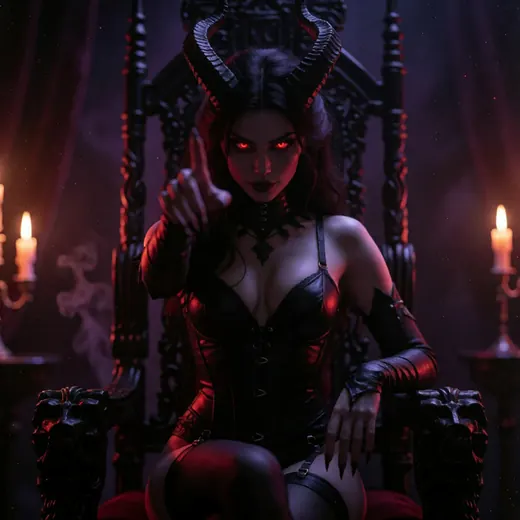
A few tips from voicing dozens of these:
- Keep her language precise and light. Menace comes from calm, not volume.
- Use numbers. "Clause two" is more persuasive than "another rule."
- Give the listener a line to say, even silently. An agreed contract needs an agreement.
- Let the fine print be playful. The twist should feel like a wink, not a trap.
- End with release. A scene where she reads the terms aloud and then lets you rest turns tension into satisfaction.
Putting a contract on the page: a worked example
To see how the parts fit together, here is a short contract drafted the way she might read it aloud:
- You called, so I will answer. That is the summons, and it is already spent.
- You will tell me what you want, in your own words, without softening it.
- You will come when I call, and you will not make me ask twice.
- In return, you are mine from dusk until I decide otherwise.
- Either of us may ask for the terms to be read again. Nobody signs in the dark twice.
The last clause is the one I never skip. Letting the listener ask for a re-read keeps the choice alive throughout. It also gives you a natural spot to pause a scene without breaking the mood, and it makes the later renegotiation feel earned rather than sudden.
Why the trope keeps returning
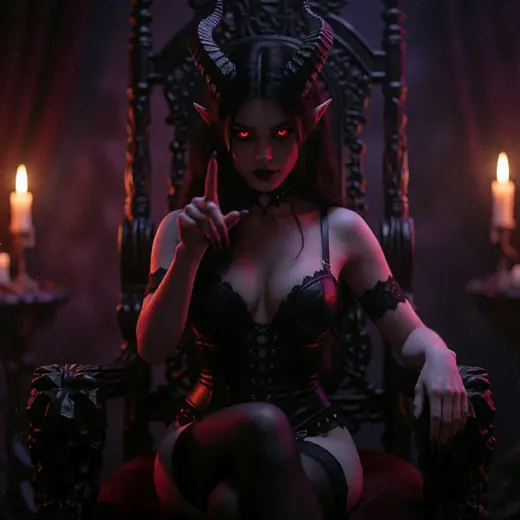
Every generation rewrites the bargain in its own vocabulary. The medieval version fears the signature. The Romantic version admires the bargainer's daring. Modern fantasy treats the contract as a love language: a way to say what you owe each other in specific, enforceable terms. A succubus is simply the most fluent speaker of that language, because her whole nature is wanting, asking and being told yes. The trope survives because it dramatizes something every adult recognizes, the thrill and the weight of agreeing to something that will change you.
Keep it fiction
One last craft note: the most memorable contracts are the ones where the reader can recite a clause afterward. Give each term a rhythm, a single image and a consequence you can feel. If the listener can say "clause two" and instantly remember how it felt, the trope has done its job.
Everything in a contract story is performance. There is no real binding, no real debt and no real demon. It is a consenting fantasy between a listener and a voice, and the safe word is your pause button. Every character is adult, and nothing here is advice for real relationships.
When you are ready to hear one end to end, start with Part 1 and let her read you the terms.
Frequently asked questions
What is the succubus contract trope?
It is a story device where a succubus offers a bargain and a human accepts numbered terms, often involving devotion, attention or a soul. It descends from deal-with-the-devil legends and works as fantasy because the surrender follows an explicit, willing yes.
Where does the idea of a demon contract come from?
Pact stories go back at least to the legend of Theophilus of Adana in the sixth century, and the Faust tradition, printed as a popular book in 1587, spread the idea across Europe. Succubus fiction borrows that structure and swaps wealth or knowledge for desire and devotion.
Why do people find the contract trope appealing?
It gives you choice and surrender in the same breath. You decide to agree, then the terms hold you to it. The price is symbolic, never real, so the tension is purely emotional. Many listeners enjoy that the power comes from a promise rather than force.
What clauses appear in a succubus contract?
Common ones are attendance (come when she calls), honesty (say what you want), worship (give her your attention), exclusivity and renewal. Good clauses are short, personal and numbered. You can hear several of them in Clause Two: Worship. Keep each one short enough to remember.
Is there a free succubus contract audio story?
My six-part Succubus Contract series covers the whole bargain, from the summoning to the renewed terms. It is adult fantasy audio, and the first part, The Summoning, is the natural place to begin. Listen in order if you can, because each part changes the terms of the one before.
Listen next



Keep reading
- What Is a Succubus? Meaning, Origin and Modern Myth
A succubus is a female demon from medieval European folklore who visits sleeping men to seduce them and draw off their vitality. Today the word also n - Succubus Lore: Lilith, Lamia, Mara and Beyond
Succubus lore is a collage: Mesopotamian night spirits, Lilith in medieval Jewish writing, the Greek lamia, the Germanic mara and Christian demonology - 62 Succubus Roleplay Ideas, Each With a One-Line Hook
Succubus roleplay ideas work best when each scenario has a hook: a single situation that tells the succubus what she wants and tells you what you risk - Succubus x Reader: What It Means and Why It Works
Succubus x reader is second-person fantasy in which the protagonist is you and the love interest is a succubus. The X is her, the reader is you. The f