Library › Guides › Succubi & Incubi
Succubus Lore: Lilith, Lamia, Mara and Beyond
By Metavulgar · updated 2026-11-11 · 6 min read
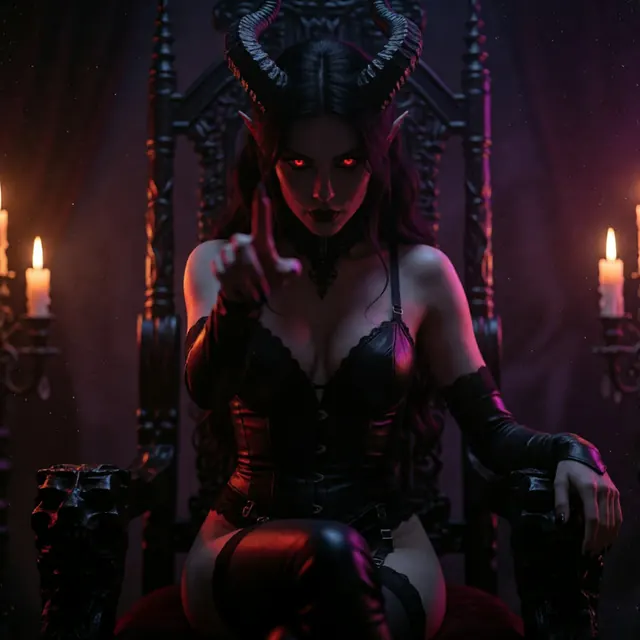
Succubus lore is not one myth but a collage: Mesopotamian night spirits, Lilith in medieval Jewish writing, the Greek lamia, the Germanic mara, church demonology and, from the 1800s on, art and fiction that gave her wings and a smile. This guide walks through the sources by culture, marks what is documented and what is variant, and shows how modern fantasy remixes the old pieces. It is lore for entertainment, with no instructions of any kind.
I tell succubus stories for a living, so I read the sources the way a storyteller does: looking for what each culture was afraid of and what it secretly wanted. If you would rather hear the result than read the research, Start Here gives you five nights, and the full series is The Succubus Contract.
The map at a glance
| Tradition | Figure | What she does | Link to the succubus |
|---|---|---|---|
| Mesopotamian | Lilitu, ardat lili | Night and wind spirits tied to unmarried desire | Distant ancestors, via Lilith |
| Medieval Jewish | Lilith | Adam's first partner in satire, later a night demon | Mother or queen of succubi in later lore |
| Greek | Lamia | A bogey woman, later a seductress | Style of seduction |
| Germanic and Norse | Mara | Sits on the chest of a sleeper | The nightmare sensation |
| Medieval Christian | Succubus, incubus | Demons that visit sleepers | The name and the theology |
| Arabic and Persian | Ghul, ghoulah, jinn | Shapeshifting night beings that lure travellers | Parallel figures, not ancestors |
| Japanese | Kanashibari, yamauba, yuki-onna | Binding sleep, mountain women, snow seductresses | Parallels with their own flavour |
| Modern fiction | Monster girl succubus | Playful adult bargainer | The remix |
Mesopotamia: the first night spirits
The oldest strand is the lilitu, a class of female spirits in Sumerian and Akkadian tradition associated with wind, night and desolate places, and the ardat lili, described as a spirit connected to unmarried desire. Texts of incantations against them survive, which tells us people took them seriously. The step from these spirits to the later succubus is one of inheritance rather than a clean line: later writers used their names and traits, and scholars debate how direct the borrowing was.
Lilith: from satire to queen of night
Lilith's story is the one most often told and most often garbled. The Alphabet of Ben Sira, a medieval satire of uncertain date, imagines Lilith as the first woman, made from the same earth as Adam. She refuses to lie beneath him, says they are equals, speaks a holy name and flies away. That text is a parody, not scripture, and I present it that way. Later mystical writing, including the Zohar, turned Lilith into a demon of the night and a danger to sleepers, and medieval lore called her the mother or queen of the succubi.
In modern readings she has also become a figure of independence, the woman who left. That is a modern reframing and a perfectly good one for fiction. The entry on Lilith has her in short form.
Greece: the lamia
The lamia is a creature of ancient Greece whose shape changes with the century. In her oldest form she is a frightening bogey, a figure used to scare people into obedience. One telling makes her a queen of Libya who loved Zeus and lost everything to Hera's jealousy. The name is linked by an ancient comic playwright to a Greek word for the gullet, which gives you the idea.
By the early centuries of the common era she had become something else. Philostratus tells of a lamia who took the shape of a beautiful woman to seduce a young man and then was exposed at a wedding feast; the story later inspired Keats's poem. That version, a serpent-woman who disguises herself as a lover, is the one that feeds both the succubus and the modern monster girl. Parentage and details vary between sources, and I treat them as variants. See the lamia entry and Coil: Wrapped in the Lamia's Temple for the modern serpent-lover.
The Germanic mara and the roots of "nightmare"
In Germanic and Norse tradition the mara was a spirit that visited sleepers and pressed on the chest. The word survives in English as "nightmare," and in the French cauchemar. Many cultures have the same pressing-night-visitor tradition under other names: the Turkish Karabasan, the Newfoundland old hag and the Japanese kanashibari. They all describe what we now call sleep paralysis. The folklore-versus-science side is covered in succubus in dreams.
Christian Europe: naming and theology
The word succubus itself is medieval Latin. Churchmen wrote at length about whether demons could really lie with humans and how. A famous handbook of witch-hunting, the Malleus Maleficarum of 1486, collects such arguments, and later writers like Ludovico Sinistrari expanded them. Those books are documents of their era, full of anxieties about sleep, desire and monks who could not keep their vows. I read them as the origin of a story, not as evidence about the world.
Several ideas introduced here shaped the modern figure:
- The pair. The same demon could appear as succubus to men and incubus to women, so the two terms travel together. See succubus vs incubus.
- The exchange. Something is taken; the arrangement matters.
- The night setting. She comes at night, at the edge of sleep.
Arabic, Persian and wider parallels
Arabic and Persian traditions include the ghul, a shapeshifting being of deserts who lures travellers, and the jinn, spirits of smokeless fire who can take human form, sometimes seductively. These are parallels, not ancestors. Tales from the Thousand and One Nights show jinn and ghuls with their own rules, and I avoid saying any of them "is" a succubus. They show that many cultures independently imagined supernatural lovers with a dangerous side.
Japan: parallels with their own flavour
Japan has no succubus, but it has close cousins. Kanashibari is the experience of being bound in sleep. Yamauba, mountain women of folklore, are ambiguous figures who can help or harm. Yuki-onna, the snow woman, is a pale seductive spirit of winter stories. Most relevant to this site is the kitsune, the fox spirit who takes human form and sometimes bargains or beguiles; the nine-tailed version is a stock figure in the kitsune sessions such as my Nine Tails and the Red Door. Japanese fantasy fiction is also where the modern monster girl took shape, which is why so many succubi in games and anime look the way they do.
How modern fiction remixes her
The remix is where I work, so I will be plain about the mechanics. A storyteller takes the oldest, strongest image, the visitor at the bedside, keeps it, and swaps the fear for invitation. Nothing in the medieval sources is lost by doing that; the sources were always about what people felt in the dark, and a modern listener feels something warmer there.
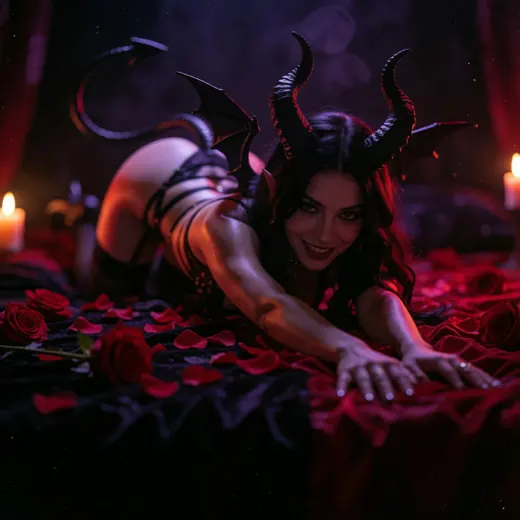
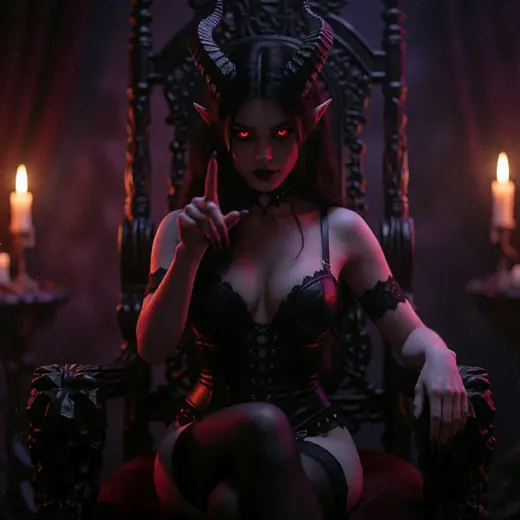
Starting in the 1800s, art and literature turned the warning into a romance. The silhouette people picture today, wings, tail, horns, a heart-shaped mark, comes from illustration and then from tabletop and video games, not from medieval texts, which say almost nothing about her body. Here is what the remix added:
- A personality. Teasing, patient, amused.
- A code. She keeps her bargains. See succubus contract trope.
- A family. Sisters, courts and rivals, as in Part 4, Her Sisters.
- A home life. The monster who has become domestic, as in Part 6, Home.
- Consent as the engine. The old fear of being taken became the fantasy of choosing to be taken, which is how I write her.
What is lore and what is invention
| Claim | Status |
|---|---|
| The word succubus is medieval Latin | Documented |
| Lilith is Adam's first partner | Appears in a medieval satire, not scripture |
| Succubi have wings and tails | Later art and games |
| The lamia seduced young men | Attested in Philostratus; the oldest lamia is a bogey |
| The mara gave us "nightmare" | Widely accepted etymology |
| Ancient Mesopotamian spirits were succubi | Debated; a loose ancestry at most |
Listening to the lore
The reason I research all this is that a good story is built on real texture. When I voice The Summoning I borrow the ceremony of old texts without presenting any of it as real, and when she speaks about ancient names she speaks as a character. Everything here is fantasy between adults. If you want the basic definition first, what is a succubus is shorter, and the whole cast of monsters is in the Monster Girl Bestiary.
Frequently asked questions
Where does the succubus come from in folklore?
She has no single source. She is a blend of Mesopotamian night spirits, Lilith in medieval Jewish writing, the Greek lamia, the Germanic mara and medieval Christian demonology, which supplied the name. Modern art and games added the wings and tail.
Is Lilith the first succubus?
Later medieval lore calls Lilith the mother or queen of succubi, but that is a tradition built over centuries. Her first-woman story comes from the Alphabet of Ben Sira, a medieval satire. Treat the connection as folklore variants, not settled history.
Do other cultures have succubus-like spirits?
Yes, though they are parallels rather than relatives. Examples include the Turkish Karabasan, the Japanese kanashibari and yuki-onna, the Arabic ghul and jinn, and the Greek lamia. Each reflects its own culture's fears and desires, and each deserves to be described in its own terms rather than squeezed into the succubus mold.
Did the original succubus have wings and a tail?
No. Medieval texts say little about her body. The wings, tail and horns come from later illustration and from tabletop and video games, which turned the demon into a recognisable character, a figure with a silhouette, a personality and a sense of humor.
How can I hear succubus lore as a story?
My Succubus Contract series uses the old ideas of bargains, sisters and night visits as story material, starting with The Summoning. It is fiction for adults, told with a nod to the old sources, and never a claim about reality or an instruction of any kind.
Listen next
Keep reading
- What Is a Succubus? Meaning, Origin and Modern Myth
A succubus is a female demon from medieval European folklore who visits sleeping men to seduce them and draw off their vitality. Today the word also n - Succubus vs Incubus: Differences, Origins, Tropes
A succubus is a female demon who seduces men; an incubus is a male demon who seduces women. In medieval theory they could be one demon taking two form - Succubus in Dreams: Why You Dream of Her, Explained
People dream of a succubus because REM sleep pairs vivid imagery with arousal, sleep paralysis can add a sense of presence, and the mind borrows a rea - Succubus Contract: The Trope, Its Roots and Story Ideas
A succubus contract is a story device in which a succubus offers a bargain and the human agrees to terms. It borrows from old deal-with-the-devil tale - Succubus Meaning: Origin, Slang and Modern Use
Succubus means a female demon who seduces men in their sleep. The word comes from medieval Latin and literally implies lying beneath. In modern slang