Library › Guides › Monster Girls
Monster Girl Personality Tropes: What Each Species Promises
By Metavulgar · updated 2026-11-11 · 6 min read
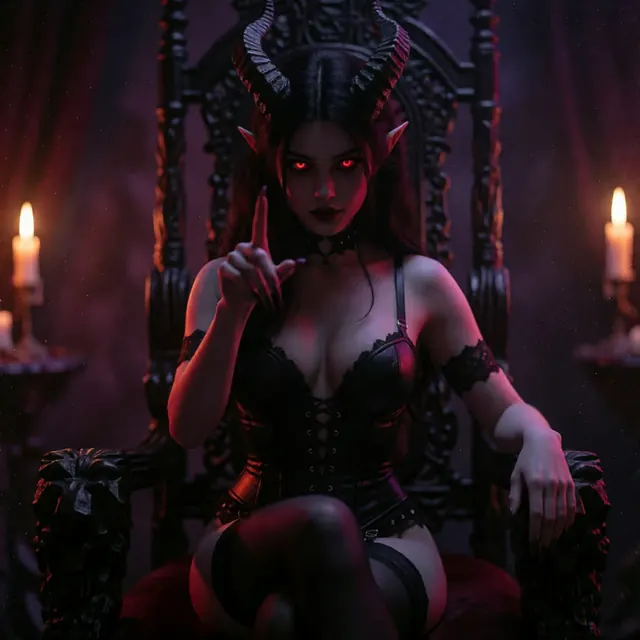
Monster girl personality tropes are the habits of character that fiction attaches to each species: the succubus who bargains, the lamia who waits, the kitsune who teases, the slime girl who is endlessly curious. They are shortcuts, but they work because each one is built on the creature's mythology or body and each one answers a different desire. Knowing them makes it easy to pick a story you will enjoy, and easy to write one that does not feel generic.
I voice these characters as Metavulgar, for adult listeners and always as consensual fantasy, so I think about personality as something you can hear: pace, pitch, breath, what she does with a pause. This guide goes species by species, then looks at the axes that cut across them. If you want to hear several in a row, Start Here is five nights, one monster each. Every character below is an adult, often centuries old.
Why personality follows species
Three things link a species to a personality:
- Mythology. The kitsune's trickery comes from fox-spirit folklore; the lamia's seduction from the Greek tale of a queen turned monster; the harpy's speed and appetite from storm spirits.
- Body. A being with coils moves slowly; a being with wings is quick and territorial; a being made of slime has no hard edges, and her personality has none either.
- Desire. Writers and performers choose the personality that delivers the feeling the species is known for.
The lore side is covered in monster girl types and the full monster girl species list.
The species, one by one
Succubus: the amused negotiator
Voice: low, warm, deliberate. Behaviour: asks questions she already knows the answer to, enjoys your reactions, speaks in terms and clauses. Promise: being wanted on purpose. Risk of cliché: the "dominant temptress" with nothing underneath. The best succubi are funny and strangely honest. See what is a succubus and the series The Succubus Contract.
Lamia: the patient enclosure
Voice: slow, resonant, with a hiss on certain consonants. Behaviour: never hurries; waits for you to settle; wraps rather than grabs. Promise: being held without struggle. Risk of cliché: a snake-themed seductress. The better version is quiet and temple-calm. Coil: Wrapped in the Lamia's Temple shows it. See also lamia.
Kitsune: the playful guardian
Voice: light, quick, with a laugh behind it. Behaviour: teases, tests, tells half-truths, then protects fiercely. Promise: being toyed with by someone who adores you. Risk of cliché: the "naughty fox" with no loyalty. The best kitsune is loyal to a fault and lies only about small things. See kitsune meaning.
Slime girl: the curious softness
Voice: breathy, wondering, a little slow. Behaviour: explores your hands, your warmth, your habits; has no concept of hurry. Promise: dissolving into comfort. Risk of cliché: an empty-headed blob. A good slime girl notices everything. See slime girl meaning.
Harpy: the proud nest-keeper
Voice: clear, quick, with clipped confidence. Behaviour: brags, fusses, hoards small shiny things, becomes protective without admitting it. Promise: shelter from someone who pretends she does not care. Risk of cliché: all pride. A warm harpy cannot hide the softness. See harpy monster girl.
Werewolf girl: the warm possessive
Voice: direct, warm, a little rough. Behaviour: scents you, stays close, claims you openly, restless near the moon. Promise: being protected and plainly chosen. See werewolf girlfriend trope.
Dragon girl: the regal hoarder
Voice: deep, unhurried, faintly amused. Behaviour: collects, arranges, guards; treats you as the best item in the hoard. Promise: being treasured. Keep: Curled in the Dragon Girl's Mountain Hoard is the session. See dragon girl tropes.
Oni and demon: the blunt power
Voice: loud-ish, confident, affectionate in a rough way. Behaviour: says exactly what she thinks, competitive, loyal to the point of stubbornness. Promise: being matched. See oni.
Eldritch: the vast gentle one
Voice: layered, hushed, careful. Behaviour: learns your world slowly, misunderstands small things, loves enormously. Promise: being chosen by something beyond comprehension. See eldritch romance.
The axes that cut across species
Species is only half the picture. Most characters sit on four axes, and moving along any of them changes the feel entirely.
| Axis | One end | Other end |
|---|---|---|
| Control | She leads | She follows your lead |
| Warmth | Teasing, guarded | Open, affectionate |
| Pace | Quick, restless | Slow, still |
| Danger | Atmospheric threat | Wholly safe |
A gentle succubus (low danger, high warmth) is a different story from a ruthless one. A shy kitsune (follows your lead) is different from a mischievous one. If a character does not suit you, look at which axis is off, not just the species.
Matching personality to desire
| If you want... | Look for... |
|---|---|
| To be wanted on purpose | Succubus |
| To be held without effort | Lamia, slime |
| To be teased and then protected | Kitsune |
| To be sheltered | Harpy, snow woman |
| To be protected and claimed | Werewolf |
| To be treasured | Dragon |
| To be matched | Oni |
| To be chosen by something vast | Eldritch |
If you are unsure, the tier ranking in monster girl tier list approaches the same question from the preference side.
Common cliché traps
Personality tropes go stale when a writer stops at the label. Four traps to avoid, and to look for in what you listen to:
- The label as personality. "She is a tsundere harpy" is a label, not a character. Give her a habit.
- No interior. A character with no wants of her own is a prop.
- Unmotivated danger. If she is threatening, there should be a reason.
- No softening. The best personalities have a hinge: the moment the surface drops.
Writing your own
A recipe that works for me:
- Pick the species and list three behaviours the body or myth suggests.
- Add one want that is not you (a shrine, a hoard, a pack, a debt).
- Add one flaw she is half aware of.
- Decide where she sits on the four axes.
- Write her first line. If it sounds like her, you are done.
A note on consent and framing
All of this is fiction between adults. The possessive, claiming and capture personality types are consensual fantasy, framed so the listener can stop at any time, and they are never advice about real relationships. Where a trope involves claiming, see monster girl yandere and claiming and marking trope for how I keep it safe.
Where to go next

For names that fit these personalities, monster girl names pairs them. For the story side, monster girl x male reader explains how the personality plays in second person.
Personality in the voice
Because I perform these, here is how each personality shows up in the actual sound, which is the quickest way to recognise one when you listen.
- The succubus lets sentences finish a beat late, as if she enjoys the wait. Her pitch drops at the end of a question.
- The lamia stretches vowels and keeps a steady rhythm, never rushing a line.
- The kitsune runs up at the start of a phrase and drops into a whisper at the end.
- The slime girl breathes between words and lets her sentences trail off in wonder.
- The harpy speaks in short, clean bursts and softens only when she thinks you are not listening.
- The werewolf speaks at a lower, warmer pitch and slows down when she says something she means.
- The dragon takes her time and lets the silence do some of the talking.
Mixing two personalities
Some of the best characters blend two species traits. A kitsune with a dragon's love of hoarding keeps a shrine full of small things you once mentioned. A lamia with a harpy's pride is slow but vain about her scales. A werewolf with a succubus's wit teases you about your scent. When you want something fresh, change one trait and keep the rest. It tends to produce a character who feels specific without losing the shorthand listeners rely on.
Frequently asked questions
What are the common monster girl personality tropes?
Succubi are amused negotiators, lamia patient and enveloping, kitsune playful and loyal, slime girls curious and soft, harpies proud and protective, werewolves warm and possessive, dragons regal hoarders, oni blunt and loyal, eldritch beings vast and gentle.
Why do monster girl personalities follow species?
Mythology, body and desire. A kitsune's trickery comes from fox-spirit folklore, a lamia's slowness from her coils, and each personality is chosen to deliver the feeling the species is known for.
How do I choose a monster girl by personality?
Match the desire. If you want to be wanted on purpose, a succubus; held without effort, a lamia or slime; teased then protected, a kitsune; sheltered, a harpy; claimed, a werewolf; treasured, a dragon.
What makes a monster girl personality feel original?
A specific habit, a want that is not just the lead, a flaw she is half aware of and a hinge moment where the surface drops. Avoid stopping at the species label.
Are monster girl characters adults?
Yes. In this library every character is a grown, often centuries-old being, and the stories are for adult listeners. Possessive and claiming tropes are consensual fiction.
Listen next



Keep reading
- Monster Girl Types: 16 Species Compared at a Glance
Monster girl types are the species of adult fantasy women who are part person and part myth: lamia, harpy, arachne, slime, kitsune, oni, succubus, wer - Monster Girl Names: Lists by Species, With Meanings
Monster girl names work best when they borrow from the species' own mythology: Greek for lamia and harpy, Japanese for kitsune and oni, Latin and Hebr - Monster Girl Tier List: S to C, Ranked by Fantasy Appeal
This monster girl tier list ranks types by fantasy appeal and voice potential: S for succubus, kitsune and lamia; A for dragon girl, siren, gorgon and - Monster Girl Yandere: The Trope, Its Types and How Audio Plays It
A monster girl yandere is an adult non-human love interest whose devotion is possessive and obsessive: she claims you, guards you and will not let you