Library › Guides › Monster Girls
Monster Girl Types: 16 Species Compared at a Glance
By Metavulgar · updated 2026-11-11 · 6 min read
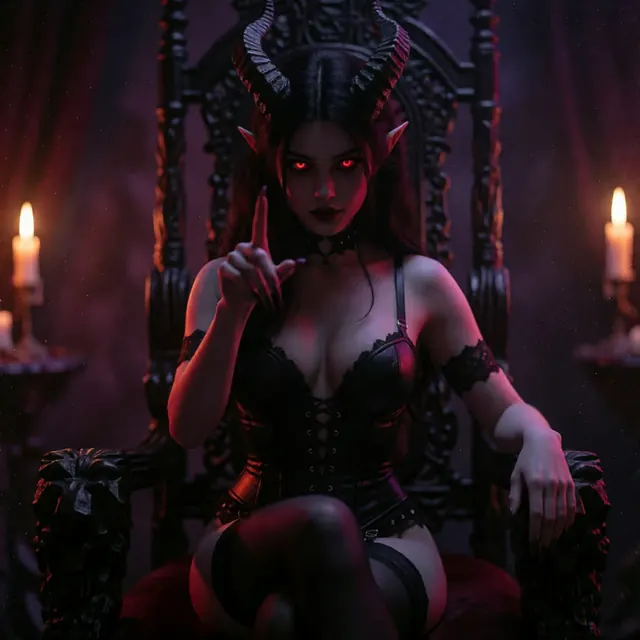
Monster girl types are the families of humanoid fantasy women built from a myth: serpent-bodied lamia, winged harpies, eight-limbed arachne, shapeshifting slimes, nine-tailed kitsune, horned oni and a dozen more. Each type comes with a body plan, a home culture and a stock personality. All are grown, adult beings in my sessions.
Below is the quick comparison table first, then the longer profiles grouped by body plan. If you want the full A to Z with origins, the species list goes deeper, and the opinionated ranking is in the tier list.
The comparison table
| Type | Origin | Body plan | Typical personality |
|---|---|---|---|
| Lamia | Ancient Greek | Woman above, serpent below | Patient, possessive, regal |
| Harpy | Ancient Greek | Wings and talons | Proud, quick, territorial |
| Arachne | Greek (Ovid) | Spider lower body or extra limbs | Perfectionist, patient |
| Slime | Video games | Fluid body | Soft, curious, devoted |
| Kitsune | Japanese | Fox ears, many tails | Playful, clever |
| Oni | Japanese | Horns, strength | Blunt, loyal, hearty |
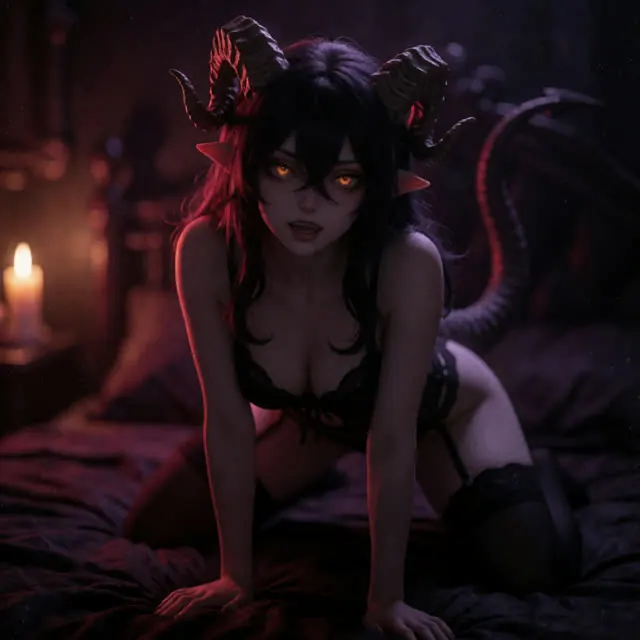
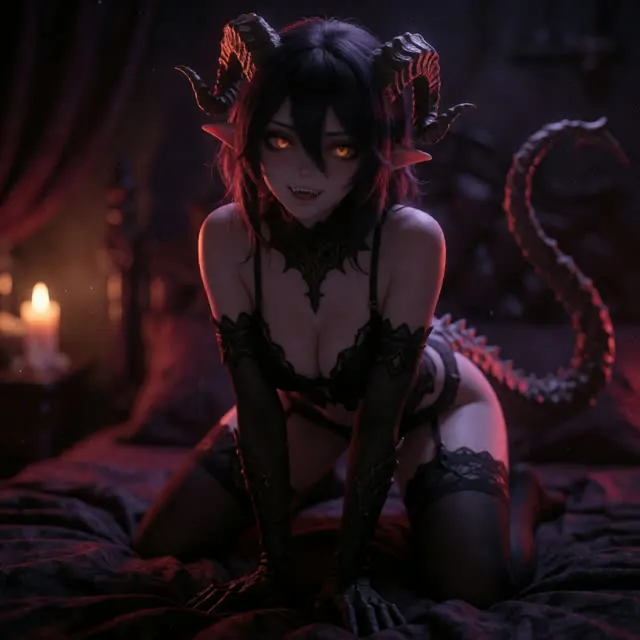
| Succubus | Medieval European | Horns, wings, tail | Teasing, negotiating |
| Werewolf girl | European | Wolf ears, tail, claws | Fierce, loyal, possessive |
| Centaur | Ancient Greek | Horse body below the waist | Proud, athletic, honest |
| Mermaid | Many cultures | Fish tail | Dreamy, curious, moody |
| Siren | Ancient Greek | Songstress | Seductive, patient |
| Gorgon | Ancient Greek | Snake hair, stone gaze | Wry, wary, protective |
| Dragon girl | Worldwide | Scales, horns, tail | Hoarding, vain, fierce |
| Kobold | German folklore, games | Small, scaled, clever | Eager, cunning, funny |
| Dryad | Ancient Greek | Tree and bark | Gentle, rooted, stubborn |
| Eldritch lover | Modern horror | Tentacles, extra eyes | Alien, curious, tender |
Serpent and coil types
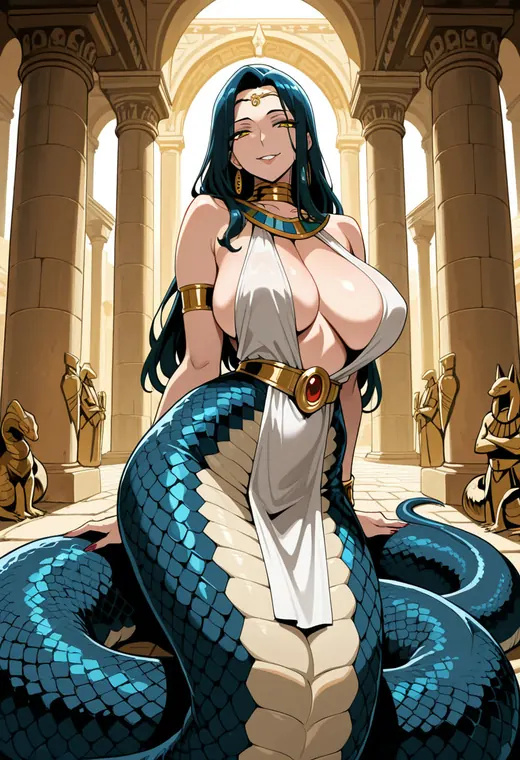
Lamia comes from Greek myth: a queen of Libya in one telling, loved by Zeus and punished by Hera, later remembered as a shape-shifting seductress. In monster girl fiction she became the serpent-bodied lover who wraps, holds and keeps. My lamia and naga guide separates her from the naga, a serpent being from South and Southeast Asian tradition. Hear her in coiled in the lamia's temple.
Gorgon also has snakes, but the gaze, not the coil, is her power. Medusa is the famous one, one of three Gorgon sisters in Greek myth.
Winged and clawed types
Harpy began in Greek myth as winged female storm-spirits who snatched. Early sources disagree on how many there were and what they looked like. Modern harpy girls are proud, fast and fiercely protective of a nest. See the harpy guide.
Siren is Greek too and, in the oldest stories, was winged before she became fish-tailed. The idea survives: a voice that pulls you off your course.
Succubus is the winged, horned seductress of medieval lore. The core definition lives in her own guide.
Many-limbed and weaving types

Arachne is named for a weaver in Ovid's Roman retelling who challenged Athena. In monster girl fiction she carries a spider's lower half or extra arms, and the personality is exact, patient and a bit possessive of her plan. Details in the arachne guide.
Eldritch lovers are a modern horror creation, not folklore: tentacles, too many eyes, and a mind that is more alien than cruel. Their appeal is the strange tenderness.
Fluid and water types
Slime girls are not myth. The slime started as the weakest enemy in an early console role-playing game, was redesigned as a friendly teardrop, and later became a woman-shaped fluid character in fan art and manga. Honest labelling matters, so my slime girl guide calls it a game-born type.
Spirit and demon types

Kitsune is the fox spirit of Japanese folklore, wiser and more magical as she gains tails. The monster girl version is playful and bargaining. Compare the lore in the kitsune entry.
Oni are horned ogres of Japanese folklore, sometimes punishers and sometimes guardians. A friendly, blunt, strong oni woman is a common type.
Succubus and dryad also belong here: one demon of desire, one nymph of the woods in Greek tradition.
Beast-blooded and scaled types
Werewolf girls are humanoid wolf-eared women with a tail and a protective, loyal streak, rooted in European transformation lore.
Centaurs are the Greek horse-bodied people, usually presented as proud and honest.
Dragon girls are scaled, horned and hoarding. They take dragon myths from many cultures and add a very personal hoard: you. The hoard is usually you.
Kobolds come from German household and mine spirits and became small, clever scaled people in games.
Mermaids appear in many cultures, from ancient Near Eastern fish-goddess stories to European folktales. They are moody, curious and very good at pulling you under.
Mood and pacing at a glance
| Type | Pace | Best mood | Weak spot |
|---|---|---|---|
| Lamia | Very slow | Being held, kept | Can feel static if rushed |
| Harpy | Fast | Rivalry, protection | Narrow tonal range |
| Arachne | Deliberate | Slow planning, binding | Little banter |
| Slime | Gentle | Comfort, curiosity | No ancient lore to lean on |
| Kitsune | Playful | Teasing, bargains | Easy to over-write as a trickster |
| Succubus | Measured | Contracts, night visits | None; she is the default |
| Dragon girl | Grand | Hoard, devotion | Vanity can swamp warmth |
| Gorgon | Still | Quiet trust | Physical hook is hard in audio |
The sound of each type
Sound is how I decide whether a type will work in audio, so here is the short list I keep on my desk:
- Lamia: scales over stone, slow breath, a low hum.
- Harpy: wingbeats, wind, a sharp call from far above.
- Arachne: the tick of thread being pulled tight, soft footfalls on many legs.
- Slime: wet, warm, a gentle settling sound.
- Kitsune: shrine bells, paper lanterns, a small laugh behind a sleeve.
- Succubus: a close, low voice and silk moving.
- Dragon girl: coins shifting, deep breathing, stone warmed by a body.
- Gorgon: hissing hair, still air, a very careful silence.
Common mistakes when picking a type
- Choosing by body only. A great body plan with a flat personality gives a flat story. Read the personality column first.
- Mixing too many origins. Three cultures in one character usually means none of them are used well.
- Ignoring the setting. A siren in a kitchen needs a reason to be there; a kitsune at a shrine does not.
- Treating every type as a seductress. A harpy is a rival, a dragon is a keeper, an oni is a companion. Match the role to the type.
- Forgetting she is a person. Every type in this list speaks, laughs and wants something.
Body plan versus personality
A body plan suggests a mood, but it never fixes one. A serpent lower body suggests patience, yet a lamia can be impulsive. Wings suggest pride, yet a harpy can be shy. The best stories pick the expected trait and then contradict it once, near the middle. I do this on purpose: a coil that tightens when she is nervous, a stone gaze that she lowers because she likes you.
Types people confuse
- Lamia and naga: Greek queen turned serpent-bodied seductress versus South and Southeast Asian serpent beings.
- Harpy and siren: the Greek sources overlap, and both began winged before the siren grew a fish tail.
- Kitsune and kumiho: the Japanese fox spirit and the Korean nine-tailed fox, similar silhouettes and different traditions.
- Succubus and vampire: one feeds on desire and bargains, the other on blood and night.
Combining types
Hybrids are common in fan work: a kitsune with a dragon's hoard, a succubus who is also a lamia. Three rules keep them coherent. Keep one dominant origin, borrow one trait from the second, and give the combination a reason in the story. A siren who learned the contract trade from a succubus is a story. A pile of traits with no reason is a costume.
How to choose a type

Pick by the way you want to be handled:
- You want to be held: lamia, slime.
- You want to be teased: kitsune, succubus.
- You want to be protected: harpy, werewolf girl, oni.
- You want to be studied: arachne, eldritch lover.
- You want to be claimed with patience: dragon girl, gorgon.
Where to hear each one
Begin with Start Here, which gives you five different monsters in five nights. After that the Monster Girl Bestiary sorts them by species, and a good single to hear a kitsune is glow, kept by the kitsune.
Frequently asked questions
What are the main monster girl types?
The main types are lamia, harpy, arachne, slime, kitsune, oni, succubus, werewolf girl, centaur, mermaid, siren, gorgon, dragon girl, kobold, dryad and eldritch lover. Each has a myth or game origin, a body plan and a typical personality.
What is the most popular monster girl type?
Succubi and kitsune lead most polls, followed by lamia, slime girls and dragon girls. Succubi are loved for their bargaining and kitsune for their playful magic. Popularity shifts with trends, so check the tier list for my own opinionated order.
Which monster girl types come from real mythology?
Lamia, harpy, siren, gorgon, centaur and dryad come from Greek myth. Kitsune and oni come from Japanese folklore, naga from South and Southeast Asian tradition, succubi from medieval Europe. Slimes and eldritch lovers are modern inventions from games and horror.
What is the difference between a lamia and a naga?
A lamia is a Greek figure, a queen of Libya in one telling who became a serpent-bodied seductress. A naga is a serpent being from South and Southeast Asian religion and folklore. Fiction often merges them, but the origins are different cultures.
Where can I hear different monster girl types?
Start Here gives you five monsters over five nights. The Monster Girl Bestiary lists the full cast by species with a recommended first listen for each type.
Listen next


Keep reading
- What Is a Monster Girl? Meaning, History and Appeal
A monster girl is a humanoid female fantasy character who blends a person with a creature, myth or spirit: a lamia, harpy, slime, kitsune or succubus. - Monster Girl Species List A-Z: Origins and Personalities
This monster girl species list runs A to Z across 34 adult fantasy beings, from arachne to yuki-onna. Each entry gives the origin, whether Greek, Japa - Monster Girl Tier List: S to C, Ranked by Fantasy Appeal
This monster girl tier list ranks types by fantasy appeal and voice potential: S for succubus, kitsune and lamia; A for dragon girl, siren, gorgon and