Library › Guides › Monster Girls
Monster Girl Yandere: The Trope, Its Types and How Audio Plays It
By Metavulgar · updated 2026-11-11 · 6 min read

A monster girl yandere is a fantasy love interest, an adult non-human woman, whose affection is total, possessive and a little frightening. The word yandere comes from Japanese (yanderu, to be sick or unwell, plus dere, lovestruck): a character who is sweet and devoted until she believes you might leave. Combine that with a creature who actually has the claws, coils or powers to keep you, and you get the monster girl yandere.
In real life, possessiveness is a warning sign, not romance. In fiction it is a different thing: a fantasy of being so wanted that you are never alone, performed inside a frame where you chose to listen and can stop whenever you like. I voice this trope as Metavulgar, and this guide explains how it is built, the types you will meet and how I make it work without it turning into something it should not be. If you want a gentler introduction first, Start Here takes you through five monsters in order.
What yandere means in a monster girl
Three traits define the monster girl yandere:
- Singular focus. She wants you and nothing else matters. Her world narrows to your name, your scent, your voice.
- Protectiveness that borders on possession. Anyone who threatens you is a problem she solves. In fiction this stays cartoonishly abstract ("they will not trouble you again").
- Tenderness inside the threat. The dangerous line is almost always followed by something soft. That swing is the draw.
Notice what is missing: cruelty for its own sake. The best versions are devoted, not abusive. She does not want to hurt you; she wants to keep you, feed you, sing to you and sleep with her tail around your leg.
The main types
| Type | Species it fits | How it feels |
|---|---|---|
| The hoarder | Dragon girl, kitsune | You are treasure. She arranges you, adorns you, guards you |
| The coiler | Lamia, naga, spider girl | She wraps you until leaving is a bad idea, with a soothing voice |
| The marker | Werewolf girl | She scents, marks and defends you as hers |
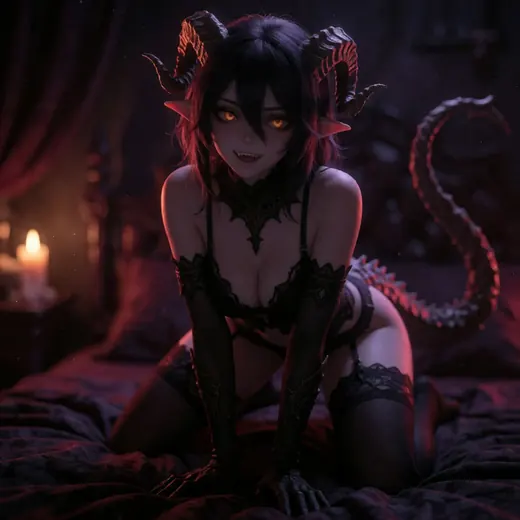
| The bargainer | Succubus | She writes you into a contract; each clause pulls you closer |
| The keeper | Slime, eldritch | She absorbs or surrounds you; there is no outside |
| The shrine-warden | Kitsune, snow woman | She decides you belong to her shrine, and the doors close softly |
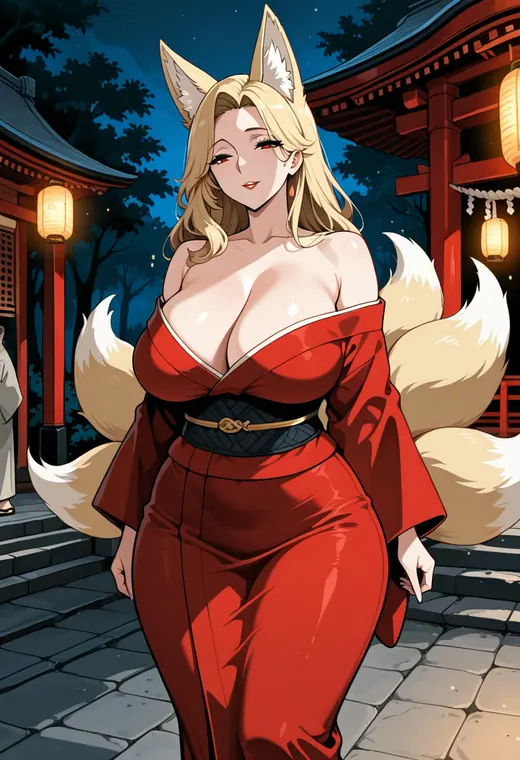
You can hear the hoarder in Keep: Curled in the Dragon Girl's Mountain Hoard, the coiler in Coil: Wrapped in the Lamia's Temple, the bargainer in the series The Succubus Contract and the shrine-warden in Glow: Kept by the Kitsune in Her Lantern Shrine.
Why people enjoy it
- Being chosen without doubt. Most romance involves uncertainty. A yandere removes it: she has decided, and you do not need to audition.
- Safety through intensity. The more she insists on keeping you, the less you have to carry. The decisions are hers.
- Danger without consequences. The tension is theatrical. Nobody is harmed, nobody is actually trapped, and the track ends when you take your headphones off.
- A clear role for the listener. You are the beloved. That is all you have to be.
For why monster partners in particular feel this way, see why are people attracted to monsters.
How audio keeps it consensual
This is the part people ask about. A few craft rules I follow so that the trope stays a fantasy:
- The frame is chosen. The listener picks the scenario, knows the premise from the title and can stop at any time. No surprise intensity.
- No real threat. Dangerous lines are atmosphere ("I would never let anyone else near you"), not instructions or plans.
- No harm, ever. The monster does not injure the lead. Restraint is gentle, warm and often playful.
- A softening beat. Near the end she says something that lowers the tension: a promise, a lullaby, a hush. The track lands on comfort.
- No real-life advice. Nothing in the script suggests this is how to treat or be treated by a person. It is fantasy, flagged as such.
For more on how I handle captive and claiming tropes safely, see cursed and captured tropes and claiming and marking trope.
What it sounds like
A good yandere performance is quiet. She does not shout; she lowers her voice. Typical lines run along the lines of:
- "You went out without telling me. It is all right. You are back now."
- "I counted your steps. You came home by the long way."
- "Sleep. I will keep the door. I always keep the door."
The shift between warm and slightly chilling is carried by tempo and breath. Slow speech, close mic, a held pause. The effect depends on binaural placement, so headphones matter; binaural audio explained covers it.
Yandere vs other possessive tropes
- Claimed by a werewolf: protective and tribal, based on the pack and the mark. Werewolf mate marking covers this.
- Possession by a spirit: a different fantasy, covered in possession fantasy.
- Obsessive succubus: a bargain that deepens; see succubus contract trope.
- Primal play: physical, instinctive, less about devotion; see primal play and monster fantasy.
Writing your own
If you are building a scenario, keep these rules:
- Give her a specific want that is not just possession (a shrine to keep, a long loneliness).
- Let her be wrong sometimes, because a character who is never wrong is not interesting.
- Make the threat theatrical and the care concrete.
- End on aftercare: water, warmth, quiet.
Is this safe to enjoy?

Fantasy is not instruction. Enjoying a possessive monster in an audio story is a long way from wanting a possessive partner, and plenty of people who like the one would run from the other. If a track ever feels uncomfortable, stop. Choosing what to listen to is the consent that holds the whole thing together.
A short script example
To show how the tension sits in the performance, here is a short original passage with stage directions, the kind of thing a yandere scene is built from.
(close to your ear, unhurried) You are home. I counted the hours. It was not many, so do not look like that. I only wanted you to know I counted.
(a soft breath, a coil of fabric or scale moving) Sit. There. I made tea the way you like it, the way you told me once, a long time ago, in passing. I remember everything you say in passing.
(lower, warm) Do not worry about the door. It closes itself in the evening. It is only so the draught stays out. Drink.
(a pause, a small laugh) There. That is the face I was waiting for. Rest your head. I will hum, and you will sleep, and in the morning I will still be here.
Notice what the passage does: the threat ("it closes itself") is small, ambiguous and immediately softened by an ordinary reason. The care is specific (the tea, the remembered remark). The ending is sleep. That ratio, a pinch of unease to a spoonful of tenderness, is the whole craft.
How to tell if a track is right for you

- If the unease is the point and the tenderness feels like relief, the trope suits you.
- If the possessive lines make you tense in a way that does not release, choose the shelter or rescue arcs instead.
- If you like devotion but not tension, pick a protective werewolf or a doting dragon rather than a coiling, whispering lamia.
Preference is the only test. There is no correct level of intensity.
Related reading
For the broader picture of how species map to desire, monster girl personality tropes lists the personalities and what each promises, and dark fantasy romance tropes covers the neighbouring genre.
Frequently asked questions
What does yandere mean?
Yandere is a Japanese-derived fiction term for a character who is sweetly devoted but becomes obsessive and possessive when she fears losing the person she loves. In monster girl fiction, the character is a non-human adult with the powers to match.
Is a yandere monster girl dangerous to the listener?
Not in practice. In audio fiction the danger is atmosphere. The monster never harms the lead; she keeps, guards and soothes. The listener chose the scenario and can stop at any time.
What is the difference between yandere and a possessive werewolf?
A yandere is defined by intense individual obsession. A possessive werewolf is usually about pack, scent and protection. Both claim the lead, but the werewolf version is more physical and the yandere more psychological.
Which monster girls work best as yandere?
Lamia and spider girls (coiling and wrapping), dragon girls (hoarding), kitsune (shrine and fox spirit devotion) and succubi (contract-based claim). Each has a physical or mythic reason to keep the lead close.
Is yandere fiction a healthy fantasy?
It is a fantasy of being wanted completely, played inside a frame you chose. It is not a template for real relationships, where possessiveness is a red flag. Enjoying one does not imply wanting the other.
Listen next




Keep reading
- Monster Girl Romance: Books, Games, Audio and Common Arcs
Monster girl romance is fiction in which a human partner falls for an adult non-human woman: succubus, lamia, kitsune, slime, harpy. It appears in nov - Succubus Contract: The Trope, Its Roots and Story Ideas
A succubus contract is a story device in which a succubus offers a bargain and the human agrees to terms. It borrows from old deal-with-the-devil tale