Library › Guides › Kitsune & Yokai
Kitsune Meaning: Japan's Fox Spirit, Its Tails and Inari
By Metavulgar · updated 2026-11-11 · 6 min read

Kitsune (狐) is the Japanese word for fox. In folklore it names a fox spirit: an intelligent, long-lived being that can take human form, often as a beautiful woman, and who may be a trickster, a guardian or a lover. The word covers both the ordinary creature and the spirit; context tells you which. In fantasy and monster romance, the kitsune is a humanoid fox woman with ears and tails. This guide covers the folklore meaning, tails, Inari, the good and trickster types, and notes on respectful use.
I voice kitsune characters as Metavulgar, for adult listeners, as fantasy. I read the folklore as a storyteller, and mark where sources vary, because the tradition is wide and many popular claims are looser than they sound. If you want to hear the fantasy version, Start Here is five nights, and the shrine side of my work lives in kitsune shrines.
The word and the creature
In Japanese, kitsune simply means fox. Foxes live across Japan, and folklore noticed them: their cleverness, their night habits, their appearance near villages and shrines. Over centuries these observations grew into a body of belief about foxes that live very long, learn magic and take human shape. In everyday speech the word is also used for the spirit.
The fox spirit tradition came to Japan with influence from China, where fox spirits (húli jīng) were already established figures, and Japanese tradition adapted them. Sources I checked agree on this overall picture, though details of dates vary, and many popular summaries are looser than scholarship.
Tails and power
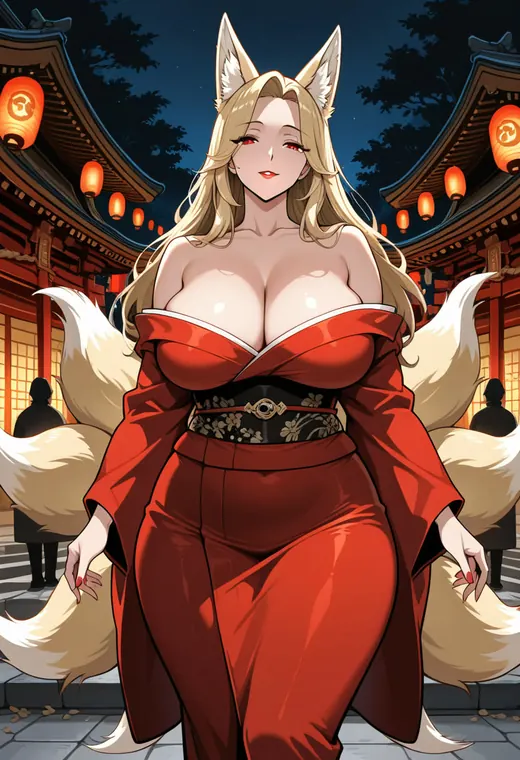
The most famous feature is the tails. In popular accounts a kitsune gains a tail with age and experience, and the maximum is nine. A greater number of tails indicates an older and more powerful fox. Some tellings put a tail at each hundred years; others give no figure, and sources differ. Treat the numbers as folklore, not a rule.
The nine-tailed fox, who has reached the top of the scale, appears in Chinese and Japanese traditions as a great and sometimes dangerous figure. See nine-tailed fox for the full story and kumiho for the Korean cousin.
Shapeshifting
Kitsune are best known for taking human form. In stories, the commonest disguise is a young or beautiful woman, but kitsune can also appear as men, as elders, or as monks. Tales say the disguise can slip: a tail shows beneath a robe, a shadow looks wrong, a dog barks. A familiar pattern is the fox wife story, in which a kitsune marries a human, keeps house for years, until her nature is discovered and she must leave. This is one reason the fantasy fox girl is a romantic figure: the tradition already had her.
Inari and the shrines

Kitsune are closely tied to Inari, a Shinto kami associated with rice, harvest and prosperity (sources describe Inari as variously gendered, and the kami is worshipped in many forms). Foxes are commonly described as Inari's messengers and servants, and Inari shrines are often guarded by pairs of fox statues. The great shrine at Fushimi Inari in Kyoto, with its long avenues of red torii gates, is the most famous. Statues of foxes often hold a key, a jewel or a scroll in the mouth.
A respectful note: the fox statues at Inari shrines are sacred objects of living religious practice. When the figure is used in fantasy, keep that distinction between the shrine as faith and the kitsune as fiction.
Zenko and nogitsune
Folklore sorts kitsune into two broad types:
| Type | Meaning | Behaviour |
|---|---|---|
| Zenko (善狐) | "Good fox" | Benevolent, linked to Inari, protective, brings luck |
| Nogitsune (野狐) | "Field fox" | Wild, mischievous or malicious, deceives people |
The line is not rigid. Many stories show a kitsune who deceives for fun and then protects out of loyalty. This is part of the character's charm in fiction: a trickster with a firm heart. For the question of danger, see are kitsune dangerous.
Foxfire and other signs

Kitsune are associated with kitsune-bi (foxfire), ghostly lights seen at night, sometimes described as flames carried in the mouth or on the tail. They are also said to use jewels (hoshi no tama) that hold their power, and to be fond of fried tofu (aburaage), which is offered at Inari shrines and gives the dish its link to foxes. These details appear often in fantasy because they are colourful and specific.
What kitsune are not
- Not all evil. Many kitsune are guardians.
- Not the same as the Chinese fox spirit. They are related, but the Japanese tradition differs in its link to Inari and its tone.
- Not a single mythology. Regional tales differ, and the popular image owes much to later literature and modern fiction.
- Not real creatures in this library. The kitsune of monster romance is a humanoid fantasy woman, a grown being with fox ears and tails.
Kitsune in modern fiction
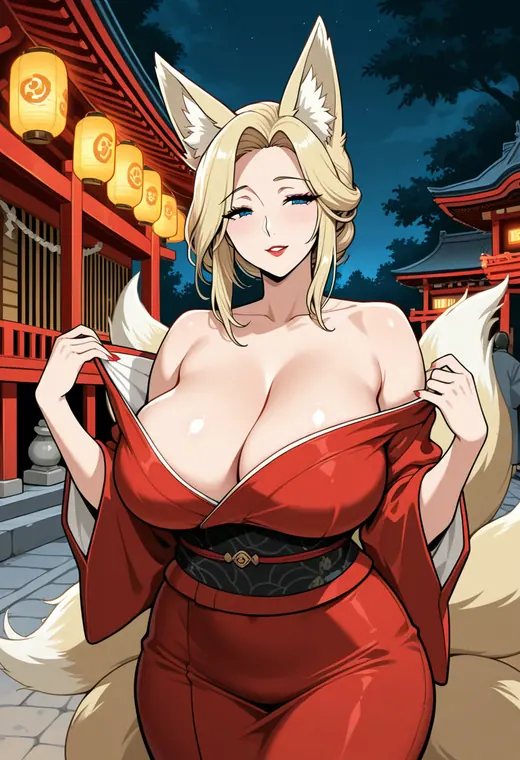
Anime, games, novels and monster romance all use the kitsune. The fox girl of fantasy usually has:
- ears and one to nine tails
- a playful or teasing manner
- fierce loyalty once she decides
- a link to a shrine, lanterns or foxfire
- a long memory and a sense of humour
The fantasy tropes are explored in fox girl tropes. The sound of the character, with bells, tail brushes and teasing laughter, is in kitsune ASMR, and a session with the shrine setting is Glow: Kept by the Kitsune in Her Lantern Shrine. The glossary entry kitsune gives a short definition.
Using the figure respectfully
A few simple practices:
- Name the culture. Kitsune is a Japanese figure; say so.
- Keep shrine and fiction separate. Do not use real shrine rituals as props.
- Use correct terms. Zenko, nogitsune, kitsune-bi and Inari are the real words.
- Do not invent myths as real. Say "in my story" for anything you add.
- Avoid occult instruction. Lore here is for entertainment only.
Common questions
Do all kitsune have nine tails? No. Nine is the maximum, reached by the oldest and most powerful. Most stories use fewer.
Are kitsune always female? No. Both sexes appear in folklore, though the fox-woman is the best-known image.
Is kitsune the same as kumiho? They are cousins: kumiho is the Korean nine-tailed fox, with a more predatory reputation.
What do kitsune eat? Folklore says fried tofu, which is why it is offered at Inari shrines.
Where to go next
For the dangerous side, are kitsune dangerous. For the sound, kitsune ASMR. For the sessions, Nine Tails and the Red Door: The Fox's Shrine.
Reading list in plain terms
If you want to go deeper without a library, a few handles help you search. Look for fox wife tales (kitsune nyōbō), the story of Kuzunoha, the legend of Tamamo-no-Mae (a famous nine-tailed fox), and the Konjaku Monogatari, a collection of tales from the late Heian period that includes fox stories. Museum and shrine sites about Fushimi Inari are also reliable for the religious side. As always, prefer sources that name the culture and give dates over lists that mix several traditions.
Kitsune and the seasons
Foxes in Japan are most visible in autumn and winter, when fields are bare, and this may be one reason folklore ties them to harvest rites and to dusk. Many shrine festivals offer rice, sake and fried tofu to the fox statues at the end of the farming year. Knowing this helps explain why the fantasy kitsune is so often pictured among lanterns, bare trees and cold clear air: the setting comes from the old calendar, not only from modern art.
A final practical note: when you meet the word in a story, check whether it means the spirit, the fox statue or the fantasy fox woman. The three are related but not interchangeable, and the context almost always says which one is meant.
Frequently asked questions
What does kitsune mean?
Kitsune is the Japanese word for fox. In folklore it names a fox spirit that gains power with age, can take human form and may be a trickster, guardian or lover. In fantasy it is a humanoid fox woman with ears and tails.
What do the tails of a kitsune mean?
In popular folklore, tail count signals age and power, up to a maximum of nine. Some tellings give a tail per hundred years, but sources differ, so the numbers are best treated as folklore, not a fixed rule.
What is the connection between kitsune and Inari?
Kitsune are commonly described as the messengers and servants of Inari, a Shinto kami of rice and prosperity. Inari shrines are often guarded by fox statues, and the famous Fushimi Inari shrine in Kyoto is closely linked to them.
What are zenko and nogitsune?
Zenko are benevolent kitsune linked to Inari, and nogitsune are wild, mischievous or malicious field foxes. The line is not rigid, and many stories show a trickster who turns out loyal.
Is a kitsune a real fox?
The word kitsune means fox, but the kitsune of folklore is a spirit that can take human form, and the kitsune in this library is a humanoid fantasy woman, an adult with fox ears and tails.
Listen next



Keep reading
- Kitsune ASMR: Fox Girl Sounds, Scenarios and How to Choose
Kitsune ASMR is adult roleplay audio where a fox girl speaks and plays close to your ears, using tail brushes, bells, teasing laughter and soft whispe