Library › Guides › The Bestiary
Lamia vs Naga: Greek Snake Woman or Sacred Serpent?
By Metavulgar · updated 2026-11-12 · 5 min read
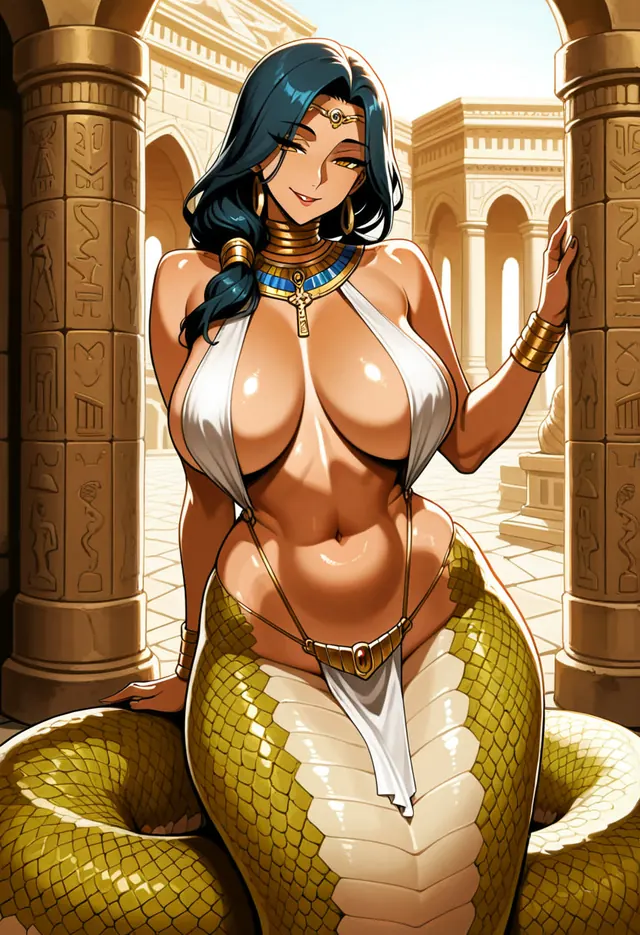
Lamia vs naga comes down to where each one was born. The lamia is Greek: a cursed queen who became a monster, and later a seductive snake woman in poems and paintings. The naga is South and Southeast Asian: a serpent being from Hindu, Buddhist and Jain tradition, often sacred, often a guardian, sometimes a king or queen beneath the waters. Modern fantasy gives both of them a woman's upper body and a serpent's tail, which is why people mix them up. This guide pulls them apart, puts them side by side in a table, and then tells you which one fits which fantasy.
I voice snake women as Metavulgar, for adult listeners, as fiction. Every coil in my library belongs to a grown woman who is centuries old. If you are new here, Start Here is five nights with one monster each, and the lamia has her own night in the monster girl bestiary.
The short answer
- Origin: lamia = ancient Greece; naga = India and the wider Hindu, Buddhist and Jain world (also Nepal, Sri Lanka, Thailand, Cambodia, Laos, Indonesia).
- What she was first: Lamia was one woman, a queen, before she became a type of monster. Nagas were always a race of beings.
- Moral weight: the Greek lamia is a cautionary monster; the naga is respected, sometimes worshipped, and can be good, dangerous or both.
- Body: the oldest Greek sources barely describe Lamia's body; the snake-woman look is later. Nagas are shown as full serpents, as human-headed serpents, or as humans with a hood of cobra heads behind them.
- In monster girl fiction: both become a woman above the waist and a snake below. The lamia keeps the seductress and the hunger; the naga keeps the dignity, the water and the treasure.
Where the lamia comes from

In the Greek story, Lamia was a queen of Libya and a lover of Zeus. Hera, jealous, took her revenge in a way so cruel that grief broke Lamia's mind, and she turned into a monster of the night. Ancient writers disagree on almost everything after that, which is normal for a figure who lived mostly in spoken tales. What stays constant is that she became a name to fear, a bogey told about at night.
Two later threads matter for fantasy:
- The plural lamiai. Over time "lamia" stopped being one woman and became a kind of creature, grouped with other seducing spirits that drained young men. That is where the hunger trope comes from.
- The snake-woman image. The serpent body is not clearly in the earliest myth. It grows stronger in later writing and art, and Keats' poem Lamia (1820) cements it: a serpent who becomes a beautiful woman to love a young man in Corinth, until a philosopher sees through her.
So the modern lamia is a blend: a tragic Greek queen, a seducing night spirit, and a Romantic poet's shimmering snake. For the creature in full, see lamia.
Where the naga comes from
The word nāga is Sanskrit for serpent, usually the cobra. In Hindu tradition nagas are a race of semi-divine serpent beings who live in an underworld realm often called Patala, full of jewels and palaces. The female is a nagini (also nagin). They are linked with water, rain, rivers and wells, with fertility, and with guarding treasure.
A few famous ones show the range:
| Naga | Tradition | Known for |
|---|---|---|
| Shesha (Ananta) | Hindu | the cosmic serpent Vishnu rests on |
| Vasuki | Hindu | used as the rope in the churning of the ocean |
| Manasa | Hindu, Bengal | goddess of snakes, worshipped for protection |
| Mucalinda | Buddhist | sheltered the meditating Buddha from a storm with his hood |
| Ulupi | Mahabharata | a nagini princess who married the hero Arjuna |
Nagas are not simply good. They can punish, poison and hold grudges, but they are treated with respect, not as vermin. In Southeast Asia you see them as balustrades on temple stairways, guarding the way in.
Lamia vs naga side by side
| Lamia | Naga / nagini | |
|---|---|---|
| Culture | Greek | Hindu, Buddhist, Jain; South and Southeast Asia |
| First form | one woman, a queen | a whole race of beings |
| Body | later art: woman above, serpent below | serpent, human-headed serpent, or human with a cobra hood |
| Home | caves, ruins, the night | underwater and underground palaces, rivers, lakes |
| Powers | seduction, illusion, draining the young | water and rain, venom, shapeshifting, guarding treasure |
| Weakness | being seen for what she is (Keats) | Garuda, the great bird and their sworn enemy |
| Temperament | wounded, hungry, deceptive | proud, protective, dangerous when wronged |
| Sacred? | no | yes, in many places still honoured |
| In fantasy | the seductress who coils around you | the serpent queen in her jewelled palace |
One more pairing confuses people: gorgons. Medusa and her sisters have snakes for hair, not for legs, and their power is the gaze that turns to stone. If that is the look you mean, read about the gorgon instead, or hear one in Stone: Held Still in the Gorgon's Garden.
The monster girl versions
In modern monster girl fiction and art, both names often point at the same body: a woman to the hips, a long snake tail after that, sometimes scales on the arms and cheeks, slit pupils, a forked tongue. Writers then lean on the old stories for personality:
- Lamia girls are jealous, clingy, hungry, and very good at wrapping. Their love is a squeeze. Hypnotic eyes are borrowed from cartoon snakes, and they suit her well, see snake hypnosis.
- Naga girls read as royalty: calm, proud, rich, hard to impress, generous once you earn it. Water scenes, temples and treasure rooms are their natural settings.
A useful writer's rule: if the scene is about temptation, it is a lamia; if it is about devotion and rank, it is a naga. For the broader cast, see monster girl types and the full monster girl species list.
Which one suits your fantasy
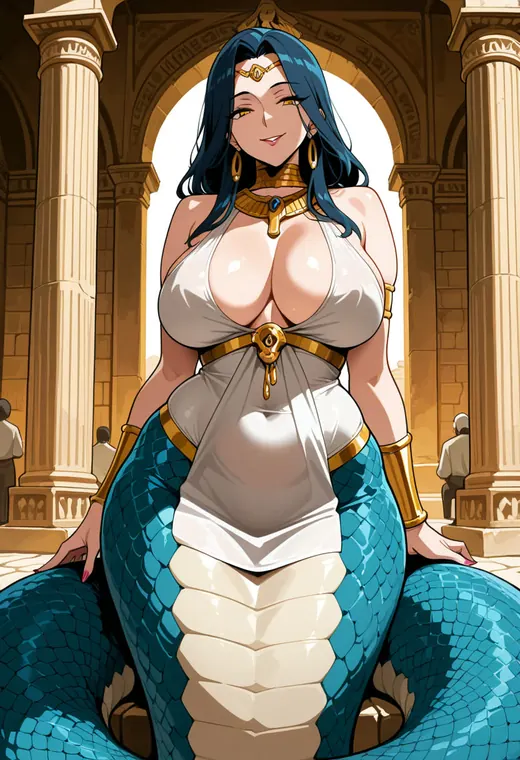
Ask yourself what you want from the coils.
- You want to be wanted, almost too much. Lamia. She notices you first, follows you home and refuses to let go. Try Coil: Wrapped in the Lamia's Temple.
- You want to be held slowly and completely. Either, but the lamia does it with hunger and the naga with ceremony. The Lamia's Coil: Wrapped and Kept is the tighter one.
- You want to serve someone above you. Naga queen. Kneeling in a drowned temple is her whole scene.
- You want to be hypnotised. Lamia, with the swaying head and the fixed stare.
- You want a gentle monster. Naga. She can be stern, but she protects what is hers.
Whatever you pick, it is fiction between adults: the squeeze stops the moment you say so, and that is part of why it feels safe to fall into.
Common mix-ups
- "Naga is the male lamia." No. Naga is a separate tradition; the female naga is a nagini.
- "Lamia always had a snake tail." Not in the oldest sources. The tail is a later, mostly literary and artistic addition.
- "Nagas are demons." In their own traditions they are semi-divine, often revered.
- "Echidna is a lamia." Echidna is a different Greek figure, the half-woman, half-serpent mother of monsters, though fantasy art often draws them alike.
- Game rules are not myth. Tabletop and video games give both creatures stat blocks and powers that have nothing to do with the old stories. Enjoy them as their own canon.
If you came here for the romance side, why people are attracted to monsters and monster girl romance go further.
Frequently asked questions
Is a lamia the same as a naga?
No. A lamia comes from Greek myth, a cursed queen who became a night monster and later a snake-bodied seductress. A naga comes from Hindu, Buddhist and Jain tradition, a semi-divine serpent being often linked with water and treasure. Modern fantasy draws them alike, but their stories differ.
What is a female naga called?
A female naga is a nagini, sometimes written nagin. Famous naginis include Ulupi, the serpent princess who married Arjuna in the Mahabharata. In monster girl fiction the word naga is often used for both sexes.
Did the original Lamia have a snake tail?
The earliest Greek sources say little about her body. The snake-woman image grew in later writing and art, and Keats' 1820 poem Lamia made it famous. Treat the tail as part of her later legend rather than the oldest myth.
What is the weakness of a naga?
In Hindu and Buddhist stories the great enemy of the nagas is Garuda, the giant bird mount of Vishnu, who hunts serpents. Nagas can also be calmed with respect and offerings. Game weaknesses are invented for each game.
Is a lamia a gorgon?
No. Gorgons like Medusa have snakes for hair and a gaze that turns people to stone. A lamia has a serpent body in later art. Fantasy sometimes mixes the two, but in Greek myth they are separate figures.
Listen next



Keep reading
- Monster Girl Types: 16 Species Compared at a Glance
Monster girl types are the species of adult fantasy women who are part person and part myth: lamia, harpy, arachne, slime, kitsune, oni, succubus, wer - Lamia vs Gorgon: Myth, Differences and Monster Girl Use
A lamia is one Greek monster, a queen turned predator, later a snake-bodied seductress in fiction. Gorgons are three sisters, Stheno, Euryale and Medu