Library › Guides › The Bestiary
Lamia vs Gorgon: Myth, Differences and Monster Girl Use
By Metavulgar · updated 2026-11-12 · 6 min read
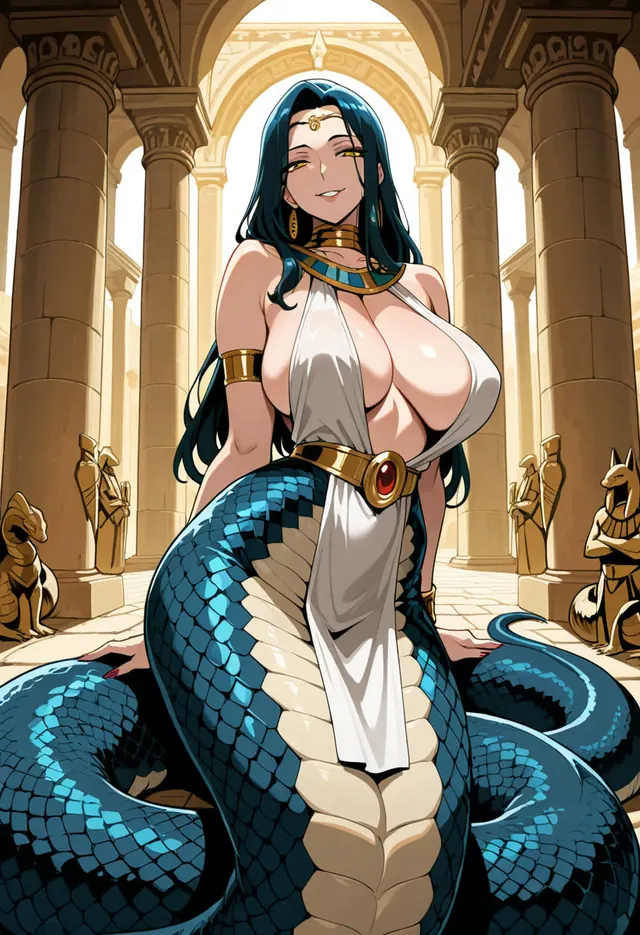
Lamia vs gorgon is a question that comes up because both are Greek, both are female, both are tied to snakes and both appear in monster girl fiction. They are not the same creature and never were. A lamia is a single figure of Greek myth who grows into a type, a seductress and predator. The gorgons are three sisters (Stheno, Euryale and Medusa) known for snake hair and a stone-making gaze. Below is the myth first, then the modern monster girl, then which one suits which fantasy.
The short version
| Lamia | Gorgon | |
|---|---|---|
| Number | One queen, later a type ("lamiae") | Three sisters |
| Greek source | Late classical and Hellenistic tales | Hesiod, 7th century BC, and earlier art |
| Origin | A Libyan queen loved by Zeus, driven to monstrosity by grief | Daughters of sea gods Phorcys and Ceto |
| Body (myth) | Woman, sometimes with a serpent's lower body in later art | Woman with snake hair, tusks, wings and a protruding tongue |
| Power | Seduction, shape-shifting, preying on the young of others | Petrifying gaze |
| Weakness | Exposed by clear sight; in Keats's poem, by a philosopher's look | A mirror or polished shield; beheading in Medusa's case |
| Mortality | Not clear | Stheno and Euryale immortal; Medusa mortal |
| Modern monster girl | Snake lower body, patient, possessive | Snake hair, gentle or fearsome, hidden eyes |
The lamia in myth
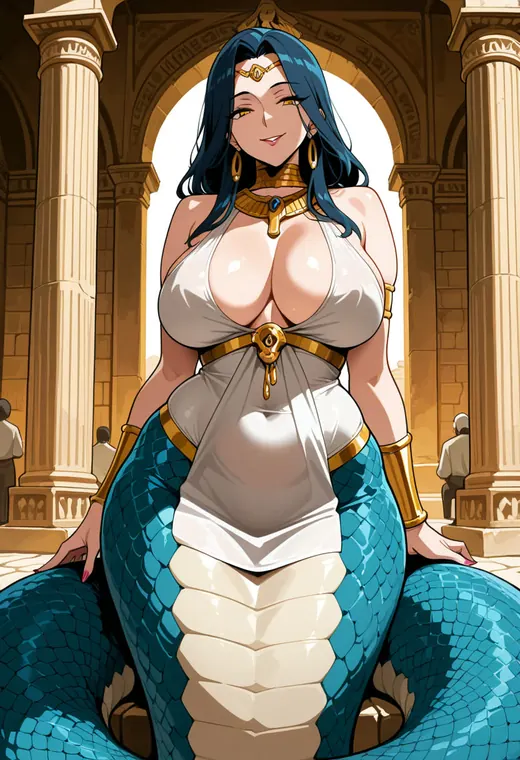
Lamia's story is thin and contradictory, which is one reason she has been reinvented so many times. The commonest version makes her a queen of Libya who had an affair with Zeus. Hera, Zeus's wife, took revenge, and Lamia was driven by grief and rage into becoming a monster who preyed on other women's offspring. In popular belief she became a bogey: a figure used to frighten, a female demon who could change shape.
Later writers made lamiae a class of creature, beautiful women who lured young men and drained them. The best-known literary version is John Keats's poem Lamia (1819), in which a snake woman takes the form of a lovely woman and wins the love of a young man named Lycius; at their wedding the philosopher Apollonius sees through her and she vanishes. That poem is the hinge from myth to the modern seductress.
The gorgons in myth
The gorgons are older and more fixed. In Hesiod's Theogony there are three: Stheno, Euryale and Medusa, daughters of Phorcys and Ceto. Only Medusa is mortal, and Perseus kills her with the help of Athena and Hermes, using a polished shield to avoid her gaze. From her severed neck spring Pegasus and Chrysaor.
The gorgon image is also earlier than any story, appearing in Greek art as the gorgoneion, a fierce face with tusks, wide eyes and a protruding tongue, carved on shields, temples and doors to ward off harm. It was a protective sign. See gorgon names and gorgon meaning and lore for the longer account.
Where they overlap and where they split
Both are female monsters of Greek tradition. Both are connected to snakes, though the snake means something different in each case. Some scholars note that gorgon imagery has parallels with the Mesopotamian demon Lamashtu, who seems also to have influenced the Greek lamia. In modern fiction the two are often blended: a snake-bodied woman with a gaze, which is why many online pages treat them as one.
Body: the difference you can see
- Lamia (modern): a woman from the waist up with the lower body of a snake. This is largely a later and modern image. It overlaps with the naga of Indian tradition; see lamia vs naga.
- Gorgon (myth): a woman or monstrous face with snakes for hair. In Greek art she is winged and often has a beard or tusks. In modern fiction she is usually softened, with snake hair on an otherwise human body.
A quick test: if the snake is below the waist, it is a lamia; if the snakes are on the head, it is a gorgon.
Powers and weaknesses
#### Lamia Seduction and shape-shifting are the main powers. In fiction she is a constrictor, a hypnotist and a hoarder of attention. Her weakness is being seen clearly: the lamia thrives on illusion.
#### Gorgon The gaze is the power, and everything else follows from it. The weakness is reflected sight, which is why Perseus carries a polished shield. In modern fiction gorgons often wear blindfolds or glasses, and the story turns on whether she dares take them off.
Temperament in modern fiction
A lamia is patient, possessive and warm. She wraps, she keeps, she speaks in a low, slow voice. The fantasy is being held and chosen. A gorgon is proud, lonely and exact. She hides her eyes, collects her visitors as statues and speaks with the weary precision of someone who has outlived everyone. The fantasy is being seen by the one person who is afraid to look at you.
Lamia and gorgon in the stories people actually read
Most readers meet the lamia first through poems and fantasy novels and the gorgon through the Perseus myth, and the two images pull the creatures apart. The lamia is a figure of desire: beautiful, patient, a little tragic, a woman who is more than she seems. The gorgon is a figure of fear turned to fascination: a gaze that is itself the story. When modern fiction turns either into a monster girl, it keeps that split. The lamia is written to come close; the gorgon is written to keep her distance, and the plot is the distance closing.
That is also why the two work so differently in audio. A lamia's voice moves toward you, and a gorgon's voice waits. If you want more of the lore behind the lamia alone, lamia meaning has the term, and the lamia vs naga page sorts out the Indian cousin.
Creature checklist: how to tell them apart in one minute
- Where is the snake? Hair means gorgon; tail means lamia (or naga).
- What is the threat? A look means gorgon; a touch or a promise means lamia.
- How many are there? Three means gorgons; one means lamia.
- What is the origin? Sea gods and the edge of the world mean gorgon; a queen and a god's jealous wife mean lamia.
- What is the ending? A hero and a shield mean gorgon; a philosopher and a broken illusion mean lamia.
Which one suits which fantasy
- You want to be held and kept: a lamia. Coils, warmth, a slow voice.
- You want to be watched: a gorgon. Silence, stillness, a gaze that pins.
- You want a trickster: a lamia, who is closer to a seducer than a guardian.
- You want a guardian or a tragic figure: a gorgon, with her protective-symbol history.
- You want an intellectual duel: a gorgon again; the stone garden is a good setting for a conversation.
Hear the difference
In my sessions the two are very different voices. The lamia's temple is slow and wrapped, a voice that circles; the lamia's coil session is the longer take. The gorgon's garden is still, spare and exact. Both are adult beings, centuries old, and both are fiction in the consent frame of the library. If you are new, start with the Start Here course, where a lamia is the third night. For more of the family, see lamia names, gorgon vs Medusa, and the monster girl species list.
Whichever you choose, keep the myth honest in your notes and the fantasy free in the telling. A reader or listener will forgive an invented power; they will not forgive being told it is the original.
Common mix-ups
- "Medusa is a lamia." No. She is a gorgon, though some modern works blur it.
- "Lamias have snake hair." In myth no. Snake hair is the gorgon's.
- "Gorgons have snake tails." In myth no. They are winged women with snake hair, and sometimes a boar's tusks.
- "A lamia is a naga." The two are often combined, but the lamia is Greek and the naga is from South Asian traditions.
- "They are both just snake girls." They overlap in fiction, not in myth. Treat them as two different tools.
Frequently asked questions
What is the difference between a lamia and a gorgon?
A lamia is a single Greek figure, a queen turned predator, later a snake-bodied seductress. Gorgons are three sisters, Stheno, Euryale and Medusa, with snake hair and a petrifying gaze. The lamia is defined by seduction, the gorgon by her gaze.
Is Medusa a lamia or a gorgon?
Medusa is a gorgon, one of the three sisters, and the only mortal one. Some modern fiction blends gorgons and lamias, but in Greek myth they are separate.
Do lamias have snake hair?
No. In myth lamias are not defined by snake hair. In modern fiction the lamia has a snake lower body, while snake hair belongs to the gorgon.
Which is stronger, a lamia or a gorgon?
It depends on the story. The gorgon gaze is absolute but defeated by reflection; a lamia relies on seduction, illusion and constriction. Neither has a fixed power rating in myth.
Where does the lamia come from?
Greek tradition describes Lamia as a Libyan queen loved by Zeus whose offspring Hera destroyed, driving her to monstrosity. Later writers, including Keats, made lamiae a class of seductresses.
Listen next



Keep reading
- Lamia vs Naga: Greek Snake Woman or Sacred Serpent?
A lamia comes from Greek myth: Lamia was a Libyan queen whom Hera's jealousy turned into a feared night monster, later painted as a snake-bodied seduc - Gorgon Names: 80 Greek Names From Myth, With Meanings
The three Gorgons of Greek myth are Stheno ("strength"), Euryale ("far-springer") and Medusa ("guardian" or "ruler"). Beyond them sit their family and