Library › Guides › The Bestiary
Gorgon Meaning and Lore: Origin, Powers, Weakness, Types
By Metavulgar · updated 2026-11-13 · 5 min read

Gorgon meaning: in Greek myth a gorgon is one of three monstrous sisters, Stheno, Euryale and Medusa, daughters of the sea gods Phorcys and Ceto in Hesiod's Theogony. They have snakes for hair, a face that fixes the eye, and a gaze that turns living things to stone. The word is also used for the creature type and for the carved face called the gorgoneion. Below is the origin of the word, the powers and weaknesses the sources actually give, the types, and how the monster-girl version keeps the stillness and drops the horror.
Where the word comes from
The etymology of Gorgon is uncertain. A popular explanation links it to Greek gorgos, "grim, fierce, terrible". Reference works are more careful: the word may be Indo-European, possibly related to a root for a rumbling or growling sound, and one scholar suggests an imitation of a growl. If a source states one origin firmly, treat it as a theory. The sisters' names are clearer: Stheno is linked to sthenos, "strength", and Euryale is usually read as "far-roaming" or "wide-leaping". Medusa is related to a Greek verb meaning "to guard or rule", which is why her name is read as "guardian" or "protectress".
The origin story
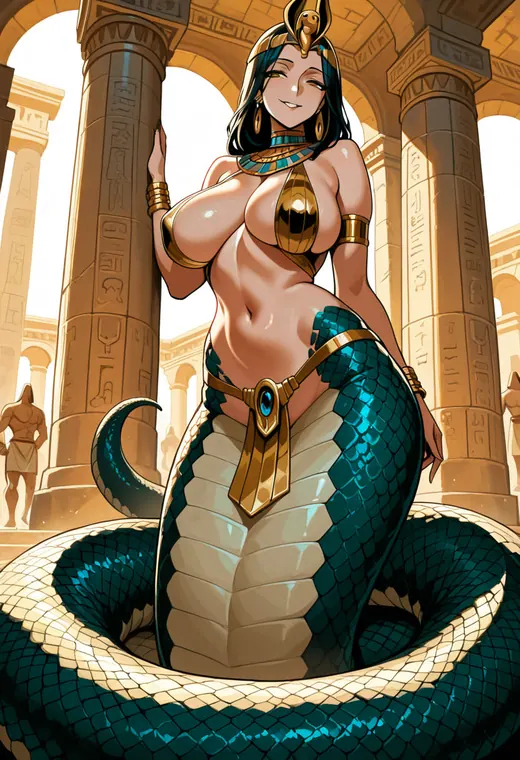
Hesiod, writing around the 8th to 7th century BC, says the gorgons live beyond the western ocean, near the Hesperides and the edge of night. They are monsters from birth, and only Medusa is mortal. Perseus kills her with help from Athena and Hermes, and from her neck spring Pegasus and Chrysaor. The later Roman version by Ovid adds that Medusa was once a beautiful woman cursed by Athena after Poseidon violated her in the goddess's temple. For the difference between the species and the individual, see Gorgon vs Medusa, which covers the Hesiod versus Ovid split in detail.
What a gorgon looks like
Greek writers describe more than snakes. Early art and later writers give the gorgons:
- A broad, round, staring face, often with a lolling tongue.
- Tusks like a boar's.
- Snakes for hair or around the head and waist.
- Bronze hands and golden wings, in the version summarised by Apollodorus.
Over time artists softened the face. By the Hellenistic period the gorgon could look beautiful and mournful, which is the root of the modern sympathetic Medusa.
Powers
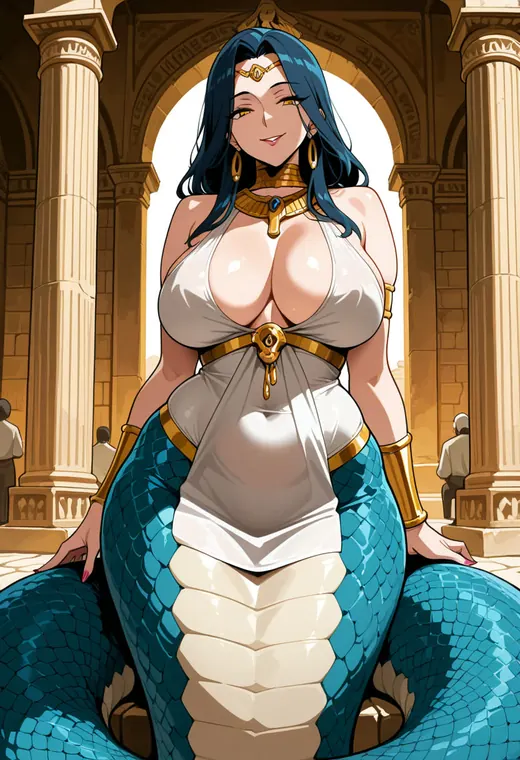
- The petrifying gaze. The defining power. Meeting her eyes turns the viewer to stone.
- Snake hair. Living serpents, venomous in many tellings.
- Flight. Wings in the classic description.
- Strength. Stheno's name is a clue.
- Protective power. The gorgoneion was a protective image on shields, temple fronts, doors and Athena's aegis. The face itself repelled harm. Even in death Medusa's head remained a weapon.
- Blood. In some accounts blood from her left and right sides had opposite effects, one dealing death, the other healing, which Asclepius is said to have used.
Weaknesses
- Reflection. Perseus used a polished shield as a mirror so he never met her gaze directly. The reflection trick is the most famous gorgon weakness.
- Blindness or a blindfold. Not looking is the practical counter, and modern fiction gives its gorgons veils or visors.
- Divine help. The myth shows no mortal beating a gorgon without gods.
- Mortality of Medusa only. Stheno and Euryale are immortal, so they have no "weakness" in the sources.
Types of gorgon
| Type | Source | Notes |
|---|---|---|
| Stheno and Euryale | Hesiod | Immortal sisters, rarely given a story |
| Medusa | Hesiod, Ovid | The only mortal; monster or cursed woman |
| Gorgoneion | Greek art and cult | The face as a protective symbol |
| Modern gorgon | Fantasy, games | Any snake-haired woman with a petrifying gaze |
The gorgon in art, cult and language
The gorgon was not only a story. She was an image people lived with. The gorgoneion, the face with wide eyes and bared teeth, appears on temple pediments, on the centre of shields, on the floors of baths, on cups and on the aegis of Athena. Its job was apotropaic: to turn away harm by being more frightening than whatever approached. Greek towns put it over doors the way other cultures hang charms.
This is a good point to remember when writing a gorgon character. The very thing that makes her dangerous also makes her a guardian. She doesn't have to be a villain; the archetype is the monster who protects.
The word in everyday language
English kept the word for any frightening, stern woman, and gorgonize means to petrify or to stare someone into stillness. The adjective gorgonian describes a stare that freezes. These are not folklore facts; they are what the myth did to the language.
Related snake figures
The gorgon is often confused with other snake-women. Lamia comes from a different myth, a queen turned into a man-eating monster, later a seductive serpent woman; Echidna is the "mother of monsters", half woman and half snake, and the mother of many creatures including Cerberus; Scylla has serpent-headed dogs around her waist. The gorgon's snakes are in her hair, not her lower body. When someone describes a woman with a serpent tail and a petrifying gaze, they have combined two figures, and it is fine in fiction as long as you know you are mixing.
The adult monster-girl version
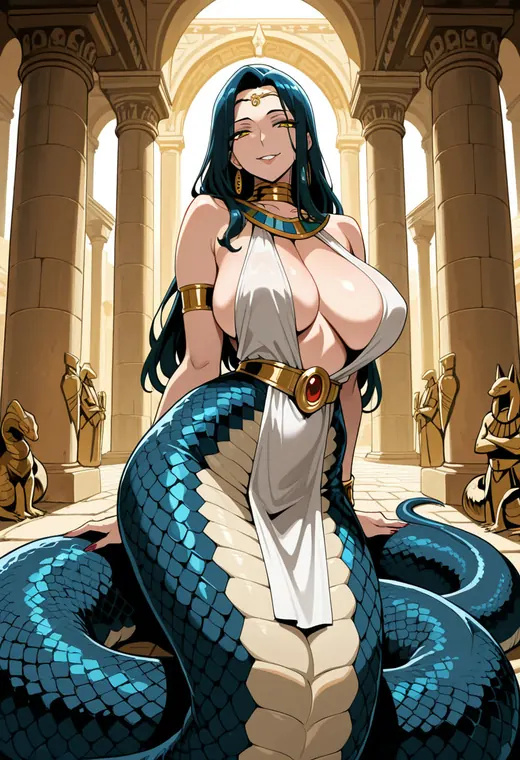
In fantasy the gorgon is a grown, centuries-old woman of calm and control. She wears a veil or blindfold, lives in a garden of statues and speaks in a low, steady voice. The danger of the gaze becomes a dynamic of stillness and care: she can hold you perfectly still, but only if you want to be held. (It is fiction; the listener decides what happens and when.) The hair makes her an immediate visual signature, and the stone motif lets a session play with heaviness, calm and slow breathing in a way few other creatures do.
She is often confused with other snake-bodied monsters. The separate guide on lamia vs gorgon draws that line, and lamia vs naga covers the rest of the snake family. For names, gorgon names. For a character-first approach, gorgon x reader.
Listen
Stone: Held Still in the Gorgon's Garden is the direct session: the garden, the veil, the slow stillness. For a softer snake, Coil: Wrapped in the Lamia's Temple swaps stone for warmth. If you are new, Start Here is the gentle five-night route, and the monster girl bestiary collects the species in one place.
Frequently asked questions
What does gorgon mean?
A gorgon is a monster of Greek myth, one of three sisters (Stheno, Euryale, Medusa) with snake hair and a gaze that turns people to stone. The word's own origin is uncertain; it is often linked to Greek gorgos, "fierce".
What are a gorgon's powers?
A petrifying gaze, living-snake hair, wings and strength in the classic description, plus a protective power: the gorgoneion image guarded shields and temples. Medusa's blood is said in some accounts to both heal and kill.
What is a gorgon's weakness?
Reflection. Perseus used a polished shield as a mirror to avoid meeting her gaze, then beheaded Medusa. Only Medusa is mortal; her sisters Stheno and Euryale are immortal.
Is Medusa the only gorgon?
No. There are three: Stheno, Euryale and Medusa. Medusa is the one in the Perseus myth and the only mortal. The word gorgon also names the species and the carved gorgoneion face.
Is a gorgon a monster girl?
In modern fantasy, yes: a gorgon girl is an adult woman with snake hair and a petrifying gaze, often veiled. The classical gorgons are monsters; the monster-girl version borrows their imagery.
Listen next


Keep reading
- Gorgon vs Medusa: The Difference, Explained With the Myth
Gorgon is the species and family; Medusa is the individual. Greek myth has three gorgons, Stheno, Euryale and Medusa, and Medusa is the only mortal on - Gorgon Names: 80 Greek Names From Myth, With Meanings
The three Gorgons of Greek myth are Stheno ("strength"), Euryale ("far-springer") and Medusa ("guardian" or "ruler"). Beyond them sit their family and - Lamia vs Gorgon: Myth, Differences and Monster Girl Use
A lamia is one Greek monster, a queen turned predator, later a snake-bodied seductress in fiction. Gorgons are three sisters, Stheno, Euryale and Medu - Lamia vs Naga: Greek Snake Woman or Sacred Serpent?
A lamia comes from Greek myth: Lamia was a Libyan queen whom Hera's jealousy turned into a feared night monster, later painted as a snake-bodied seduc