Library › Guides › Lists & Ideas
Gorgon Names: 80 Greek Names From Myth, With Meanings
By Metavulgar · updated 2026-11-12 · 6 min read
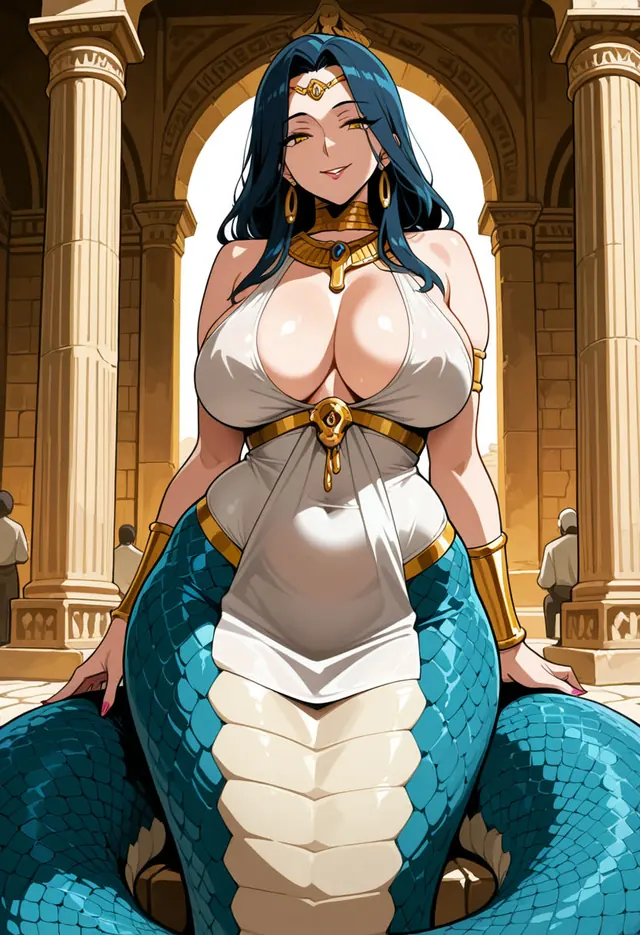
Gorgon names start with a short list of three. In Hesiod's Theogony the Gorgons are Stheno, Euryale and Medusa, daughters of the sea gods Phorcys and Ceto, and only Medusa is mortal. Everything after that is family, Greek vocabulary or invention, and most name lists on the web blur the three. This page keeps them apart: myth (attested in Greek sources), Greek word (a real word that works as a name, not a mythic figure) and invented (mine).
The three Gorgons
- Stheno: usually glossed "strength" or "mighty". Immortal.
- Euryale: "wide-leaping" or "far-springing". Immortal.
- Medusa: the meaning is less settled. Sources propose "ruler", "queen", "guardian" or "protectress", from the same root as the Greek verb for ruling or protecting. Mortal, and the one Perseus beheaded.
- Gorgon / Gorgo: the family name, tied to gorgos, "fierce, terrible, grim". Gorgo is also a real Greek given name, borne by a Spartan queen.
Treat the etymologies as interpretations. Even Medusa's own name has competing readings, which makes it fun for a character: she can be "guardian" in one telling and "queen" in another.
Family and companions from myth

- Phorcys: sea god, father of the Gorgons. Often given as "old man of the sea".
- Ceto (Keto): their mother, a sea monster; the name relates to the Greek for sea creature.
- Graeae: the "grey sisters". Names given for them include Deino ("dread"), Enyo ("war-like") and Pemphredo.
- Echidna: monster mother of many beasts, sometimes counted a sister.
- Scylla: sea monster of the strait, sometimes counted a sister by later writers.
- Pegasus and Chrysaor: born from Medusa's neck at her death.
- Gorgophone: name of a daughter of Perseus, often read "Gorgon-slayer".
- Perseis: associated with Perseus, as a feminine form.
- Athena: the goddess who wears the Gorgon's face on her aegis.
- Cisthene: the island home of the Gorgons in Hesiod's and Aeschylus's tellings.
- Sarpedon: a rock or cape associated with the Gorgons in some accounts.
Greek words that make strong gorgon names
None of these are mythic characters. They are real Greek words, so each name means something you can state.
- Ophis: "snake".
- Echis: "viper".
- Drakaina: "she-serpent, she-dragon", the feminine of drakon.
- Lithos / Lithia: "stone" / "of stone".
- Petra: "rock".
- Adamantia: "unbreakable".
- Phobe: "fear".
- Deima: "terror".
- Gorgopis: "gorgon-eyed", an epithet used for Athena in Homer.
- Glaukopis: "bright-eyed", another Homeric epithet.
- Aspis: "shield" or "asp".
- Hydra: "water-snake".
- Kerata: "horns", for a horned gorgon.
- Sphinga: from sphingein, "to bind tight".
- Moira: "fate, share".
- Nemesis: "retribution".
- Eris: "strife".
- Alke: "might, prowess".
- Kratos: "power".
- Thelxis: "enchantment".
- Iris: "rainbow"; used here for a gorgon with shimmering scales.
- Selene: "moon", for a gorgon who is only awake at night.
- Nyx: "night".
- Ananke: "necessity".
- Daphne: "laurel"; a nymph who ran from a god, and a good name for a gorgon with a garden.
- Kallisto: "most beautiful".
Names by character
The queen
Medusa, Kratos, Alke, Adamantia, Stheno. These sound like someone who is obeyed.
The recluse in the garden
Daphne, Petra, Lithia, Cisthene, Selene. A gorgon who has had centuries to learn how to grow things.
The predator
Drakaina, Echis, Ophis, Aspis, Phobe. Hissing sounds, short and fast.
The oracle
Moira, Ananke, Thelxis, Euryale. These suit a gorgon who speaks slowly and knows the ending.
Modern monster girl gorgon names

In fiction the gorgon is often a stone-gazing snake-haired woman who either is gentle and wears a blindfold or is pleased to be feared. Names that work in either mood:
- Medea: not a gorgon, but a witch and sorceress; a favourite crossover.
- Circe: another enchantress who changes men, from the Odyssey.
- Stheno-Vey: Stheno with an invented family name.
- Maris Euryl: a shortened Euryale for modern ears.
- Meduse: the French spelling of Medusa.
- Medusina: invented feminine diminutive.
- Gorgeia: invented, from gorgos.
- Sthenia: from sthenos, "strength"; used in Greek for strength.
- Euralea: invented softer form of Euryale.
- Viperra: invented, from viper.
- Basilea: "queen", Greek, also the basilisk's root.
- Ceta Marren: invented, from Ceto and sea.
- Orphne: "darkness", the Greek nymph of the underworld.
- Chryssa: "golden", for the golden gorgon with bright scales.
- Zephyra: soft wind, for a gorgon who is nothing like her reputation.
More Greek names tied to the gorgon story
The Medusa myth has a cast beyond the family, and several of them make good names for characters who sit near a gorgon.
- Perseus: the hero who beheads Medusa, usually read "destroyer" in popular lists, though the etymology is uncertain.
- Danaë: Perseus's mother, locked in a bronze chamber by her father.
- Andromeda: the princess Perseus rescues from a sea monster. "Ruler of men" in the standard gloss.
- Cassiopeia: her mother, who boasted of her daughter's beauty.
- Polydectes: the king who sent Perseus on the quest.
- Atlas: the Titan Perseus turns to stone in some tellings.
- Hermes, Athena, Hephaestus: the gods who equip Perseus, with winged sandals, a polished shield and a sword.
- Pegasus: the winged horse, "of the springs".
- Chrysaor: "golden sword", Medusa's other offspring.
- Geryon: Chrysaor's son, the three-bodied giant.
- Seriphos: the island where Perseus lands with the head.
- Aegis: Athena's shield, bearing the gorgoneion, the carved Gorgon face.
- Gorgoneion: the face itself, used in Greek art as a protective emblem on shields, floors and doors.
The thing worth knowing is that the gorgoneion was a guard. The face turned up on temples to keep trouble out. That gives you the guardian reading of Medusa's name, and it makes a gorgon who protects a garden or a sanctuary feel properly Greek rather than just a monster.
Names for gorgons in different roles
The guard
Aegis, Phylax ("guardian"), Pharos ("lighthouse"), Thyra ("door"), Kleis ("key"). A gorgon who keeps a temple, a vault or a grove.
The healer who was misunderstood
Akesis ("healing"), Hygieia ("health", goddess of cleanliness and health), Panacea ("all-healing"), Iaso ("cure"). A gentle reversal: the snake as a symbol of medicine, which is exactly what the serpent staff of Asclepius is.
The weaver and the sculptor
Arachne (a mortal weaver in Greek myth, and a different monster), Pallas, Ergane ("worker", an epithet of Athena), Statua. A gorgon who is also an artist, whose studio is full of pieces that used to be visitors.
The sea queen
Thalassa ("sea"), Pontia ("of the sea"), Galene ("calm"), Amphitrite, Thetis, Ceto. Fitting for a gorgon whose parents are sea powers.
Mistakes to avoid when naming a gorgon
- Do not reuse Medusa and call it original. If she is Medusa, say so and make her Medusa. If she is not, pick another name.
- Do not trust "meaning" columns on generator sites. Many invent translations. Check any Greek-word name against a dictionary or one of the myth sources.
- Do not confuse gorgon, lamia and naga. Each has a different origin. See lamia vs gorgon and lamia vs naga.
- Do not give a gorgon a name that cannot be hissed. If the audience cannot hear the s, the voice loses the best tool it has.
How to choose a gorgon name

- Choose between myth and vocabulary. A mythic name carries weight, but a Greek word gives you a meaning no one else has used.
- Decide about the gaze. If she keeps her eyes closed, names like Selene or Nyx tell that story. If she looks at you openly, Drakaina or Medusa do.
- Match the sound to the voice. A gorgon voice is long, low and slow. Names with an s sound let the voice hiss without trying.
- Mark invented names. If it is not from Greek, do not claim it is.
- Give her a title. "Medusa of Cisthene" or "Petra, keeper of the garden" place her at once.
Gorgons in my sessions
My gorgon is grown, centuries old, and deliberate: the Gorgon's Garden session is built around a voice that holds you still on purpose. For the full lore of the creature see gorgon meaning and lore, and for the comparison with her cousins see lamia vs gorgon and gorgon vs Medusa. More lists: lamia names, monster girl names. New to this kind of audio? Begin with Start Here, or visit the monster girl bestiary.
Frequently asked questions
What are the names of the three Gorgons?
Stheno, Euryale and Medusa. In Hesiod's Theogony they are daughters of Phorcys and Ceto. Stheno and Euryale are immortal, while Medusa is mortal and is killed by Perseus.
What does Medusa mean?
The meaning is debated. Sources give "guardian", "protectress", "ruler" or "queen", from a Greek root for ruling or protecting. Treat any single translation as an interpretation rather than fact.
What does Stheno mean?
Stheno is usually glossed as "strength" or "mighty". Euryale, her sister, is usually "wide-leaping" or "far-springing". Both are scholarly interpretations of the Greek roots.
Is Gorgon a name or a species?
Both. Gorgon is the family name of the three sisters and later a general term for a snake-haired creature that turns people to stone. Gorgo is also a real Greek given name.
What are good names for a gorgon character?
Myth names such as Stheno, Euryale and Medusa carry history. Greek words such as Drakaina, Lithia, Petra and Ophis are fitting and meaningful. Invented names should be labelled as invented.
Listen next



Keep reading
- Lamia vs Gorgon: Myth, Differences and Monster Girl Use
A lamia is one Greek monster, a queen turned predator, later a snake-bodied seductress in fiction. Gorgons are three sisters, Stheno, Euryale and Medu - Gorgon vs Medusa: The Difference, Explained With the Myth
Gorgon is the species and family; Medusa is the individual. Greek myth has three gorgons, Stheno, Euryale and Medusa, and Medusa is the only mortal on