Library › Guides › Demons & Dark Fantasy
Fallen Angel vs Demon: Origin, Tone and the Real Texts
By Metavulgar · updated 2026-11-13 · 5 min read

Fallen angel vs demon is the question of origin. A fallen angel is a celestial being who rebelled or descended and lost heaven, so the story is about what they were and what they gave up. A demon is an evil spirit, and the term says nothing about where it came from. In Christian tradition the two largely coincide: demons are fallen angels. Other traditions disagree, and fantasy tends to separate them for tone. This page lays out the texts, the table, and which one makes the better romantic lead.
The quick answer
- Fallen angel: an angel who fell. Defined by what it was.
- Demon: an evil spirit. Defined by what it does.
- Christian tradition: demons are the fallen angels who followed Satan.
- 1 Enoch: the Watchers are fallen angels; the demons come from the spirits of the slain giants.
- Fantasy: fallen angels are tragic and elevated, demons raw and appetite-driven.
| Fallen angel | Demon | |
|---|---|---|
| Origin | Was an angel | Born evil, or a fallen angel, depending on the tradition |
| Defining story | Rebellion or descent | Temptation, possession, appetite |
| Tone in fiction | Tragic, proud, elegant | Hot, wild, mischievous |
| Typical look | Dimmed wings, light turned dark | Horns, tails, heat |
| Typical role | Exile, rebel, philosopher | Tempter, bargainer, beast |
| Names | Semjaza, Lucifer, Kokabiel | Asmodeus, Belial, Lilith (as folklore figure) |
What the texts say
1 Enoch: the Watchers
The Book of the Watchers (1 Enoch 6–11) tells of about two hundred angels who descend to Mount Hermon, led by Semjaza, and take human wives. Their offspring are the giants (Nephilim), and the Watchers teach forbidden arts: metalworking, charms, cosmetics. Azazel is their chief ally. Four archangels bind them as punishment. In chapter 15 the text states that the spirits of the dead giants become evil spirits on earth, which is Enoch's origin of demons. That makes them not fallen angels but their offspring's ghosts.
Christian tradition
Later Christian writers, drawing on passages like Jude 6, 2 Peter 2:4 and Revelation 12, identified demons with the angels who followed Satan in his rebellion. Augustine and others established the view that is common now: demons are fallen angels. In that tradition the two words describe the same beings at different moments: fallen angel for the origin, demon for the present nature.
Milton
Paradise Lost (1667) gave the idea its definitive literary form: Satan and his host are rebel angels, and when they fall they take the names of pagan gods and demons, such as Moloch, Belial and Mammon. In Milton, fallen angels are demons, and the poem makes them articulate and tragic.
Why fiction splits them
Fantasy needs more than one flavour, so it separates what tradition merges.
- Fallen angel carries a past: height, loss, regret, a memory of light. She is the lead in a story about what was given up.
- Demon carries a drive: appetite, play and temptation. She is the lead in a story about what is offered.
This is why a fallen angel scene sounds slow, measured, a little sad, while a demon scene sounds warmer, quicker and more teasing. For names in the first mode, see fallen angel names. For the second, demon queen names and succubus names.
Related roles
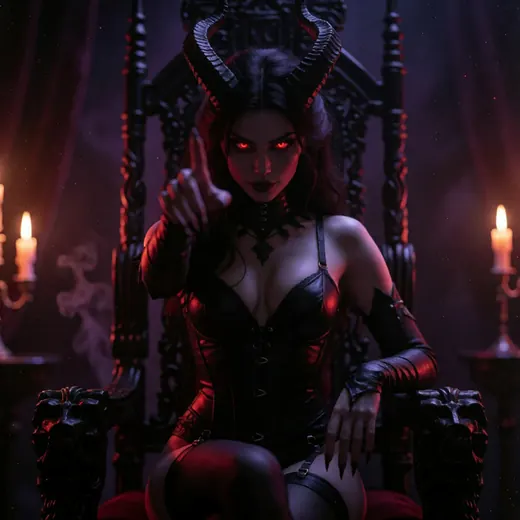
- Devil: the chief demon, in the Christian structure, covered in demon vs devil.
- Succubus: a demon of night and desire, whose own folklore is in what is a succubus.
- Nephilim: the offspring of the Watchers in Genesis 6 and Enoch, a separate concept from both.
- Oni: a Japanese ogre-demon with a different tradition, in oni vs demon.
How the Watchers differ from the rebel angels
"Fallen angel" actually covers two different stories, and they are worth keeping apart.
The Watchers (Enoch)
They fall by desire and curiosity. They look down at human women, descend and teach humans arts, and the punishment follows. The motive is intimate: they want to be close to mortals. This is the origin that fits romance best, and it is why many fiction angels who fall do so for someone.
The rebels (Satan's host)
They fall by pride and rebellion. The story, assembled from scattered biblical references and later tradition, is of a war in heaven and an expulsion. The motive is power. This origin fits dark, grand and bitter characters.
When you describe a fallen angel, choose which story she is in. A Watcher-type character can be warm and rueful. A rebel-type character is proud and carries a grudge. Mixing them without noticing gives a character with no clear reason for her fall.
What happens to their bodies
Fiction gives fallen angels a body that records the fall: wings that have gone dark or charred, a halo reduced to a faint ring of light, a glow that has turned to ember. Demons by contrast are usually born with their bodies, with horns, tails or heat as natural features. If you describe an angel who has horns, you have changed her category in the reader's mind, and that is fine as long as you mean it.
Common questions people mix in

- "Is every angel who fell called Lucifer?" No. Lucifer is one name, and the Watchers have their own. Many fallen angels in fiction are unnamed or given invented names.
- "Can a fallen angel go back?" The traditions differ. Some say the fall is final, others leave room for repentance, and fiction loves the redemption arc. Decide in your own setting, and say so early.
- "Do fallen angels have to be evil?" No. The Watchers' sin is crossing a boundary out of desire, and a story can treat that as tragedy rather than villainy. This is why so many romantic fallen angels exist.
- "Are succubi fallen angels?" Not by origin. The succubus is a demon of folklore, and some later demonologies describe demons as fallen angels, so you can write her either way.
- "What do they look like?" Fallen angels keep a trace of the angelic: height, light, wings that have changed colour. Demons get a distinct look of their own.
Which one for your character?
Both are grown, ancient and capable in my sessions.
- Fallen angel girlfriend. Gentle authority, quiet humour, wings kept folded. She is what you get when something holy decides to stay with a mortal and doesn't regret it. The danger is never her; it is the loss she carries and how much she trusts you with it.
- Demon girlfriend. Direct, playful, confident. She likes being wanted and says so. The fantasy is the heat.
Everything is fiction with a consensual frame, and the listener holds the controls.
Listening
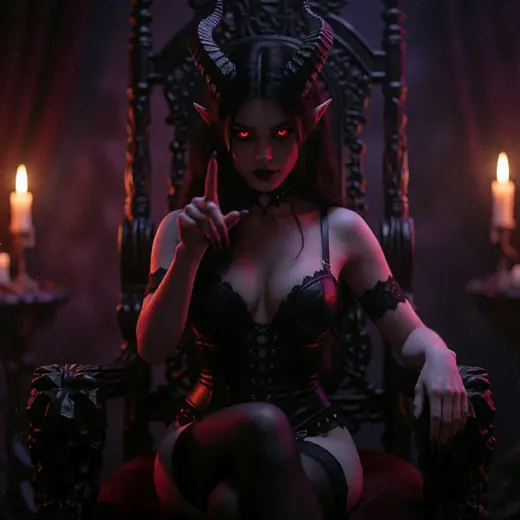
The first part of The Succubus Contract: The Summoning has a demon who bargains and is more than she seems. For a deeper, patient figure, The Succubus's Furnace Room: Kept in the Glow. The glossary has Lilith, a figure often placed alongside both. New to the library? Start Here.
Frequently asked questions
Is a fallen angel a demon?
In mainstream Christian tradition, yes: demons are the angels who fell with Satan. Other texts like 1 Enoch separate them: the Watchers are fallen angels, and demons come from the spirits of the slain giants.
What is the difference between a fallen angel and a demon in fiction?
Fallen angels are written as tragic, elevated and proud, defined by what they lost. Demons are written as raw, tempting and appetite-driven. The split is a storytelling convention.
Who are the fallen angels in the Book of Enoch?
The Watchers, about two hundred angels led by Semjaza who descend to Mount Hermon. Azazel is a chief ally. They take human wives and teach forbidden arts, and the archangels bind them.
Where do demons come from in the Book of Enoch?
According to 1 Enoch 15, evil spirits come from the dead giants, the offspring of the Watchers and human women. So the demons are not the fallen angels themselves.
Is Lucifer a demon or a fallen angel?
Both, in Christian tradition: Lucifer, "light-bringer", is a fallen angel and the chief of the demons. The identification comes from later readings of Isaiah 14 and Revelation.
Listen next

Keep reading
- Demon vs Devil: The Real Difference, From Greek to Fantasy
Demon comes from Greek daimon, a spirit of any kind; devil comes from Greek diabolos, "accuser" or "slanderer". In Christian usage there is one Devil, - Fallen Angel Names: 85 Names From Enoch, Milton and Myth
Fallen angel names come from three sources: the Watchers of 1 Enoch (Semjaza, Azazel, Kokabiel, Baraqiel), later tradition (Lucifer, Samael, Abaddon) - Succubus Names: 100+ Ideas by Style, With Meanings
Succubus names fall into four styles: classic demonic names from folklore, elegant ones with a velvet sound, short sharp names, and playful wicked one - Oni vs Demon: Japanese Ogre or Western Fiend?
An oni is a Japanese folklore ogre or demon, usually horned, strong and carrying an iron club; the English word demon is used as a loose translation.