Library › Guides › Demons & Dark Fantasy
Oni vs Demon: Japanese Ogre or Western Fiend?
By Metavulgar · updated 2026-11-13 · 5 min read

Oni vs demon is a translation problem. English dictionaries render oni as "demon", "ogre" or "troll", and none of those is right. An oni is a creature of Japanese folklore: large, horned, strong and often red or blue, with an iron club. A demon in the Western sense is a fallen or evil spirit that tempts souls, a figure of theology. They overlap in fiction and diverge in tradition, and this page sorts the two out and shows what each gives a monster-girl character.
The quick answer
- Oni: a Japanese folklore creature. Physical, strong, a bringer of disaster and disease, sometimes a guardian.
- Demon (Western): a spirit of evil in Jewish, Christian and later European tradition. Spiritual, a tempter, tied to a hierarchy and to the idea of damnation.
- In practice: English uses "demon" for both, and fiction mixes them.
| Oni | Western demon | |
|---|---|---|
| Origin | Japanese folklore, Buddhist and Chinese influences | Jewish, Christian, Greek |
| Nature | Often physical: ogre, brute | Spiritual: fallen angel or evil spirit |
| Wants | Food, violence, mischief | The soul, corruption |
| Look | Horns, red or blue skin, tiger-skin loincloth, iron club | Varies: horns, wings, human form |
| Role | Disaster, disease, hell's guards; can protect | Tempter, adversary |
| Defeated by | Beans, heroes, holy words | Prayer, exorcism, faith |
Where oni come from
The word oni has a long, shifting history. It may have meant a hidden or spirit being, and it was joined by the Chinese idea of a ghost or disease demon. Early Japanese texts use it for unseen malevolent forces, and over centuries it took on the fierce physical form we know. Under Buddhist influence, oni became the guards and torturers of hell, ox- or horse-headed wardens who serve the king of the underworld. Their typical look, horns and a tiger-skin loincloth, is explained as a pun on the ushitora direction, ox and tiger, the northeast "demon gate" in traditional geomancy. The club, kanabō, completes the picture.
What oni do in the stories
- Bring disaster. Disease, storms, famine and violence were attributed to oni.
- Kidnap and feast. Folktales have oni who live in the mountains and take travellers.
- Guard hell. In Buddhist stories, oni serve as hell's wardens.
- Get beaten. Heroes such as Momotarō, the peach boy, go to Onigashima, the island of oni, and defeat them. The legendary hero Minamoto no Yorimitsu kills the oni king Shuten-dōji.
- Protect. The onigawara roof tiles carved with oni faces keep harmful spirits away, the way gargoyles do in Europe. At Setsubun some shrines chant "Fortune in" with no mention of oni, and in a few places oni are invited in as protectors.
Setsubun: throwing beans at oni
On Setsubun, at the turn of the season in early February, households throw roasted soybeans out of the door and cry Oni wa soto! Fuku wa uchi! ("Demons out, luck in!"). The rite descends from a Chinese ceremony for expelling disease spirits that was adopted at the Heian court. It shows what oni are in everyday belief: not a theological adversary but a seasonal bad luck that you can drive off with a handful of beans.
Female oni
Oni are usually male in folklore, but women turn into oni too, and the most famous example is the hannya, the horned mask of Noh theatre showing a woman consumed by jealousy and grief. The legends of women who become oni or serpents through obsession, such as the story of Kiyohime, are the roots of the female oni in modern fiction. Fiction goes further: the oni girl is a recognised monster-girl type.
The oni girl in fantasy
In monster-girl fantasy she is tall, strong and warm: horns, red or blue or pale skin, an iron club, a love of drink and a loud laugh. She is physical where the Western demon is seductive. Her romance is the friend who becomes more: she carries you, feeds you, picks you up as if you weighed nothing and then goes quiet when you hold her hand. The strength is the appeal, and the tenderness under it is the twist. It is consensual fiction in which the listener decides the pace. Details on the type are in oni girl, the glossary term oni and oni names, and the broader Japanese tradition is in the term yokai.
Oni types and ranks
Oni are not one creature. Japanese tradition names several kinds, and the differences are useful for characters.
- Red and blue oni. The best-known pair, often shown as hell's wardens or in Setsubun imagery. Colour can stand for temperament: red for heat and passion, blue for cold and calm.
- Hell oni (gokuzu and mezu). The ox-headed and horse-headed guards of the Buddhist underworld.
- Mountain oni. Wild, living in caves, with a taste for travellers and for drink. The Shuten-dōji tale is a mountain oni story.
- Female oni. Women transformed by jealousy or grief, as in the hannya tradition, or oni queens in later folktales.
- Domesticated oni. In comedic stories, oni who work, get beaten up by clever humans or turn out to be lonely.
Powers and weaknesses
Folklore gives oni great strength, size and sometimes shape-shifting or the ability to summon storms. Their weaknesses are the stuff of folktale: roasted soybeans at Setsubun, holly and sardine heads hung at the door in some regions, a clever hero and, in Buddhist tales, the power of a sutra. They are also easy to trick: oni in stories lose bets and are fooled by promises.
Why the difference matters in fiction
A Western demon is a figure of temptation, and the story is about what she can persuade you to do. An oni is a figure of force, and the story is about what she can do and how you meet her. The first is a seduction, the second a meeting of equals. For listeners, this means an oni girl sounds more direct, more physical and more humorous, and a demon girl sounds more calculated and teasing. Neither is better, and the pairing in the library lets you choose.
The Western demon in fantasy
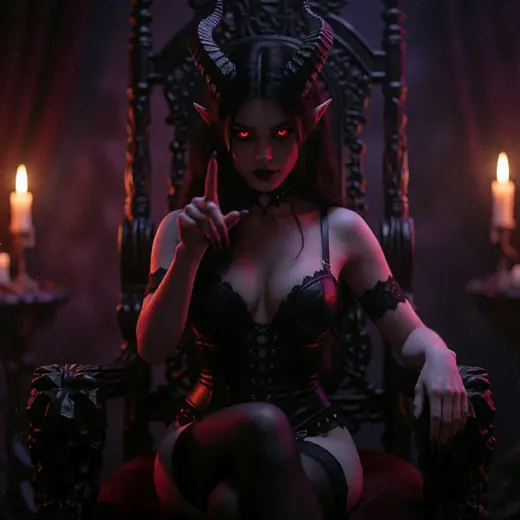
The Western-style demon girl is slinky, clever and persuasive, and she is a creature of bargains and appetite. See demon vs devil for the vocabulary, fallen angel vs demon for the origin question and demon girlfriend ASMR for the audio. If you want the closest thing in the library, The Succubus Contract Part 1: The Summoning is a bargain-maker, and Steady: Pinned Down in the Minotaur's Labyrinth is the closest to an oni's physical presence. Start with the gentle route at Start Here.
Frequently asked questions
What is the difference between an oni and a demon?
An oni is a Japanese folklore ogre-like creature with horns and an iron club, physical and sometimes protective. A Western demon is an evil spirit of theology that tempts souls. English often translates oni as demon, but the traditions differ.
Are oni evil?
Usually fearsome, but not purely evil. They bring disease and violence in folktales and guard hell in Buddhist stories, yet oni-faced tiles protect buildings and some rituals treat them as protectors.
Why do oni have horns and tiger-skin?
The look is traditionally linked to ushitora, ox and tiger, the northeast direction called the demon gate: ox horns and tiger skin. The iron club is the kanabō.
What is Setsubun?
A Japanese seasonal festival in early February where people throw roasted soybeans and shout "Demons out, luck in". It derives from a Chinese ritual for driving out disease spirits.
Are there female oni?
Yes, mainly in legend. The hannya, the horned mask of Noh theatre, shows a woman turned oni by jealousy. Modern fiction has the oni girl as a standard monster-girl type.
Listen next

Keep reading
- Oni Girl: Japanese Folklore, Horns, Strength and the Modern Monster Girl
An oni girl is a horned, strong woman drawn from the oni of Japanese folklore, ogre-like beings that can be demons, guardians or tragic figures. Folkl - Demon vs Devil: The Real Difference, From Greek to Fantasy
Demon comes from Greek daimon, a spirit of any kind; devil comes from Greek diabolos, "accuser" or "slanderer". In Christian usage there is one Devil, - Fallen Angel vs Demon: Origin, Tone and the Real Texts
A fallen angel was an angel who rebelled or descended and lost heaven. A demon is an evil spirit that may never have been an angel. Christian traditio - Demon Girlfriend ASMR: Possessive, Tender and Teasing Variants Explained
Demon girlfriend ASMR is audio roleplay in which a demon woman, horned, tailed and devoted, is your partner. It comes in three main flavours: possessi