Library › Guides › Werewolves & Beast Girls
Werewolf Lore: Origins, the Full Moon, Silver and Modern Fiction
By Metavulgar · updated 2026-11-11 · 5 min read
Werewolf lore is the long tradition of stories about humans who become wolves, or wolf-like beings. The earliest tales are ancient, the medieval ones are bound up with law and religion, and the rules most people know today, the full moon and the silver weakness, are largely modern additions from fiction. This guide separates the documented lore from the later inventions, as a storyteller reads it, with no instructions of any kind. It is lore for entertainment.
I tell werewolf stories as Metavulgar, so I read the sources for what each period feared and wanted. If you would rather hear the result, Start Here is five sessions, and the werewolf girl side of my work is in werewolf girl ASMR.
The word
Lycanthropy comes from the Greek lykos, "wolf", and anthropos, "human". Werewolf comes from Old English wer, "man", plus "wolf". So the word itself means "man-wolf". The English tradition assumes a male subject; modern fiction, including the werewolf girl of monster romance, has widened it.
Ancient roots
The best-known early tale is the Greek myth of Lycaon, king of Arcadia, whom Zeus turned into a wolf as punishment for an offence against the gods (Ovid tells it in the Metamorphoses, in Latin, about 2,000 years ago). In that story transformation is divine punishment, a pattern that continues: in many early tales, becoming a wolf is a curse, not a talent.
Roman writers also tell wolf-transformation stories. In Petronius' Satyricon (first century CE), a soldier strips, performs a strange ritual over his clothes and becomes a wolf, a tale told by a dinner guest and plainly meant to entertain. The ancient world did not have a single werewolf "system"; it had scattered stories of transformation.
Medieval and early modern Europe
Between roughly the 1100s and 1600s, werewolf stories appear in several forms:
- Romance and lai. In medieval French literature, the bisclavret (a Breton word for werewolf) appears in Marie de France's lay of that name, in which a nobleman who turns into a wolf is a sympathetic figure betrayed by his wife. Early medieval werewolves could be tragic, not monstrous.
- Chronicle and folklore. Gervase of Tilbury (around 1200) discusses werewolves and links transformation to the moon, one of the earliest recorded connections.
- Trials. In the late 1500s, accusations of lycanthropy appeared in trials in France and Germany. The case of Peter Stumpp (1589) is the best known. These records show how fear and politics shaped the legend; they are not evidence of anything supernatural.
- The Beast of Gévaudan (1764 to 1767). A series of attacks by a large, never-identified wolf-like beast in southern France shaped later stories, including the silver bullet motif, though how much remains debated.
Northern and other traditions
Norse sources describe the úlfheðnar, warriors in wolf pelts, and the berserkers, bear-shirted fighters, whose battle frenzy may lie behind some later tales. Armenian, Slavic and Baltic folklore have their own wolf-people. Wolf transformation appears widely, often as a curse or a gift of a witch.
The full moon
The full moon is probably the most famous werewolf rule, and it is far newer than most people assume. Early sources give many causes for transformation: a curse, a magic ointment, a girdle of wolf skin, being born under certain conditions. The moon appears among them, and Gervase of Tilbury mentions it, but it was one of many. It became the rule through nineteenth and twentieth century fiction, above all the 1941 film The Wolf Man, which made the full moon the standard trigger.
Silver
Folk belief did link silver with warding off evil, and some accounts say a silver amulet prevents transformation or a silver blade breaks it. The silver bullet is a different matter: it is usually traced to the Beast of Gévaudan story, to a later pulp fiction tale, or both, and sources disagree. Treat the exact origin as uncertain. What is clear is that silver as the werewolf's weakness is a modern fixture, not an ancient rule.
The nineteenth and twentieth century
Gothic and Victorian writers rebuilt the werewolf as a tragic figure, a respectable man with a curse. Guy Endore's The Werewolf of Paris (1933) was a best seller and shaped later stories. Hollywood in the 1930s and 40s set the rules most people now know: the bite as infection, the moon as trigger, silver as the weakness and the sorrow of the afflicted man.
Modern fiction and the werewolf girl
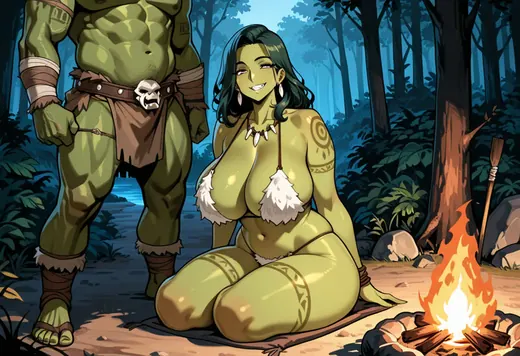
In the last few decades, werewolves have moved into romance and fantasy:
- Paranormal romance made the werewolf a lover, with pack, mate and marking motifs (see werewolf mate marking).
- Monster girl fiction gave her a humanoid body, with ears, tail and heightened senses. See what is a monster girl.
- Audio fiction uses her scent-sense and warmth as sound: breath, growl and heartbeat. See werewolf girlfriend trope.
In all of these, the werewolf is a grown, humanoid fantasy being. Nothing in the genre involves real wolves.
Lore versus fiction, at a glance
| Idea | Origin | Status |
|---|---|---|
| Man turns into wolf | Ancient myth (Lycaon) | Old, widespread |
| Transformation as punishment | Greek tales | Old |
| Sympathetic werewolf | Medieval lai (Bisclavret) | Old, rarer |
| Trials for lycanthropy | 1500s France and Germany | Historical records |
| Full moon trigger | Mentioned c. 1200, standardised by 1940s film | Mostly modern |
| Silver weakness | Folk silver beliefs plus later fiction | Mostly modern |
| Bite spreads the curse | 20th century film | Modern |
| Mate, mark and pack | Modern romance | Modern |
How fiction uses the lore
The stories I tell borrow selectively:
- The moon as mood. Restlessness and warmth, not a switch.
- Scent. The wolf's sense of smell turns into intimacy.
- Pack. Belonging, protectively framed.
- Silver. Rarely used. It adds nothing to a romance.
Common questions
Are werewolves real? No. The tradition is folklore and fiction. Historical trial records show fear and persecution, not supernatural events.
Where does the silver bullet come from? Probably from the Beast of Gévaudan story and later fiction; the sources disagree.
Is the werewolf girl a traditional figure? No. She is a modern monster girl character, built on the old transformation myth.
Do werewolf stories have to be horror? No. Medieval tales could be tragic or sympathetic, and modern romance treats the werewolf as a lover.
Where to go next
For the romance side, werewolf girlfriend trope; for sound, werewolf girl ASMR; for other lore pages, succubus lore and kitsune meaning. If you want a physical, steady creature in the same spirit, try Steady: Pinned Down in the Minotaur's Labyrinth.
Why the werewolf lasted
A few reasons explain why this figure survived when many others faded.
- It is a story about the self. A person who contains something wild is a mirror for anyone who has felt divided.
- It is flexible. The werewolf can be a victim, a villain, a hero or a lover, depending on who tells it.
- It has a visible shape. Wolves are familiar, and the leap from wolf to human-wolf is short.
- It fits every medium. Prose, stage, film, games and audio all handle it well.
How I read it as a storyteller
For my own work, I keep what serves a romance (scent, warmth, protectiveness, a bond with the moon as mood) and leave out what serves a horror (infection, helplessness, cruelty). The result is a figure who is wilder than a human lover but no less caring, and who is always, plainly, a grown woman. If you want to hear it, the sound guide werewolf girl ASMR explains the details.
Frequently asked questions
Where does werewolf lore come from?
From ancient Greek myth, especially Lycaon turned into a wolf by Zeus, through Roman tales, medieval French and English literature and early modern trial records. Many familiar rules were added later by fiction and film.
Is the full moon part of the original werewolf legend?
Only loosely. Gervase of Tilbury linked transformation to the moon around 1200, but it was one of many causes. The full moon became the standard trigger through 19th and 20th century fiction and the 1941 film The Wolf Man.
Why does silver hurt werewolves?
Folk belief connected silver with warding off evil, but the silver bullet as a werewolf weakness is mostly modern, traced to the Beast of Gévaudan story and later pulp fiction. Sources disagree on the exact origin.
What does lycanthropy mean?
It comes from Greek lykos, wolf, and anthropos, human, meaning wolf-human. Werewolf is the Old English equivalent: wer (man) plus wolf.
Is the werewolf girl a traditional folklore figure?
No. She is a modern monster girl character, a humanoid woman with a wolf's senses and instincts, built on the old transformation myth and adapted by romance and audio fiction.
Listen next
Keep reading
- Werewolf Girlfriend Trope: Pack, Mate, Marking and Protection
The werewolf girlfriend trope pairs a human lead with an adult werewolf woman whose love is expressed through scent, protection and pack loyalty. Comm - Werewolf Girl ASMR: Scenarios, Sounds and Consent Framing
Werewolf girl ASMR is adult roleplay audio in which a humanoid werewolf woman speaks close to your ear, with panting, low growls, scent-seeking breath - Werewolf Mate Marking: What the Mark Means in Romance Fiction
In werewolf romance fiction, mate marking is a ritual or instinct in which a werewolf claims a partner by scent, bite or both, signalling a lasting bo - Succubus Lore: Lilith, Lamia, Mara and Beyond
Succubus lore is a collage: Mesopotamian night spirits, Lilith in medieval Jewish writing, the Greek lamia, the Germanic mara and Christian demonology