Library › Guides › Tentacles & the Deep
Cecaelia vs Scylla: Octopus Woman or Greek Sea Monster?
By Metavulgar · updated 2026-11-12 · 6 min read
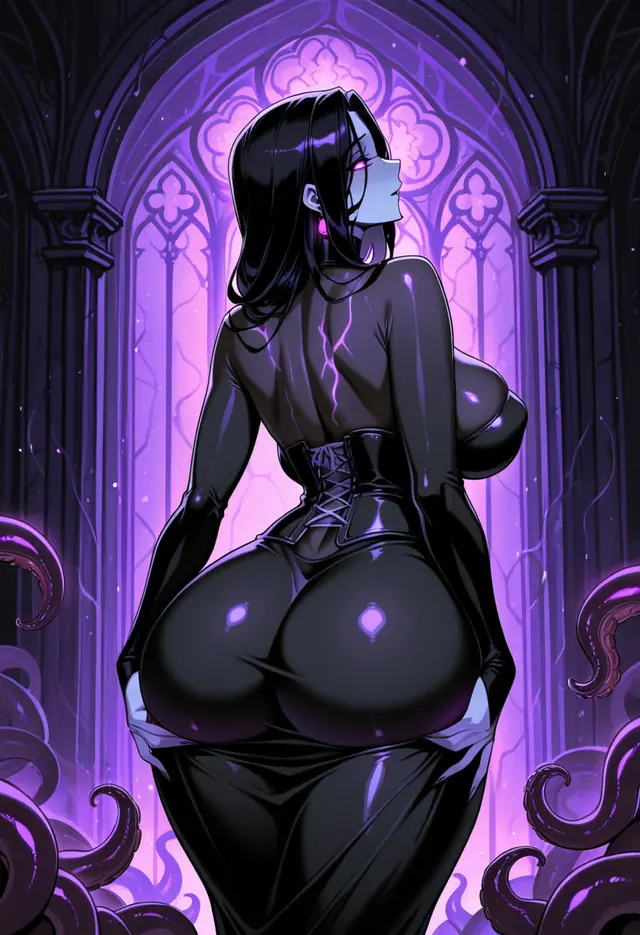
Cecaelia vs Scylla is a question of what is old and what is new. Scylla is a figure of Greek myth, a sea monster that guards a narrow strait in the Odyssey. A cecaelia is a modern fantasy word for a woman whose lower half is an octopus or squid, a cousin of the mermaid. They are often placed side by side because both are women of the deep with tentacles, but the history behind them is completely different.
The short version
| Scylla | Cecaelia | |
|---|---|---|
| Origin | Greek myth: Homer's Odyssey, Ovid's Metamorphoses | Modern fantasy and pop culture, no ancient myth |
| Body | Homer: six long necks, twelve feet. Later art: a woman's torso with dogs' heads at the waist and a fish tail | Woman above, eight tentacles below |
| Role | Hazard that devours sailors in the Strait of Messina | Lover, villain, ruler or friend in a fantasy setting |
| Origin of the monster | Transformed by Circe out of jealousy (Ovid) | Born that way or cursed, depending on the story |
| Temperament | Predatory and tragic | Anything: witty, protective, cunning |
| Best known as | Half of "Scylla and Charybdis" | Ursula-type characters; octopus mermaids |
Scylla in the ancient sources
In the Odyssey, Circe warns Odysseus of two hazards on his route. Scylla lives in a cave high on a cliff and has six long necks, each with a head of three rows of teeth, and twelve misshapen feet. She snatches six sailors at a time from passing ships. Across the strait is Charybdis, a whirlpool that swallows the sea three times a day. Odysseus is told to sail close to Scylla and lose six men instead of risking everyone to the whirlpool. That is the root of the phrase "between Scylla and Charybdis".
Notice that Homer's Scylla has a creature's body. Some readers see octopus-like features in the description: many limbs reaching out from a cave. That is an interpretation, not a statement in the poem.
Scylla in Ovid: a woman made monstrous
The version that looks like a monster girl story is in Ovid's Metamorphoses (Books XIII and XIV). Scylla is a beautiful woman, a nymph who is pursued by the sea god Glaucus. She refuses him. Glaucus asks the sorceress Circe for a love potion, but Circe wants Glaucus herself, and she poisons the pool where Scylla bathes. Scylla steps in and discovers that her lower half has become dogs and barking monsters. Shame and terror drive her to the rocks, where she turns permanently into the creature of the strait.
Later art shows her as a woman's upper body with a ring of dogs' heads at the waist and a fish or serpent tail. That image, not an octopus, is the classical Scylla. In some versions Lamia is her mother; see the lamia entry.
The cecaelia: a modern word
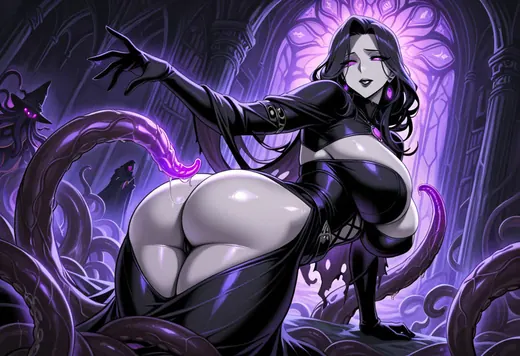
Cecaelia is a recent coinage, thought to be formed from the name Cecilia with an echo of "cephalopod". It has no ancient or folkloric attestation: it is a fan and genre word for a mermaid whose tail is octopus tentacles. The best-known pop culture example is the sea witch Ursula from the animated film The Little Mermaid, and many readers use "cecaelia" for any octopus woman since.
Common features of a fantasy cecaelia:
- Eight arms. They are strong and dexterous, so a cecaelia can hold, carry and work with tools.
- Camouflage and ink. Borrowed from real cephalopod behaviour.
- Intelligence. Octopuses are famously smart, so cecaelia are usually written as clever and curious.
- A choice about water. Some stories let her walk on land with her tentacles; others keep her in the sea.
Where they overlap
Both are sea-women with many limbs, and both tend to be misunderstood. People hunting for "an octopus woman" often find Scylla first because the name is classical and carries weight, but the match is loose. The honest reading is that the cecaelia is a modern monster girl who borrows the mood of Scylla: danger from below, a body that does not fit a human frame.
If you want the weaker, softer reading, the cecaelia is the one. If you want ancient dread, Scylla. If you want a tragic transformed woman, Ovid's Scylla comes closest, and writers often name their cecaelia heroine Scylla as a nod to her.
Which one suits which fantasy
- A tentacle-heavy romance: cecaelia. The limbs are the point, and the story can be as gentle or as possessive as you like.
- A dark, myth-flavoured story: Scylla. The Ovidian tragedy is rich, and the strait is a ready-made setting.
- A monster girl cast: use the cecaelia and give her Scylla as an ancestor.
For the full tentacle family, see tentacle monster trope and tentacle meaning. The tentacles and the deep path collects the sessions where the sea itself holds you, and The Deepest Den is the one I would start with. For a listening route, Start Here is the gentlest, and tentacle ASMR explains what to expect from the sound.
Octopus facts behind the fantasy
Part of the cecaelia appeal comes from the real creature, and a few facts are worth borrowing because they give your character credible habits. An octopus has three hearts and blue blood, eight arms with suckers that can taste what they touch, and no bones, so it can pour itself through any gap larger than its beak. It changes colour and skin texture in a fraction of a second, squirts ink to escape, and is widely regarded as the most intelligent invertebrate. Most octopuses live short lives and are solitary.
Translate those into a monster girl and you get a clever, watchful woman who can disappear into a rock pool, who touches things to understand them, and who is a very patient host. These traits matter in audio, where the listener cannot see her: the sound of wet, slow movement and a voice that is curious about you does more than any description.
How writers use Scylla in modern fiction
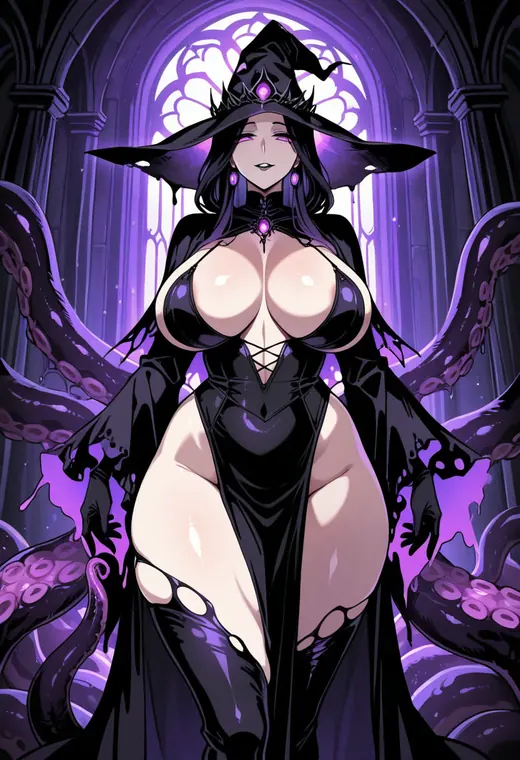
Beyond the cecaelia link, Scylla appears in modern fantasy in three common ways. As the monster at the cliff, a straightforward sea hazard. As the tragic woman, following Ovid, a victim of jealousy who has learned to live with a new body. And as a name, borrowed for any sea-woman who needs a mythic ring. If you are building a cast, the second is the richest: it gives your monster girl a reason to be wary of the surface and a story about why the sea is home.
Other sea monsters people mix in
Searches for octopus women pull in several other figures, so it helps to keep them straight. The kraken is a Norse-derived giant sea monster, usually imagined as a huge squid or octopus, and in fiction it is a creature, not a woman. Mermaids are fish-tailed women of wide European tradition, and sirens in Greek myth were bird-bodied women whose song led sailors to their deaths. Nereids were Greek sea nymphs, a gentle category of women of the waves. A selkie is a seal-shifting woman of Scottish and Irish tradition. And the Lovecraftian deep ones are a separate horror tradition entirely. Among these, the cecaelia is the closest to the mermaid in shape and to the kraken in limbs, and the one that fits a monster girl story most easily because she can combine tenderness with a body that is wholly her own.
Notes on use
Every character here is an adult being of the sea. Any possession or capture in these stories is consensual fiction, and the listener stays in control of the dream. If you are writing your own cecaelia, give her a voice and a history rather than just a silhouette, which is where Scylla's tragedy gives you a model.
Frequently asked questions
Is a cecaelia the same as Scylla?
No. Scylla is a Greek sea monster from the Odyssey and Ovid. A cecaelia is a modern fantasy term for a woman with octopus tentacles. They overlap in mood, but only Scylla has an ancient myth.
What did Scylla look like in the Odyssey?
Homer describes six long necks, each with a head of three rows of teeth, and twelve misshapen feet. She lives in a cave on a cliff. Later artists gave her a woman's body with dogs at the waist.
Where does the word cecaelia come from?
It is a modern coinage, probably blending the name Cecilia with a nod to cephalopods. No ancient myth uses it, and it became popular in fan and fantasy circles for octopus-bodied mermaids.
Who turned Scylla into a monster?
In Ovid's Metamorphoses, the sorceress Circe poisoned the pool where Scylla bathed, out of jealousy over the sea god Glaucus. Scylla became the monster of the strait afterward.
What is Scylla and Charybdis?
Two sea hazards on each side of a narrow strait in the Odyssey: Scylla, a monster in a cliff cave, and Charybdis, a whirlpool. The phrase now means a choice between two dangers.
Listen next

Keep reading
- Tentacle Monster: The Trope, Its Variations and Why It Works
A tentacle monster is a fantasy creature whose limbs are flexible and many, used in horror, fantasy and adult fiction as a symbol of being enveloped b - Tentacle Meaning: From Octopus Arms to a Fantasy Trope
A tentacle is a long, flexible limb, found on creatures such as squid and octopuses. As a fantasy trope, tentacles stand for being enveloped, overwhel - Tentacle ASMR: Sounds, Binaural Design and What to Expect
Tentacle ASMR is adult roleplay audio in which a tentacled creature speaks and moves around you, using wet slides, low drones, soft whispers and binau - Siren vs Mermaid: Bird-Women, Fish Tails and How They Got Mixed Up
In Greek myth a siren is a bird-bodied woman whose song lures sailors to their deaths, while a mermaid is a woman with a fish tail from later and wide - Cecaelia vs Mermaid: Tentacles or Tail, and Which Suits Your Fantasy
A mermaid has a fish tail and centuries of folklore behind her; a cecaelia has octopus tentacles and is a modern fantasy invention. The difference sho