Library › Guides › Tentacles & the Deep
Cecaelia vs Mermaid: Tentacles or Tail, and Which Suits Your Fantasy
By Metavulgar · updated 2026-11-12 · 5 min read

Cecaelia vs mermaid is the question behind every "half-woman, half-sea" character. A mermaid is a woman with a fish tail, a figure with a long European and worldwide folklore. A cecaelia is a woman with octopus or squid tentacles instead of legs, a modern fantasy coinage. They share the sea, but the two feel completely different, and which one you choose changes the story, the sound and the touch.
The short version
| Mermaid | Cecaelia | |
|---|---|---|
| Lower body | Fish tail | Eight (or more) tentacles |
| Folklore | Centuries of tales across Europe and beyond | Modern fantasy term; no ancient myth |
| Movement | Swims in sweeping strokes | Crawls, pours, grips and swims |
| Abilities | Singing, weather omens, drowning or rescuing | Camouflage, ink, intelligence, strong grip |
| Mood | Lyrical, distant, longing | Curious, tactile, close |
| Temperament | Seductive, tragic or cruel | Clever, protective, mischievous |
| Land life | Often needs legs or a spell | Can sometimes walk on tentacles |
| Pop culture | The Little Mermaid and countless retellings | Ursula-type characters, octopus mermaids |
The mermaid
Mermaids appear in many cultures. In European tradition, sailors report women of the sea who warn of storms or lure ships to their deaths; the Scottish and Irish have the selkie, a seal-woman; the Slavic world has the rusalka; and the Mesopotamian myth of Atargatis gives an early fish-tailed goddess. The stories range from the gentle (the little mermaid who gives her voice for love in Hans Christian Andersen's tale) to the deadly (the sailor who follows a song into the waves).
The mermaid's body is graceful and smooth, built for swimming. In fiction she is usually a singer, a seer or a ruler, and her fantasy is distance: you watch her from the shore, and she is both near and out of reach. That distance is why mermaid stories so often end in loss.
The cecaelia
The word cecaelia is a modern coinage, probably a blend of the name Cecilia and cephalopod. It has no ancient source, and it spread through fan and fantasy circles to describe a woman with an octopus's lower body. The best-known pop example is Ursula the sea witch, though sources argue about whether to call her octopus or squid.
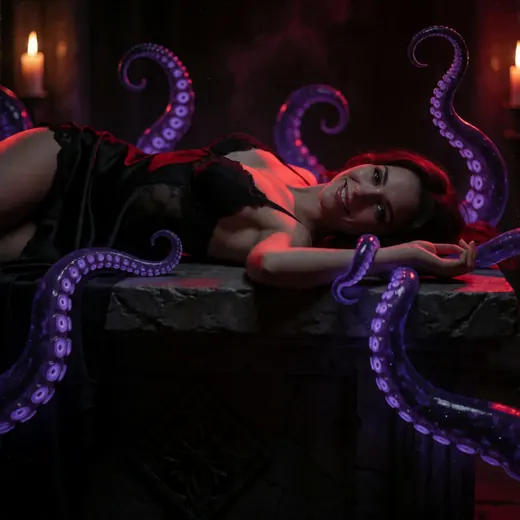
The cecaelia's fantasy is the opposite of the mermaid's: not distance but closeness. Eight arms mean eight ways to hold you, each with its own sense of touch. A cecaelia in fiction is a creature who can wrap around you, reach everything in the room and understand you through contact. Real octopuses are clever, colour-changing and curious, and fantasy cecaelia inherit that.
Body and abilities
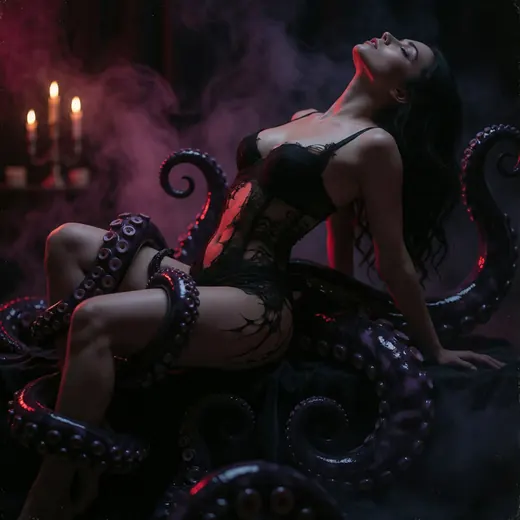
- Strength and dexterity. Tentacles are strong and fine at once. A cecaelia can hold a cup and a person in the same moment.
- Camouflage. Borrowed from real octopuses; a cecaelia can blend into a coral wall or a dark cave.
- Ink. A defence in fiction, and a visual signature in art.
- No bones. She can squeeze through gaps no human can, which gives her an unnerving stealth.
- Mermaid song. The mermaid's counterpart ability is voice, and in many stories the mermaid's song is her whole power.
Temperament in fiction
Mermaids tend to be longing and lyrical: tragic heroines, seductive sirens, regal sea queens. Cecaelia tend to be sharp and playful: witches, cunning merchants, affectionate tricksters. You can write against type, of course, but readers expect those flavours.
Which one suits which fantasy

- If the fantasy is watching and wanting: a mermaid. The shoreline, the song and the sea at night.
- If the fantasy is being held: a cecaelia. The grip and the warm, slow coil are the appeal.
- If the fantasy is a clever, mischievous companion: a cecaelia.
- If the fantasy is tragic romance: a mermaid.
- If the fantasy is a little dangerous: either, but the cecaelia is more openly possessive.
In my own audio the tentacled sea-woman lives in the tentacles and the deep path, and The Deepest Den is the session built around her slow, enveloping hold. The sea-singer version is Sink: Held Under the Siren's Moonlit Tide. Everyone in these stories is an adult being, and the possessive moments are consensual fiction that you can leave at any time.
How each one sounds in audio
Because I work in audio, the sound of the body matters as much as the look. A mermaid is mostly voice and water: a long, clear singing line, the lap of waves, a distant echo. The movement sounds are broad and slow, a tail breaking the surface, a pool of water spilling. A cecaelia is mostly texture: slow wet slides, suction, soft presses and the faint creak of something large moving carefully through a small space. The voice is closer, often a murmur, and the sound travels around the listener because the body does.
That difference is why the two suit different moods. If you want to drift, a mermaid session is a long exhale. If you want to be wrapped and quietly overwhelmed, a cecaelia session is a held breath that slowly lets go. Many listeners like both and alternate: the mermaid on nights when they want to be soothed, the cecaelia when they want to be held.
What each one says about the setting
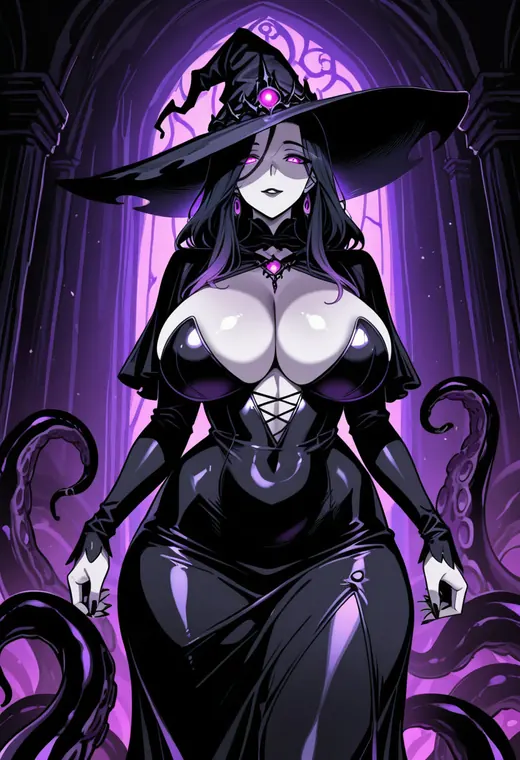
The species also tells you about the world. A mermaid story is usually a story about a border: shore and sea, human and other, air and water, and it works well for stories of longing and leaving. A cecaelia story is usually about a home: the cave, the reef, the den where she lives and into which you are welcomed or drawn. Mermaid settings are open, moonlit and wide. Cecaelia settings are enclosed, dim and warm. If you are building a cast of monster girls, that is a useful way to avoid giving every sea-woman the same scene.
A quick checklist
- Wide sea, song, tragedy: mermaid.
- Cave, grip, clever companion: cecaelia.
- Need a historical anchor: mermaid (folklore) or Scylla (Greek myth).
- Need a body that interacts with the room: cecaelia.
Common mix-ups
Siren vs mermaid. Greek sirens were bird-women; the fish-tailed siren is a later blend. See siren vs mermaid.
Cecaelia vs Scylla. Scylla is a Greek monster with no octopus body in the text, and the cecaelia is a modern term. See cecaelia vs Scylla.
Cecaelia vs kraken. A kraken is a giant sea monster, not a woman.
Writing tips if you are choosing
- Pick the touch first. Do you want sweeping contact or many hands? That decides the species.
- Think about land. A mermaid needs a bridge to land; a cecaelia may simply walk.
- Use the real octopus. Octopus details (three hearts, colour change, taste in the arms) give your cecaelia credible habits.
- Give her history. The mermaid has centuries of stories; the cecaelia needs yours.
For the family around both, see tentacle monster trope, tentacle meaning and the monster girl species list. If you are new to the genre, Start Here puts a sea-woman in the right order for a first week.
Frequently asked questions
What is the difference between a cecaelia and a mermaid?
A mermaid has a fish tail; a cecaelia has octopus or squid tentacles. Mermaids have centuries of folklore, while cecaelia is a modern fantasy term. The mood also differs: mermaids are lyrical and distant, cecaelia curious and close.
Is Ursula a cecaelia?
Ursula from the animated The Little Mermaid is the best-known example and is usually called one, though sources argue over whether she is an octopus or a squid. She is a pop culture figure rather than a folklore one.
Where does the word cecaelia come from?
It is a modern coinage, thought to blend the name Cecilia with cephalopod. It has no ancient attestation and became popular in fan communities for octopus-bodied mermaids.
Can a cecaelia walk on land?
In many fantasy settings yes, using her tentacles, though it depends on the story. Mermaids more often need legs or a spell. Writers choose whichever suits the plot.
Which is better for a monster girl romance?
It depends on the fantasy. A mermaid suits longing and tragedy; a cecaelia suits closeness, holding and a clever, playful companion. Both are written as adult characters.
Listen next

Keep reading
- Cecaelia vs Scylla: Octopus Woman or Greek Sea Monster?
Scylla is an ancient Greek sea monster, first a many-headed horror in the Odyssey and later a woman transformed by Circe in Ovid. A cecaelia is a mode - Siren vs Mermaid: Bird-Women, Fish Tails and How They Got Mixed Up
In Greek myth a siren is a bird-bodied woman whose song lures sailors to their deaths, while a mermaid is a woman with a fish tail from later and wide - Tentacle Monster: The Trope, Its Variations and Why It Works
A tentacle monster is a fantasy creature whose limbs are flexible and many, used in horror, fantasy and adult fiction as a symbol of being enveloped b - Tentacle Meaning: From Octopus Arms to a Fantasy Trope
A tentacle is a long, flexible limb, found on creatures such as squid and octopuses. As a fantasy trope, tentacles stand for being enveloped, overwhel - Monster Girl Species List A-Z: Origins and Personalities
This monster girl species list runs A to Z across 34 adult fantasy beings, from arachne to yuki-onna. Each entry gives the origin, whether Greek, Japa