Library › Guides › Tentacles & the Deep
Tentacle Meaning: From Octopus Arms to a Fantasy Trope
By Metavulgar · updated 2026-11-11 · 6 min read
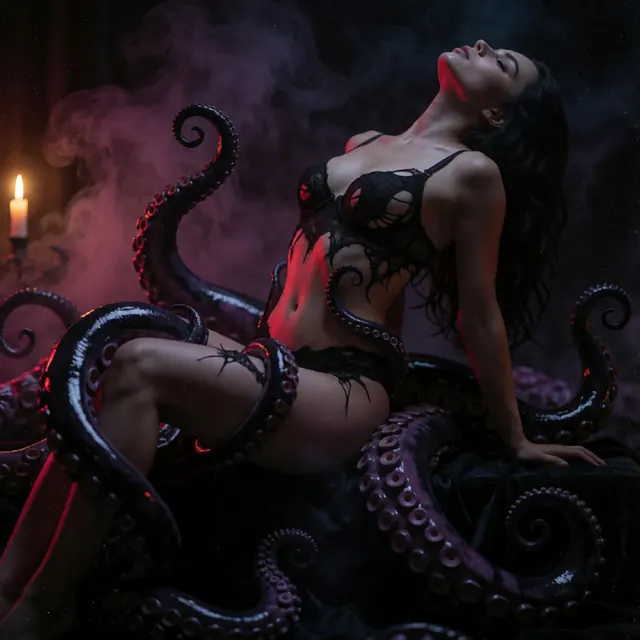
Tentacle has two meanings that people usually search for at once: the plain biological word and the fantasy trope. A tentacle is a long, flexible, often muscular limb used for grasping or feeling, found on creatures such as squid, octopuses, jellyfish and sea anemones. In fantasy and adult fiction, "tentacles" stand for something else: being enveloped, overwhelmed or surrendered to something alien and strong, usually with an eldritch or sea-monster flavour.
I voice tentacle stories as Metavulgar, always for adult listeners and always as consensual fantasy. This guide explains both meanings, the art history behind the trope and what the trope is really about, in plain and tasteful terms. If you want to hear it handled gently, Start Here has a gentle introduction to my monsters, and the guide to tentacle ASMR covers the sound side.
The biological meaning
In biology, a tentacle is a flexible appendage. Some key facts, and the differences that confuse people:
- Tentacles vs arms. In cephalopods, "arms" usually carry suckers along their whole length, while "tentacles" (a pair in squid and cuttlefish) are longer and carry suckers only near the tip. Octopuses have eight arms and no tentacles in the strict sense, though everyday speech calls them all tentacles.
- Other sea creatures. Jellyfish, sea anemones and snails also have tentacles, used for feeding, sensing or defence. Snails' eyestalks are tentacles.
- Purpose. Gripping, sensing, feeding, moving.
That is the whole non-fantasy sense. The rest of this guide is about fiction. (This library is about humanoid fantasy beings only; the biological sense is included here only to answer the keyword.)
The cultural meaning
In fantasy, a tentacle is a symbol. It can mean:
- Otherness. A body that does not follow human rules.
- The deep. Sea monsters, abyssal gods, things that live where light does not reach.
- Overwhelm. More hands than you have, more attention than you can handle.
- Surrender. Letting go of control to something stronger.
That last meaning is why the trope exists in romance and erotica at all. For the trope in detail, see tentacle monster trope.
Where the trope comes from
The most-cited ancestor is Hokusai's print The Dream of the Fisherman's Wife (1814), from the book Kinoe no Komatsu, an example of shunga, Japanese erotic art. It shows a woman with two octopuses, and the text above the image refers to a visit to the sea god's undersea palace, tying it to the legend of the diver Tamatori. Hokusai was not the first to draw such a scene; he drew on earlier work from the 1700s. Art writers also point out that the mood in the Edo print is mutual pleasure, unlike many later depictions.
How direct the line from Hokusai to modern tentacle fiction is remains debated. Some writers call the print the direct ancestor of modern manga and anime tentacle erotica; more careful ones call it an early example within a longer tradition, and note that Japanese censorship rules of the twentieth century pushed some imagery in new directions. What can be said safely is this: the sea creature as an erotic image is old, in Japan and elsewhere, and it fed into the later trope.
Tentacles in Western fiction
Western horror gave tentacles a different life. H. P. Lovecraft's cosmic horror (1920s and 30s) made tentacled sea gods a staple of the weird tale. Cthulhu, with a mass of tentacles for a face, became the model for the "eldritch" creature. Over the decades the image spread through pulp magazines, film, tabletop games and modern fantasy. For the romance variant, see eldritch romance and the glossary entry eldritch.
What the trope is about
Beyond the shock value, the trope tends to be about three things:
- Control. Surrendering it to something strong and attentive.
- Sensation. Many points of touch at once; a stimulus overload that is easier to enjoy when the fantasy removes real risk.
- The unknown. A body and a mind you cannot predict, which is exciting precisely because it is not human.
In my stories, this is always consensual fiction between adults, and the creature is a lover with a voice and intentions, not a faceless threat. The tone is warm and unhurried; the danger is atmosphere.
Variations
| Variation | Character | Mood |
|---|---|---|
| Gentle | A shy sea creature, soft and curious | Comfort |
| Overwhelming | A confident abyssal queen | Surrender |
| Alien | A being who communicates in sound or light | Wonder |
| Eldritch | A cosmic entity in a human shape | Awe, unease |
| Plant-based | Vines in a greenhouse or forest | Slow, sensory |
The last one appears in The Night-Bloom Glasshouse: Open for Her. For the water-and-deep version, see Sink: Held Under the Siren's Moonlit Tide.
Common questions about the word
Is "tentacle" used as slang? Occasionally, as shorthand for the genre: "tentacle stuff". People searching for the meaning usually want either the biology or the trope, and now you have both.
Why are tentacles so common in Japanese media? Partly the long tradition above, partly sea-monster folklore, partly censorship laws that shaped how some artists depicted bodies. The causes are debated; no single one explains it.
Is it connected to octopus folklore? Yes. Japanese tradition has octopus yokai and sea spirits, and the sea god's palace is part of the Tamatori story that Hokusai's text alludes to.
How to approach it in audio
Tentacle audio is among the most sound-driven of all genres: low drones, wet slides, layered whispers, binaural movement that wraps around your head. If you are curious, listen to the gentlest version first and decide whether the sensation of being surrounded is something you enjoy. Choose a track with a clear, kind character, since the voice is what turns the trope into a relationship. Best tentacle audio ranks sessions by gentleness.
All characters are adults, all scenarios are consensual fiction, and nothing here is advice about real life. If a track is not for you, stop it and pick another species. Preference is the only test.
Summary
Tentacle means a flexible limb in biology and a symbol of surrender to the alien in fiction. The trope has older roots in Edo art and newer ones in cosmic horror and manga. In my stories, it stands for being enveloped by something strong, strange and kind.
Related words you may see
- Tentacled: having tentacles, used of creatures and costumes.
- Cephalopod: the group of sea creatures (octopus, squid, cuttlefish, nautilus) that includes most tentacled species.
- Eldritch: strange, uncanny and cosmic, often with tentacles in fiction.
- Kraken: a legendary sea monster from Scandinavian sailors' tales, usually drawn with enormous arms.
- Tamatori: the diver of Japanese legend who steals a jewel from the sea god's palace, connected to Hokusai's print.
- Shunga: Japanese erotic art of the Edo period, usually woodblock prints, a major art tradition in its own right.
Why the trope persists
A trope lasts when it does a job. Tentacles do three: they give artists a way to draw something strange without a human face to judge, they give writers a physical shorthand for being overwhelmed, and they let readers and listeners explore surrender in a setting that is plainly not real. That last function is the reason it shows up in romance as well as horror. When the creature has a voice and a name, as in my stories, the trope becomes a relationship rather than an event.
A note on tone and consent
Because older depictions of the trope are often coercive, I want to be plain: in this library every scenario is consensual, every character is an adult and the lead is treated with warmth. The creature asks, waits and listens. The power imbalance is part of the fantasy; the safety is part of the performance. If a track you try does not match that, skip it.
Frequently asked questions
What does tentacle mean?
Biologically, a tentacle is a long flexible limb on creatures such as squid, octopuses and jellyfish. In fantasy and adult fiction it is a trope symbolising being enveloped, overwhelmed or surrendering to something alien, often with an eldritch or sea-monster feel.
Where did the tentacle trope come from?
The most-cited ancestor is Hokusai's 1814 shunga print The Dream of the Fisherman's Wife, though how direct the line to modern fiction is debated. Lovecraft's tentacled cosmic horror and later manga and games also shaped it.
What is the difference between a tentacle and an arm?
In cephalopod biology, arms carry suckers along their length, while tentacles are longer and carry suckers near the tip. Octopuses have eight arms; squid have eight arms and two tentacles. Everyday speech blurs the two.
Why are tentacles used in fantasy romance?
They symbolise otherness, the deep and surrender. The fantasy is about giving up control to something strong and attentive, which feels safe because the scenario is fictional and consensual.
Is tentacle audio the same as tentacle erotica?
Tentacle audio is the performed version: a voiced scenario with binaural sound and an adult, consensual framing. It uses the same trope as tentacle erotica in writing but adds voice, breath and placement.
Listen next
Keep reading
- Tentacle Monster: The Trope, Its Variations and Why It Works
A tentacle monster is a fantasy creature whose limbs are flexible and many, used in horror, fantasy and adult fiction as a symbol of being enveloped b - Tentacle ASMR: Sounds, Binaural Design and What to Expect
Tentacle ASMR is adult roleplay audio in which a tentacled creature speaks and moves around you, using wet slides, low drones, soft whispers and binau - Eldritch Romance: Cosmic Horror Meets a Love Story
Eldritch romance is fiction in which the love interest is an ancient, cosmic or Lovecraftian being. The appeal is awe, mystery and being chosen by som