Library › Glossary › Dark Fantasy
Oni: meaning
Also: onis, Japanese ogre, Japanese demon, onna-oni
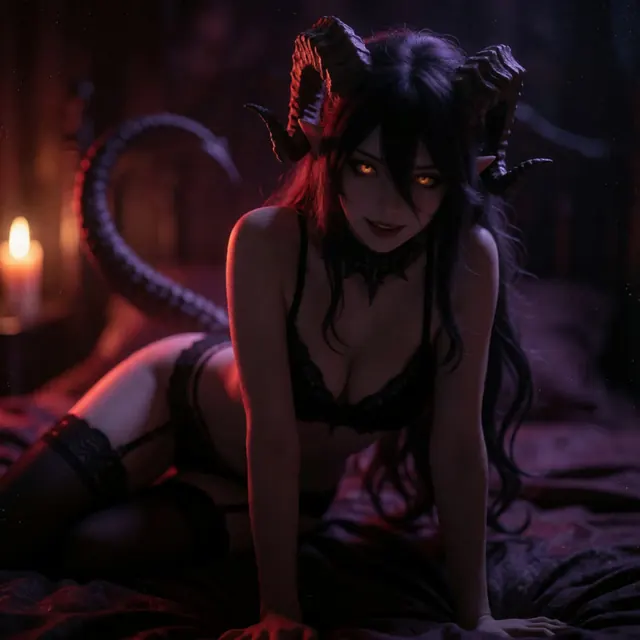
Oni is one of the best-known creatures of Japanese folklore, and the English words used for it, ogre and demon, each get part of the idea and miss part of it. An oni is a yokai, a supernatural being, usually shown with horns, wild hair, fangs, a muscular body, red, blue or other bright skin, a tiger-skin loincloth and an iron club studded with spikes. It is strong, fierce and sometimes funny, and in modern fiction it is also a monster girl.
Where the word comes from
The most cited explanation links oni to the old Japanese word on or onu (隠), meaning to hide. A tenth-century Japanese dictionary, the Wamyō Ruijushō, gives this explanation: the oni is a hidden thing that does not show its form. Scholars do not all agree. Some trace the word to other ancient terms, such as yomotsushikome, the fearful creatures of the underworld in the oldest myths, and there is no clear example of the word in the very oldest texts.
Where the oni comes from
Most scholars see the oni as a blend of three sources:
- Native Japanese spirit belief: unseen forces behind disease, disaster and the unknown.
- Chinese ideas of gui, ghosts and spirits, which brought the word's written form.
- Buddhist teachings about the guardians and punishers of hell, who are horned, tiger-skinned and strong.
The look of the classic oni, with horns and a tiger-skin loincloth, comes from the idea of the ushitora, the "ox-tiger" direction, the northeast, which was the kimon, or demon gate, through which evil entered. An ox has horns and a tiger has stripes, so the oni wears both.
What oni do in folklore
Oni appear in many roles:
- Villains who abduct and eat people, in old tales of heroes such as Momotaro, the peach boy who sails to the island of the oni.
- Guardians in Buddhist art, who punish sinners in hell.
- Tricksters and comedians, outwitted by clever humans in folk stories.
- Bringers of luck, in some regions and festivals, where oni masks are worn for protection.
- Shapeshifters, who can disguise themselves as human, man or woman, and trick travellers.
The best-known ritual is Setsubun, held on the day before spring in the old calendar, when people throw roasted soybeans and shout oni wa soto, fuku wa uchi: "demons out, luck in". The oni is the thing you drive away, and the thing that makes the ritual feel alive.
Female oni
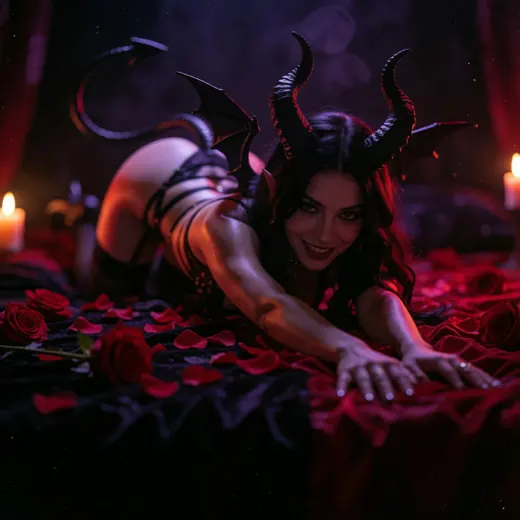
The oni of folklore are not exclusively male. There are stories of onna-oni, women who become oni, and the idea that jealousy, rage or sorrow can turn a woman into one. The famous hannya mask of Noh theatre shows a woman transformed by jealousy into a demon, with horns and a fierce face. Legends such as that of Kiyohime, who turned into a serpent, belong to the same family of transformation tales. Folklore also tells of oni women who live in remote mountains and lure travellers.
Female oni are rarer in older sources than male ones, and the modern oni girl owes more to games and manga than to folklore. Still, the transformation motif is old, and it gives the character depth.
The oni monster girl
In modern fiction, the oni girl is a recognizable type, and its common features are:
- Horns, one or two, from small to large.
- Great strength, with a club, a sake cup and a boisterous laugh.
- Bright skin or hair, often red, blue or white.
- A love of drink, food and festivals.
- A warm, direct and proud personality, loyal once you have won her trust.
The fantasy is being carried off by someone much stronger and surprisingly tender. She is loud and bossy and has a big heart. Oni Girl goes deeper into the type, Oni vs Demon sets her beside Western demons, and Oni Names gives names.
Oni in context
Related terms and creatures: yokai is the umbrella for all of Japan's supernatural beings, kumiho is the Korean fox spirit, and kitsune is the Japanese fox. In my library, the Japanese flavor is strongest in the lantern-and-shrine sessions: Follow: Led Up the Mountain by the Kitsune's Lanterns. Start Here is the five-night course to begin with.
Examples in a sentence
- The oni mask hung by the door, horned and grinning, to scare off bad luck.
- At Setsubun, the crowd shouted oni wa soto while throwing beans at the masked figure.
- Her oni girl character had red skin, a spiked club and a laugh you could hear across the village.
Frequently asked questions
What does oni mean?
Oni means a horned ogre or demon of Japanese folklore. The word is often linked to an old verb meaning to hide, and the creature blends native spirits, Chinese ideas about ghosts and Buddhist guardians of hell.
Are oni evil?
Often, in older tales, where they abduct and eat people. They are also guardians in Buddhist art, tricksters in folk stories and, in some regions, bringers of luck. Modern fiction often makes them warm and loyal.
Why do oni wear tiger-skin?
Oni are linked to the northeast, the demon gate, called ushitora, ox-tiger. They have an ox's horns and a tiger's stripes, which is why they wear tiger-skin loincloths.
What is Setsubun?
Setsubun is a Japanese festival marking the day before spring in the old calendar. People throw roasted soybeans and shout oni wa soto, fuku wa uchi, meaning demons out, luck in, to drive away bad luck.
Are there female oni?
Yes. Folklore has onna-oni, women transformed by jealousy or rage, and the hannya mask shows one. The modern oni girl is a game and manga type, strong, horned and often warm-hearted.
Read the full guide
- Oni Girl: Japanese Folklore, Horns, Strength and the Modern Monster Girl
An oni girl is a horned, strong woman drawn from the oni of Japanese folklore, ogre-like beings that can be demons, guardians or tragic figures. Folkl
Hear it in a session
By Metavulgar · updated 2026-11-13