Library › Guides › The Bestiary
Banshee Meaning and Lore: Origin, Powers, Weakness and Myth
By Metavulgar · updated 2026-11-13 · 5 min read
Banshee meaning: the word comes from the Irish bean sídhe (older ben síde), "woman of the fairy mound". A banshee is a female spirit of Irish folklore who appears or is heard, usually as a keening cry, shortly before a family member dies. She does not cause the death; she announces it. Everything people ask about banshee lore, origin, powers and weaknesses follows from that one fact. This page covers all of it, then shows how the monster-girl version keeps the sound and changes the story.
Origin of the word and the legend
Sídhe (pronounced roughly "shee") refers to the burial mounds and hills of Ireland, and by extension to the people of the mounds, the otherworld folk. Bean is "woman". The legend most likely grows from keening, the traditional lament for the dead, performed by women (bean chaointe, "keening woman") in Ireland and parts of Scotland. A cry in the night, a funeral lament in old language, and a belief in family spirits fit together easily. One historian's theory, cited in Irish press, is that the banshee began as a dead keening woman; another reading links the sídhe to ancestor belief. These are interpretations, not settled history. The Tuatha Dé Danann connection is popular and uncertain.
What a banshee is in the stories
- A messenger, not an attacker. She is attached to certain old Gaelic families (traditionally those with an O' or Mc/Mac name), and she follows the family, even abroad.
- She is heard more than seen: a wail, a keen, a shriek at night near the house.
- When seen, she appears as one of three forms: a young woman, a middle-aged woman, or an old hag. She often has long hair, a grey or white cloak, and eyes red from weeping.
- A well-known motif: she combs her long hair. Folk belief held that if you find a comb lying about, you should not pick it up, because it may be hers.
- In some tellings the sound is not frightening but mournful, and being mourned is a mark of an old, respected line.
Related spirits
- Bean nighe (Scottish Gaelic): the "washerwoman", seen washing the bloody clothes of those about to die.
- Washer at the Ford: the motif appears in Irish tales around heroes' deaths; the war-goddess figures the Morrígan and Badb are linked to it.
- Gwrach y Rhibyn (Welsh): a winged hag who shrieks a name before a death.
- Cyhyraeth: another Welsh death omen, a groaning voice heard before a death.
If you want the sea and sound cousin of the banshee, banshee vs siren compares the two voices of doom, and dullahan vs banshee sets her beside the other Irish death omen.
Powers
The traditional banshee has one power, a voice:
- Foretelling death. She knows who will die.
- The cry. In the stories it can be heard far away, and some versions say it can shatter glass. The glass detail is a modern flourish.
- Shapeshifting in some tellings: a young woman, then a hag.
- Family bond. She travels with her family, not with a place.
Modern fiction adds: flying, a sonic scream attack, ghostly walking-through-walls and sometimes a fierce fighting spirit. Those belong to games and comics, not folklore.
Weaknesses
In the old stories she cannot be fought, because she is not a threat. There are no folklore weaknesses to give. Modern fiction invents them: iron in the fairy tradition, silence or earplugs against the scream, or a counter-song. If you want a banshee who can be defeated, you are writing a new monster. Be clear in your own setting what the rules are.
Banshee types
| Type | Source | Look | Role |
|---|---|---|---|
| Bean sídhe | Irish | Young or old, long hair | Foretells family death |
| Bean chaointe | Irish | Human mourner | The keening woman |
| Bean nighe | Scottish | Small washerwoman | Washes shrouds at the ford |
| Gwrach y Rhibyn | Welsh | Winged hag | Shrieks a name |
The monster-girl banshee
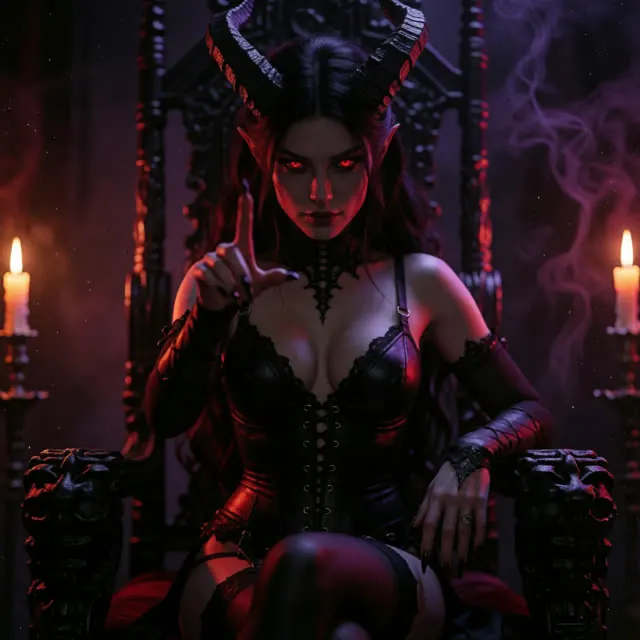
In the adult monster-girl version she is a grown, centuries-old spirit of grief and mourning. The traits that carry over are the voice, the long hair, the white gown and the family bond. What the fantasy changes is what she wants. Instead of announcing a death, she keeps watch over you and tells you when it is time to rest. Her sound is not a scream but a slow, low keen like a lullaby, and that is the form that suits ASMR: voice-led, sorrowful, and tender.
She is a good partner for the quieter fantasies, as well as for the lamenting, devoted-to-one-listener kind. In a roleplay she is the one who stays when the others leave. (The danger is always fiction; the listener stays in control.)
How the keening tradition shaped her voice
It helps to hear what keening actually was, because the banshee's sound is its echo. Keening (caoineadh) was a formal lament, partly sung and partly wailed, performed at wakes and funerals, usually by women who were known for it. It followed a pattern: a rising cry, praise of the dead person, a recital of their family and deeds, and a falling return to the wail. It was an art, not a breakdown, and the keening women were respected, sometimes paid.
That is the thing the folklore preserves. The banshee does not scream at random; she performs a lament. When people in the stories describe her cry, they often say it was beautiful and terrible at the same time, a sound like a woman and a bird and the wind. That mix is why the banshee fits audio so well. She is an entity made entirely of voice.
In a monster-girl setting this gives you a handful of useful design choices:
- Her speech is a song. Even ordinary sentences have a falling cadence at the end.
- She knows your name and your line. Banshee fiction loves the genealogical detail: she can recite your family back through the generations.
- She is gentle with the dying and the tired. A banshee character is often the one you want near when you are exhausted, because she has seen every kind of ending and none of them surprise her.
- She is attached. The traditional banshee follows a family across the sea. The romantic version follows you.
Names and further reading
For name ideas, see banshee names. For the cousin with a missing head, see dullahan vs headless horseman. For a grief-and-hush session, Hush: Held Quiet by the Snow Woman in Her Winter Lodge has the same slow voice. New here? Begin with Start Here.
Frequently asked questions
What does banshee mean?
Banshee comes from the Irish bean sídhe, "woman of the fairy mound" or "fairy woman". Sídhe refers to the ancient mounds of Ireland and the otherworld people said to live in them.
Is a banshee evil?
Traditionally no. She is a warning spirit who mourns a death that is about to happen, and she does not cause it. In modern fiction she is often rewritten as a hostile or dangerous creature.
What are a banshee's powers?
In folklore, mainly foretelling death through her cry. She is attached to old families. Fiction adds sonic screams, flight and ghostly movement, which are not part of the traditional lore.
What is a banshee's weakness?
Folklore gives none, because she is a messenger, not an enemy. Modern games invent weaknesses like iron, silence or music, which is design choice, not tradition.
Why does a banshee comb her hair?
It is a recurring motif in Irish stories: a keening woman seen combing long hair. Folk belief said a comb found on the ground might be hers and should not be picked up. The meaning is unclear.
Is the banshee Irish or Scottish?
Irish by name, with Scottish and Welsh counterparts: the Scottish bean nighe (washerwoman) and the Welsh gwrach y rhibyn. All are death omens, each with its own details.
Listen next

Keep reading
- Banshee Names: 100 Irish, Scottish and Dark Names With Meanings
Banshee names come from three places: Irish words for keening and the fairy mound, real Irish given names with meanings like radiance and gentle, and - Banshee vs Siren: Irish Death Omen or Greek Deadly Song?
A banshee is an Irish fairy woman whose keening warns that someone in a family is about to die; a siren is a Greek bird-woman whose song lures sailors - Dullahan vs Banshee: Two Irish Death Omens Compared
The banshee is a woman of the fairy mound who keens when a death is near, and she warns. The dullahan is a headless rider who carries his own head and - Dullahan vs Headless Horseman: Irish Omen or Sleepy Hollow Ghost?
The dullahan is a headless Irish fairy who rides a black horse, carries his own head and calls a name, at which the named person dies. The Headless Ho